
Tooth-Saving Treatment
Root canal treatment in Bloomingdale, IL
A root canal removes infected or inflamed pulp from inside a tooth, cleans and shapes the root canals, then seals them — saving the natural tooth instead of extracting it. Most root canals are completed in 60 to 90 minutes, with a temporary filling or crown placed afterward and a permanent crown recommended on most back teeth to protect the tooth from fracture.
At Serenity Dental of Bloomingdale, Dr. Husna Khan, DDS treats lingering sensitivity, throbbing pain, swelling, and tooth infection with clear diagnosis, profound numbing, and same-visit comfort care. We explain in plain language whether your tooth needs a filling, a crown, or — when restoration isn't realistic — an extraction.
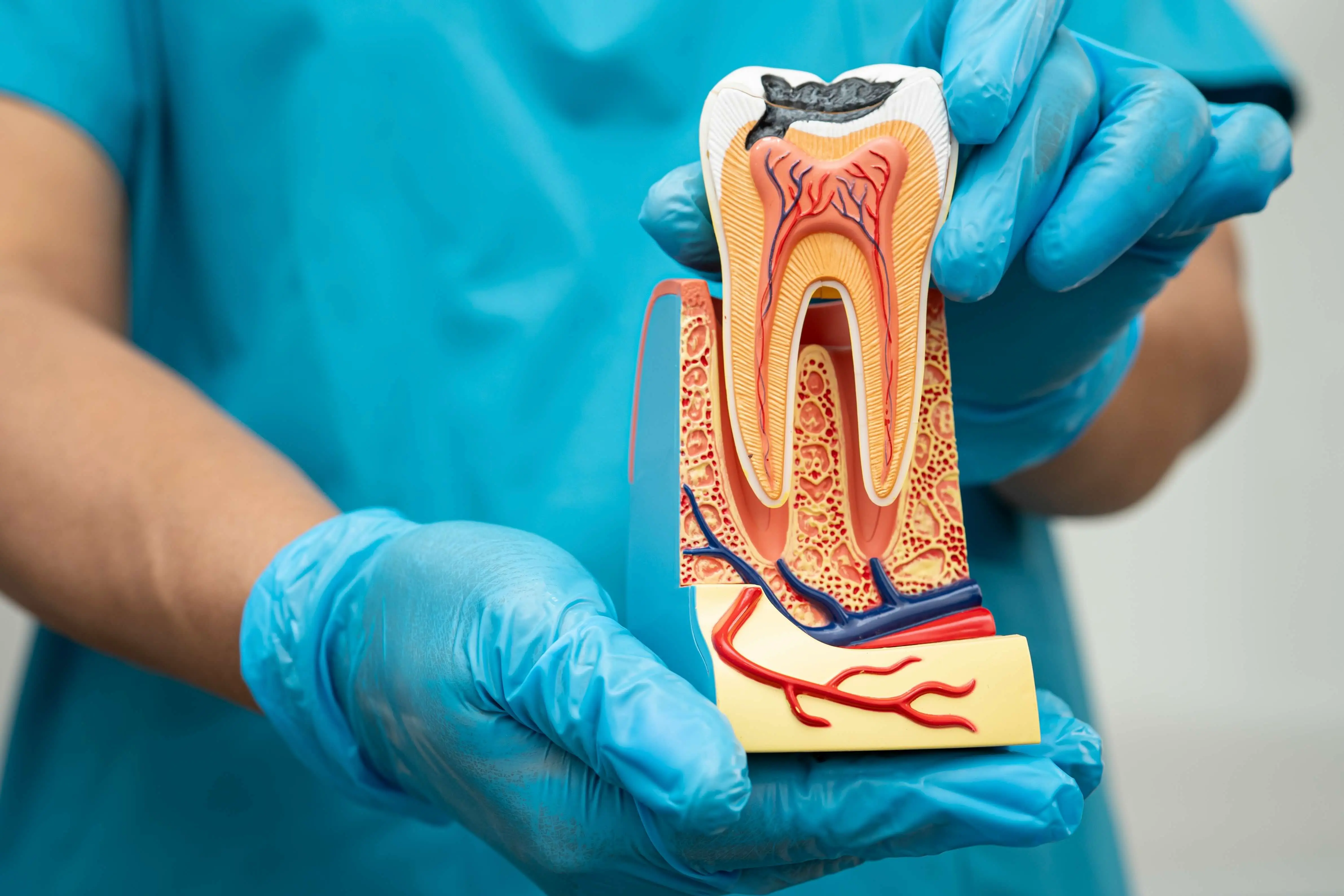
Common signs
- Lingering hot or cold sensitivity
- Throbbing tooth pain
- Pain when chewing or biting
- Swelling or a pimple on the gum
Why save the tooth
Keeping your natural tooth can help protect your bite, maintain chewing comfort, and avoid the added time and cost of extraction and replacement.
What we focus on
Clear diagnosis, comfort during treatment, careful cleaning of the infected space, and practical next-step planning once the tooth is sealed.
How do I know if I may need a root canal?
A root canal may be recommended when the inside of the tooth is inflamed or infected and a regular filling is not enough. Common clues include lingering temperature sensitivity, deep throbbing pain, pain when chewing, swelling near the tooth, or a tooth that has broken down enough to expose the nerve.
Not every painful tooth needs a root canal. Sometimes the right answer is a filling, a crown, gum treatment, or in more severe cases an extraction. The exam and X-rays are what clarify the best next step.
Do root canals hurt?
Most patients describe the procedure as easier than the pain that brought them in. The goal is to get the area thoroughly numb before treatment begins. You may feel pressure, vibration, or time in the chair, but sharp pain during treatment is not the goal.
Mild soreness afterward can happen for a few days, especially if the tooth was very inflamed beforehand, but treating the infection source usually moves patients toward relief rather than more pain.
What the process usually looks like
1) Diagnose and numb
We confirm what is causing the pain, review the images, and get the tooth thoroughly numb before treatment begins.
2) Clean and disinfect
We remove the infected or inflamed tissue inside the tooth and clean the canals carefully before sealing them.
3) Seal and restore
Once the inside of the tooth is sealed, we plan the filling or crown needed to help protect it long term.
How long does a root canal take?
Some root canals can be completed in one visit, while others may take longer depending on the tooth, the number of canals, how inflamed the tooth is, and whether additional steps are needed before the final restoration.
Front teeth are often simpler than molars. When a tooth is badly broken down or heavily infected, the overall timeline may include separate visits for treatment and for the final crown or buildup.
Will I need a crown after a root canal?
Many teeth do, especially back teeth that handle more biting force or teeth that have already lost a lot of structure. A crown often helps reduce fracture risk after root canal treatment.
Some teeth can be restored with a filling or buildup instead. The recommendation depends on the tooth position, the amount of tooth left, and how much long-term strength the tooth needs.
How do you care for it afterward?
Mild soreness, tenderness when biting, or awareness of the tooth can happen for a few days. Most patients feel better as the infection source settles down. We will explain what is expected, what helps, and when to call if symptoms worsen instead of improving.
Until the tooth is fully restored, avoid chewing hard foods on that side if we tell you the tooth is still vulnerable. That matters especially when a crown is still pending.
Insurance and payment
- Major PPO plans: Many plans help with root canals, though coverage depends on the tooth, deductible, and plan rules.
- Medicaid and Medicare Advantage dental: Benefits vary by plan and clinical need. We can help verify coverage.
- No insurance? Ask about practical payment options and financing.
Care for Bloomingdale and nearby communities
We see patients from Bloomingdale, Glendale Heights, Carol Stream, Roselle, Addison, and nearby communities for tooth pain, suspected infection, emergency evaluations, and tooth-saving treatment planning.
Related care
Learn more from the root canal blog
Nineteen articles on the specific situations patients ask about most. Reviewed by Dr. Husna Khan, DDS.
Quick facts
| Treatment time | 60 to 90 minutes; sometimes split across 2 visits for molars |
|---|---|
| Anesthesia | Local anesthesia |
| Recovery | Mild tenderness for 1 to 3 days |
| Success rate | 86% to 98% with current techniques and proper restoration |
| Typical cost | $700-$1,600 per tooth |
| Follow-up | Crown recommended on most back teeth within 4 to 6 weeks |
Cost figures on this page are typical Chicago-area ranges, not quotes. Fees depend on exam findings, materials, and insurance benefits; we provide a written, itemized estimate before treatment.
Clinical references
We rely on guidance from established clinical organizations. The references below inform how we explain options, expected outcomes, and aftercare on this page.
- American Association of Endodontists reports modern root canal treatment success rates of 86–98% when performed with current techniques and proper restoration.
- American Dental Association recommends crown placement on most posterior teeth following root canal therapy to protect against fracture.
- Cochrane Oral Health Group systematic reviews on endodontic outcomes and the value of single-visit versus multi-visit treatment.
- Journal of Endodontics outcomes research on contemporary endodontic therapy reports high long-term survival rates when followed by proper coronal restoration.
For patient education only. Treatment recommendations depend on individual diagnosis. Reviewed by Dr. Husna Khan, DDS.
Root Canal FAQs
These are the questions patients ask most often when they are trying to understand whether a painful tooth can be saved and what root canal treatment is really like.
When is a root canal needed?
Is a root canal painful?
Will I need a crown after a root canal?
How long does recovery take after a root canal?
Do you accept dental insurance?
Do you offer financing or payment options?
How do I know if I need a root canal?
Is it better to save a tooth with a root canal or have it extracted?
Are there alternatives to a root canal?
Educational content only. Recommendations are personalized after an exam and any needed imaging.
Visit us
Root Canal Treatment at our Bloomingdale, IL office
Serenity Dental of Bloomingdale is at 1 Tiffany Pt, Suite 205, Bloomingdale, IL 60108. Patients come to us for root canal treatment from Bloomingdale and from Glendale Heights, Roselle, Carol Stream, Itasca, Medinah, Addison, and Bartlett. Our team speaks 7 languages, including Spanish, Polish, Hindi, Urdu, and Arabic.
Hours
- Mon9:00 AM – 5:00 PM
- Tue10:00 AM – 6:30 PM
- Wed9:00 AM – 5:00 PM
- Thu9:00 AM – 5:00 PM
- Fri9:00 AM – 5:00 PM
- Sat9:00 AM – 3:00 PM
- SunClosed
Saturday hours and Tuesday evenings available.
Book root canal treatment
Online booking works for consultations and routine visits. For pain, swelling, or a broken tooth, call so we can fit you in sooner.