Cosmetic Dentistry
Porcelain veneers in Bloomingdale, IL
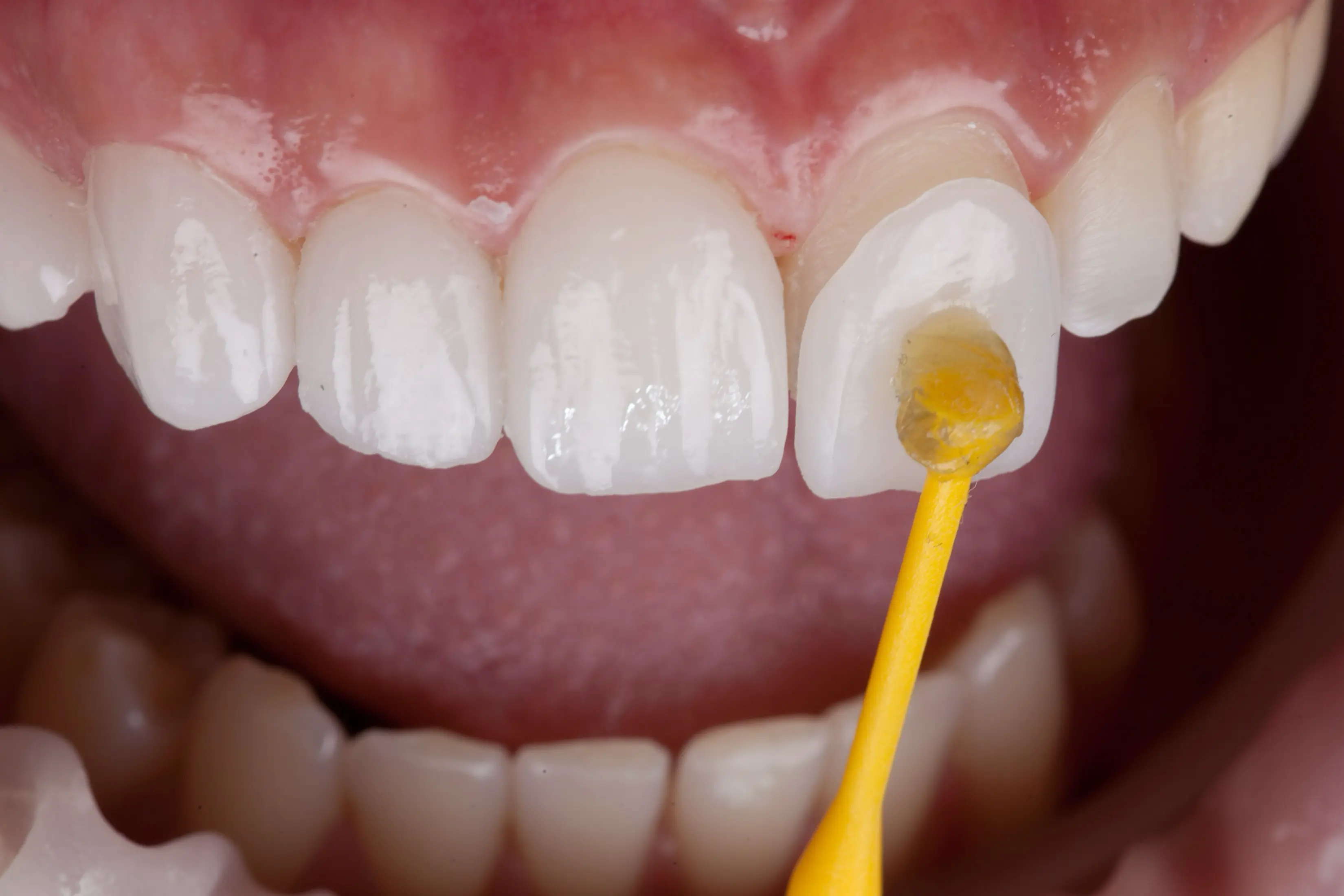
Porcelain veneers are thin, custom-made shells bonded to the front of teeth to improve color, shape, size, and symmetry; composite resin veneers are the lower-cost, shorter-lived alternative. Porcelain veneers typically last 10 to 15 years with good care, while composite veneers last 5 to 7 years and cost less. Most cases involve 6 to 8 front teeth and complete in two to three visits.
We use veneer consultations to decide whether veneers truly make sense for your goals, or whether a simpler option like bonding, whitening, or Invisalign would be the better place to start.
Common reasons patients ask about veneers
Discoloration that does not respond well to whitening, chipped front teeth, uneven edges, small gaps, and a smile that feels slightly off-balance.
What a consultation helps answer
Whether veneers are the best fit, how many teeth to treat, what shade and shape make sense, and whether a more conservative option should come first.
Who this page helps most
Patients in Bloomingdale and nearby communities who want a more refined smile and want clear, realistic guidance before choosing cosmetic treatment.
What veneers can improve
- Teeth that look darker than you want, even after whitening
- Chips, worn edges, and uneven front teeth
- Small gaps and minor shape differences
- A smile that feels slightly off-balance or asymmetrical
Why people choose veneers
- They can improve multiple cosmetic concerns at once
- Porcelain holds color well and resists staining better than natural enamel
- They can create a more balanced, polished smile
- The final design is customized to your face, bite, and goals
Do veneers ruin your teeth?
Not when the case is chosen carefully and the preparation is planned conservatively. Veneers are not the right answer for every smile, which is why the consultation matters. The goal is to improve appearance in a thoughtful way, not to remove more tooth structure than the case actually requires.
We also look at bite, enamel, grinding habits, and whether a different treatment would be more conservative before recommending veneers.
Veneers compared with other cosmetic options
Veneers vs bonding
Bonding is often a better fit for smaller cosmetic changes, subtle reshaping, or one chipped front tooth. Veneers usually make more sense when color, shape, balance, and durability all need to be improved together.
Veneers vs whitening
Whitening is often the best first step when the main concern is color. Veneers can change color, but they can also improve shape, size, symmetry, and surface appearance in ways whitening cannot.
When Invisalign may come first
Sometimes moving the teeth with Invisalign creates a better and more conservative cosmetic result before any veneer planning begins.
When crowns are more appropriate
Crowns are usually the better option when a tooth also needs full structural support, not just a cosmetic change to the front surface.
What the veneer process usually looks like
Veneers are usually done in phases so the design is thoughtful and the final result feels right, not rushed.
1) Consultation and design
We talk through what you want to change, review shape and shade, and decide whether veneers are the best route.
2) Conservative preparation
If veneers are the plan, the teeth are prepared carefully and changes are kept as conservative as the case allows.
3) Try-in and final bond
Final veneers are checked for fit, appearance, and bite before they are bonded into place.
Shade and smile design
A good veneer case is not just about making teeth whiter. It is about choosing the right shape, length, brightness, and balance for your face and smile.
Temporaries when needed
In many porcelain cases, temporaries let you live with the planned look before the final veneers are seated.
How long veneers last and how to care for them
Porcelain veneers can last many years with good home care, regular exams, and sensible habits. They are stain-resistant, but they still need to be treated with respect.
What helps veneers last
- Regular exams and cleanings
- Good daily brushing and flossing
- A night guard if you clench or grind
- Avoiding very hard foods and using teeth as tools
What patients usually ask
Veneers can chip if they are overloaded, and regular care still matters. If you grind at night, protecting them with a night guard is often one of the smartest ways to protect the investment.
Cost and payment planning
Veneer fees vary depending on the number of teeth, the material, and how much planning and design the case involves.
We provide a written estimate and walk through what is included before you decide to move forward.
Insurance and coverage
- Major PPO plans: Veneers are usually considered cosmetic and are often not covered.
- Medicaid and Medicare Advantage dental: Cosmetic veneers are typically not covered. Benefits vary by plan and any restorative exception would depend on diagnosis, not appearance alone.
- No insurance? Ask about practical payment options and financing.
We see patients from Bloomingdale, Glendale Heights, Carol Stream, Roselle, Addison, and nearby communities who want to improve chipped, uneven, discolored, or slightly unbalanced front teeth with a clear cosmetic plan.
Alternatives worth considering
Veneers are not always the first or best answer. Sometimes another option gets you where you want to go in a simpler way.
Learn more about veneers
Twelve in-depth articles by Dr. Husna Khan covering cost, materials, longevity, alternatives, and the most common questions patients ask before booking a consultation.
What are dental veneers?
A plain-language guide to how veneers work and what they actually fix.
Porcelain vs composite veneers
Side-by-side comparison of the two main veneer materials.
Veneers cost explained
What 2026 prices actually look like and where the cost goes.
Does insurance cover veneers?
Coverage rules, exceptions, and how to use HSAs, FSAs, and financing.
How long do veneers last?
Lifespan ranges, what shortens them, and how to protect your investment.
Veneer preparation and tooth shaving
How much enamel actually comes off and why social media exaggerates it.
Veneers vs crowns
How they differ and when each one is the right call.
Veneers vs Lumineers
Brand vs material vs technique — what Lumineers actually are.
Snap-on vs permanent veneers
Two very different products — only one is dentistry.
Why people regret veneers
Five common patterns and how a careful consultation prevents them.
Veneers for crooked or chipped front teeth
When veneers help, when bonding is enough, and when orthodontics comes first.
enameloplasty
What Is Enameloplasty? A Plain-English Guide to Enamel Reshaping
Enameloplasty is the dental term for tooth reshaping. What it involves, what it costs, when it's the right choice, and how to find it in Bloomingdale, IL.
Quick facts
| Treatment time | 2 to 3 visits over 2 to 4 weeks |
|---|---|
| Anesthesia | Light local anesthesia for prep |
| Materials | Porcelain (most durable) or composite resin |
| Lifespan | 10–15 years (porcelain); 5–7 years (composite) |
| Typical cost | $900-$2,500 per tooth (porcelain) |
| Reversibility | Generally permanent — small enamel layer removed |
Cost figures on this page are typical Chicago-area ranges, not quotes. Fees depend on exam findings, materials, and insurance benefits; we provide a written, itemized estimate before treatment.
Veneers vs. bonding vs. crowns: at a glance
| Option | Best for | Lifespan | Tooth removal | Typical cost (per tooth) |
|---|---|---|---|---|
| Porcelain veneers | Color, shape, and symmetry on front teeth | 10–15 years | Minimal enamel reduction | $900-$2,500 |
| Composite veneers | Smaller cosmetic changes, budget-conscious | 5–7 years | Often none or minimal | $250-$1,500 |
| Dental bonding | Single chip, small gap, edge repair | 5–7 years | None | $300-$600 |
| Dental crowns | Tooth needs structural strengthening | 10–20 years | Significant tooth reduction | $800-$2,500 |
Cost ranges are typical for the Chicago suburbs and depend on case specifics. Insurance coverage varies. Contact Serenity Dental of Bloomingdale for an estimate based on your situation.
Clinical references
We rely on guidance from established clinical organizations. The references below inform how we explain options, expected outcomes, and aftercare on this page.
- American Academy of Cosmetic Dentistry describes porcelain veneers as a stain-resistant, long-lasting option for correcting color, shape, and minor alignment of front teeth.
- Journal of Esthetic and Restorative Dentistry studies on porcelain veneer longevity report 10-year survival rates of 91–95% with proper bonding protocols and case selection.
- American Dental Association guidance on cosmetic dentistry treatment planning, informed consent, and case selection.
For patient education only. Treatment recommendations depend on individual diagnosis. Reviewed by Dr. Husna Khan, DDS.
Veneer FAQs
These are the questions patients ask most often when they are deciding whether veneers are the right way to improve their smile.
What can veneers improve?
How many visits do veneers usually take?
How are veneers different from bonding?
Should I choose veneers or whitening?
Do you offer financing or payment options?
What is the difference between porcelain and composite veneers?
Are dental veneers permanent?
How many visits does it take to get porcelain veneers?
What is a smile makeover and what does it include?
Should I get veneers or whitening for stained teeth?
How do you care for porcelain veneers?
What should I avoid with veneers?
Educational content only. Recommendations are personalized after an exam and any needed imaging.
This treatment is part of Cosmetic dentistry in Bloomingdale, IL.
Visit us
Dental Veneers at our Bloomingdale, IL office
Serenity Dental of Bloomingdale is at 1 Tiffany Pt, Suite 205, Bloomingdale, IL 60108. Patients come to us for dental veneers from Bloomingdale and from Glendale Heights, Roselle, Carol Stream, Itasca, Medinah, Addison, and Bartlett. Our team speaks 7 languages, including Spanish, Polish, Hindi, Urdu, and Arabic.
Hours
- Mon9:00 AM – 5:00 PM
- Tue10:00 AM – 6:30 PM
- Wed9:00 AM – 5:00 PM
- Thu9:00 AM – 5:00 PM
- Fri9:00 AM – 5:00 PM
- Sat9:00 AM – 3:00 PM
- SunClosed
Saturday hours and Tuesday evenings available.
Book dental veneers
Online booking works for consultations and routine visits. For pain, swelling, or a broken tooth, call so we can fit you in sooner.