Clear Aligners · Adult Orthodontics
Invisalign in Bloomingdale, IL
Special Invisalign Offer: $500 OffMost adults who sit down with Dr. Husna Khan at Serenity Dental say the same thing: "I thought braces were just for kids." They're not — and Invisalign makes straightening your teeth as an adult more discreet and manageable than most people expect.
According to the American Association of Orthodontists, 27% of orthodontic patients today are adults. At Serenity Dental, every case is evaluated individually so you get a realistic picture of what Invisalign can — and can't — do for your smile before you commit to anything.
Why adults in Bloomingdale choose Invisalign
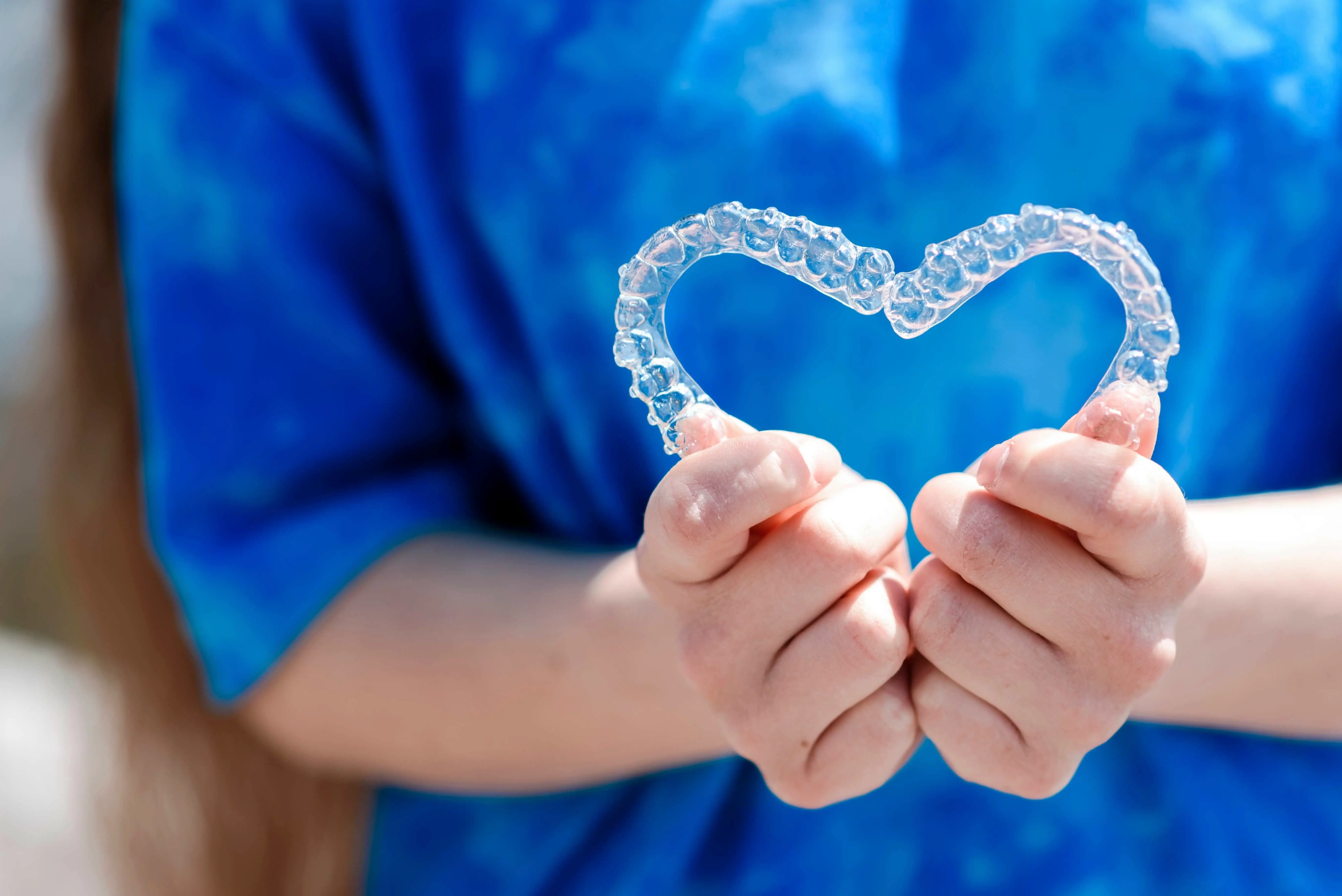
The Invisalign look is nearly invisible in daily life — at work, in meetings, and in photos. People wearing Invisalign find it fits their professional life in a way that traditional metal braces simply don't.
What makes Invisalign treatment work
Invisalign clear braces technology is precise, but results depend on consistent wear. The recommended wear time at Serenity Dental of Bloomingdale is at least 22 hours a day — the AAO minimum. Patients who stay consistent see faster, more predictable outcomes.
What happens at your first visit
At your first visit, Dr. Husna Khan evaluates your bite, reviews your dental history, and answers every question — including whether Invisalign or braces is the better fit for your specific case. No pressure, no surprises.
What Invisalign can fix for adults
A common misconception is that Invisalign only handles minor cosmetic issues. In practice, what Invisalign can fix covers a meaningful range — including concerns that patients assume only braces can address. Per the American Dental Association (ADA), clear aligners are an accepted treatment option for a wide range of mild to moderate malocclusions.
- Crowded or crooked teeth — aligners create proper spacing and improve alignment
- Gaps between teeth — progressive movements gradually close unwanted spacing
- Overbites and underbites — many vertical and horizontal bite concerns can be addressed
- Crossbite and open bite — more complex bite patterns that affect chewing and jaw comfort
- Post-braces drift — adults who had braces years ago often choose Invisalign as a refinement step
Severity matters. Each case is evaluated individually at Serenity Dental, with an honest assessment of what's within Invisalign's range and what isn't.
Types of Invisalign: finding your fit
When Dr. Husna Khan reviews your smile as your Invisalign doctor, she matches you to the right plan based on your goals and case complexity. The main types of Invisalign available at Serenity Dental are:
- Invisalign Full — Most comprehensive. Addresses significant misalignment and complex bite issues. Most Full cases run 12–18 months.
- Invisalign Lite — Built for moderate crowding or spacing. Typically completes in 6–12 months.
- Invisalign Express — Minor corrections and finishing touches — frequently chosen by adults transitioning from braces to Invisalign after teeth have shifted.
Whatever your situation, there are Invisalign packages and treatment options designed to fit your case. A frank recommendation from Dr. Husna Khan comes at your consultation.
What does Invisalign look like on teeth?
In everyday conversation
The teeth clear aligners sit flush against your tooth surface with a slim, smooth profile. In normal conversation or across a room, they're essentially undetectable. Most patients are surprised by how natural the Invisalign look is the first time they wear them.
In photos and on video calls
How does Invisalign look in photos? The clear plastic catches minimal light and doesn't produce the reflective glare that standard retainers sometimes create. People wearing Invisalign at work consistently report that colleagues don't notice their treatment unless they point it out.
Up close
Can you see Invisalign if you're looking for it? Yes — visible up close if you know what to look for. What does Invisalign look like on teeth specifically? Your teeth look like your teeth, just slightly shinier. No bulk, no metal, no wire. Most people find the trade-off easy to live with.
How Invisalign treatment works at Serenity Dental
Dr. Husna Khan guides every patient through each step — from first scan to final retainer.
1) Pre-treatment and consultation
Before your scan, any outstanding dental work — fillings, cleanings, gum treatment — needs to be completed first, as aligners are custom-made to your exact tooth shape. Dr. Husna Khan reviews your bite and dental history and uses 3D imaging to show you a simulation of results before you commit to anything.
2) Fabrication and delivery
Every tooth movement is mapped step by step using Invisalign's digital planning tools, with Dr. Husna Khan reviewing the simulation. Your custom aligners are then manufactured and shipped — allow 4 to 6 weeks for production and delivery. At your fitting appointment, attachments are placed and you'll receive full wear and care instructions.
3) Wear the aligners
Each aligner set is worn for about 1 week, at least 22 hours a day. Remove them for meals, brushing, and flossing — your oral hygiene routine stays completely normal. Progress check-ins with Dr. Husna Khan happen every 6 to 8 weeks.
4) Retention
Once active treatment ends, a retainer maintains your results. This phase is easy to overlook and essential not to skip — teeth can drift without it, and protecting your investment matters.
Invisalign vs braces: an honest comparison
Is Invisalign braces? Not technically — they're a different category of orthodontic treatment. Are Invisalign orthodontics? Yes. Clear aligners are a fully recognized system that works through removable trays instead of bonded brackets and wires.
- Visibility: Invisalign is nearly invisible. Traditional braces are clearly visible.
- Removability: Invisalign comes out for meals, events, and brushing. Braces are fixed.
- Comfort: Smooth plastic aligners avoid the gum and cheek irritation common with brackets and wires.
- Oral hygiene: Normal brushing and flossing routine with Invisalign. Braces require special tools and more effort.
- Complex cases: Braces can handle the full spectrum. For most mild-to-moderate adult cases, Invisalign is the more lifestyle-compatible choice.
A straight recommendation from Dr. Husna Khan reflects your specific bite and goals — not a generic comparison.
Daily life with Invisalign aligners
Invisalign works best when the teeth aligner trays are worn at least 22 hours a day. Per Align Technology clinical guidance, taking them out too often slows progress, affects tracking, and stretches treatment time. For most adults, the routine becomes second nature within the first week.
- Remove aligners for meals and anything besides water
- Brush and floss before putting them back in — every time
- Wear-time consistency matters as much as switching trays on schedule
- Mild discomfort for the first few days when switching trays is normal — most patients adjust within about a week
- Attachments (small tooth-colored bumps) are common and usually subtle
- Some cases also use orthodontic elastics alongside the aligners to help correct bite position
- Refinements near the end of treatment can help improve the final result
"It was the first time I've been able to smile in photos without thinking about it. I kept waiting for the right time, and there's no right time — you just do it."
Cost, packages, and Invisalign offers
Invisalign treatment at Serenity Dental of Bloomingdale typically ranges from $3,500-$7,000 depending on the plan and case complexity. Invisalign Lite and Express sit on the lower end; Full treatment for complex cases sits higher.
- Flexible monthly payment plans — spread the cost in low, manageable installments
- Insurance coordination — dental plans that include orthodontic coverage typically cover clear aligners equally to traditional braces; we verify your specific benefits before your second appointment
- Periodic Invisalign offers — seasonal promotions and new-patient discounts available; ask at your consultation
- Customizable Invisalign packages — pricing is case-specific, not one-size-fits-all
If you're searching for the cheapest Invisalign near me or the best deal on clear aligners, the right move is a consultation. Invisalign Lite and Express sit meaningfully lower than Full treatment — but an accurate quote is specific to your mouth. Online estimates are generic and often misleading.
Serving Bloomingdale and surrounding DuPage County
Serenity Dental sees Invisalign patients from Bloomingdale, Carol Stream, Glendale Heights, Hanover Park, Roselle, Addison, and nearby communities across DuPage County who want a straighter smile without traditional braces.
For adults weighing the investment — Invisalign is worth it for the right case. The combination of predictable results, a lifestyle that barely changes, and a certified Invisalign doctor guiding your care makes it worth serious consideration.
If you're also exploring cosmetic alternatives, it may help to compare treatments like veneers or dental bonding when shape, color, or small cosmetic details are part of the goal alongside alignment. Teeth whitening is also a popular complement once Invisalign treatment is complete.
Is Invisalign worth it?
For adults who complete treatment, Invisalign reviews are overwhelmingly positive — not just because of the final result, but because of how well the process fits into real life. A consistent theme in Invisalign review after review: patients say they wish they'd started sooner.
The case for Invisalign worth it in Illinois comes down to one question: is a straighter smile worth 12–18 months of something you'll barely notice wearing? For most of our patients across Bloomingdale and DuPage County, the answer is yes.
- Discreet enough that most coworkers and friends won't notice
- Removable for meals, events, and professional situations
- No dietary restrictions and a normal oral hygiene routine
- Predictable results when treatment is followed consistently
Can anyone get Invisalign?
Not everyone is a candidate — and Dr. Husna Khan will tell you that honestly at your consultation. Good candidacy depends on how much tooth movement is needed, how your bite functions, your bone health, and whether you're likely to wear the aligners as directed.
- Most adults with crowding, gaps, or mild-to-moderate bite concerns are good candidates
- Very complex bite corrections may be better served by traditional orthodontics
- Active gum disease or significant bone loss needs to be addressed first
- Teens can be candidates too — candidacy depends on dental development, not age alone
The 3D scan and consultation together give you a realistic picture of what's achievable before you commit to a single tray.
Quick facts
| Treatment time | 6 to 18 months typical |
|---|---|
| Wear schedule | 20 to 22 hours per day; switch trays every 1 to 2 weeks |
| Visits | Every 6 to 10 weeks for monitoring |
| Typical cost | $3,500-$7,000 |
| Retention | Nighttime retainer required to prevent relapse |
| Best for | Mild to moderate alignment, spacing, and bite issues in compliant patients |
Cost figures on this page are typical Chicago-area ranges, not quotes. Fees depend on exam findings, materials, and insurance benefits; we provide a written, itemized estimate before treatment.
Invisalign vs. traditional braces
| Aspect | Invisalign clear aligners | Traditional metal braces |
|---|---|---|
| Visibility | Nearly invisible | Visible brackets and wires |
| Removable | Yes (for eating, brushing) | No |
| Treatment time | 6–18 months typical | 12–24 months typical |
| Eating restrictions | None (remove to eat) | Avoid sticky, hard foods |
| Hygiene | Brush and floss normally | More complex around brackets |
| Visit frequency | Every 6–10 weeks | Every 4–6 weeks |
| Best for | Mild to moderate cases | Any case complexity |
| Typical cost | $3,500-$7,000 | $3,000-$6,000 |
Cost ranges are typical for the Chicago suburbs and depend on case specifics. Insurance coverage varies. Contact Serenity Dental of Bloomingdale for an estimate based on your situation.
Clinical references
We rely on guidance from established clinical organizations. The references below inform how we explain options, expected outcomes, and aftercare on this page.
- American Association of Orthodontists recognizes clear aligners as a valid orthodontic option for many cases of mild to moderate malocclusion.
- American Dental Association guidance on clear aligner therapy emphasizes the importance of professional supervision and treatment planning.
- Journal of the American Dental Association research on clear aligner outcomes, tooth-movement predictability, and case selection criteria.
For patient education only. Treatment recommendations depend on individual diagnosis. Reviewed by Dr. Husna Khan, DDS.
Invisalign FAQs
These are the questions patients ask most often when deciding whether Invisalign fits their smile, lifestyle, and budget — answered plainly, without the sales pitch.
Who is a good candidate for Invisalign?
How long does Invisalign take?
Do you offer Invisalign consultations?
Do you have an Invisalign offer?
Do you offer financing or payment options?
Is Invisalign better than braces for adults?
How much does Invisalign typically cost?
How many hours a day do you have to wear Invisalign?
Can Invisalign fix gaps, crowding, and bite problems?
Do I need a retainer after Invisalign?
Educational content only. Recommendations are personalized after an exam and any needed imaging.
Learn more about Invisalign
Twenty-one detailed guides covering every stage of Invisalign treatment, written and reviewed by Dr. Husna Khan. Organized by patient journey: Before, During, and After treatment.
Before treatment
Understanding cost, options, and what to expect before starting Invisalign.
This treatment is part of Cosmetic dentistry in Bloomingdale, IL.
Visit us
Invisalign at our Bloomingdale, IL office
Serenity Dental of Bloomingdale is at 1 Tiffany Pt, Suite 205, Bloomingdale, IL 60108. Patients come to us for invisalign from Bloomingdale and from Glendale Heights, Roselle, Carol Stream, Itasca, Medinah, Addison, and Bartlett. Our team speaks 7 languages, including Spanish, Polish, Hindi, Urdu, and Arabic.
Hours
- Mon9:00 AM – 5:00 PM
- Tue10:00 AM – 6:30 PM
- Wed9:00 AM – 5:00 PM
- Thu9:00 AM – 5:00 PM
- Fri9:00 AM – 5:00 PM
- Sat9:00 AM – 3:00 PM
- SunClosed
Saturday hours and Tuesday evenings available.
Book invisalign
Online booking works for consultations and routine visits. For pain, swelling, or a broken tooth, call so we can fit you in sooner.