Cosmetic Dentistry
Teeth whitening in Bloomingdale, IL
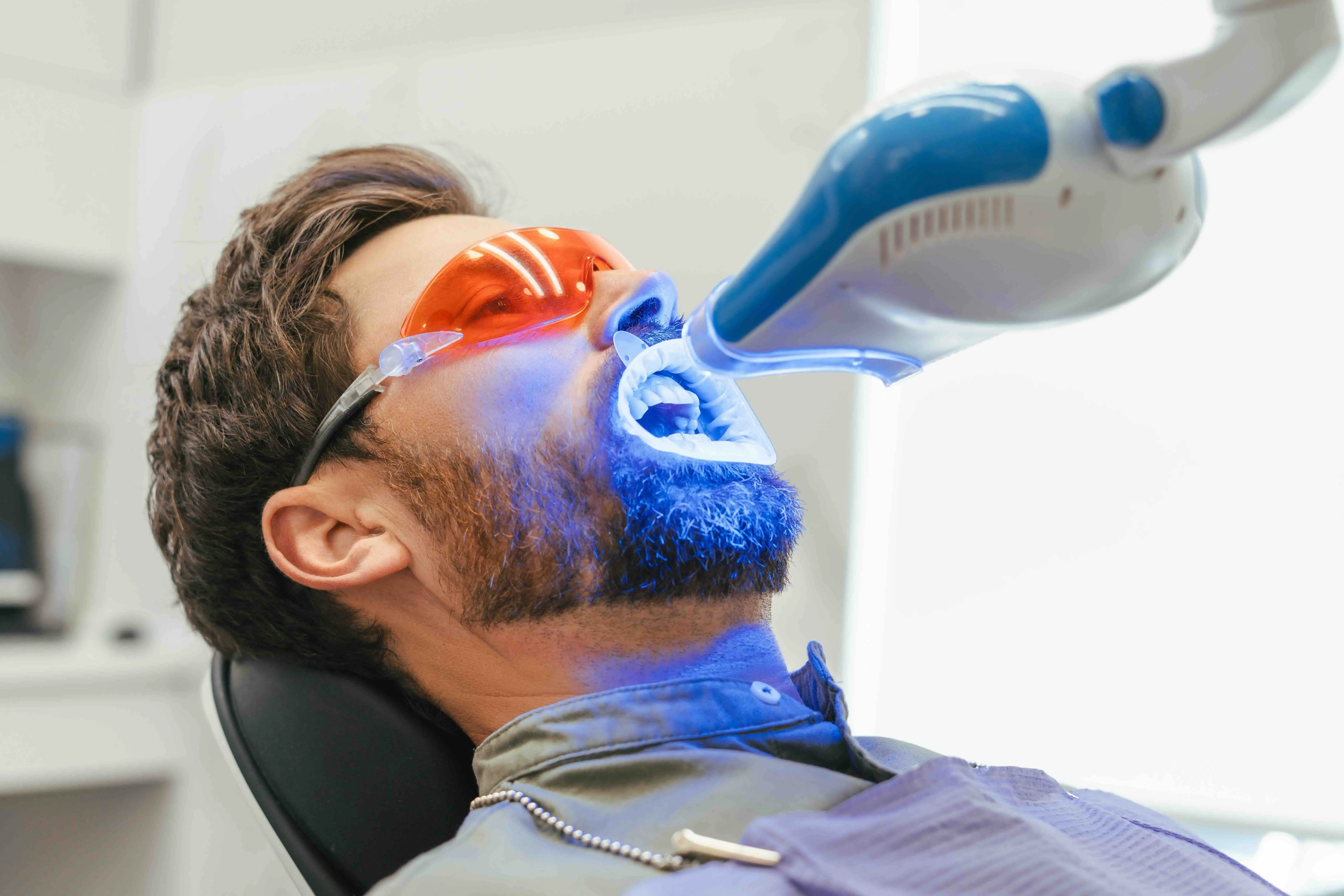
Professional teeth whitening lightens tooth color using a peroxide-based gel applied either in-office under a controlled light or at home in custom trays. At Serenity Dental, in-office Philips Zoom whitening lifts shade in about 60 to 90 minutes, while take-home trays produce comparable results over 7 to 14 nights. Results typically last 6 to 24 months depending on diet and habits.
Best for patients whose main concern is color. If shape, spacing, or worn edges are a bigger issue, we will explain when another cosmetic option makes more sense. Last updated: March 2026.
Who whitening fits best
Whitening is usually a good fit when the teeth are healthy and the main goal is to lift yellowing or everyday stains rather than change shape or spacing.
Professional planning matters
We help you choose the right strength, pace, and approach based on sensitivity, existing dental work, and how quickly you want to see a change.
Not every stain responds the same
Some discoloration improves very well with whitening. Other color changes may respond less and are better discussed during a cosmetic consultation.
In-office vs take-home whitening
In-office whitening
A good fit when you want faster results, have an event coming up, or prefer a more guided treatment visit. Our in-office whitening uses the Philips Zoom system, one of the most widely used professional whitening platforms in the country.
Take-home trays
A good fit when you want a more gradual approach, more control over sensitivity, or a practical way to maintain your shade over time.
Will whitening make my teeth sensitive?
Some sensitivity is common after whitening, but it is usually temporary. We can adjust strength, timing, and pacing if your teeth tend to be more reactive. Not every patient experiences sensitivity the same way, which is one reason professional planning helps.
How long does whitening last?
Results vary based on coffee, tea, wine, smoking, home care, and your natural stain tendency. Many patients keep the result longer with occasional touch-ups, good hygiene, and regular cleanings and exams.
What your whitening visit usually looks like
1) Shade and smile review
We talk through your goals, current shade, and whether whitening is the best match for what you want to improve.
2) Protect and prepare
We protect soft tissues and choose an approach that balances brightness goals with comfort.
3) Whitening treatment
We guide the in-office or take-home plan based on the option selected and how your teeth respond.
4) Maintain the result
We explain how to keep the shade going, when touch-ups make sense, and what habits may shorten the result.
Whitening vs veneers or bonding
Whitening changes color. Bonding and veneers can change shape, size, edge contour, and sometimes color at the same time. If color is the main issue, whitening is often the simpler first step.
Safety and coverage
- Major PPO plans: Whitening is usually considered cosmetic and often is not covered.
- Medicaid and Medicare Advantage dental: Cosmetic whitening is usually not covered, though we can help verify benefits when needed.
- No insurance? We can review practical payment options before treatment begins.
Local whitening consultations
We see whitening patients from Bloomingdale, Glendale Heights, Carol Stream, Roselle, Addison, and nearby communities who want a brighter smile for everyday confidence, photos, events, or a broader cosmetic refresh.
Related cosmetic options
Learn more about teeth whitening
Detailed guides covering every common whitening question -- from how it works and what it costs, to home methods, sensitive teeth, branded products, and long-term results.
Professional vs. at-home whitening
A side-by-side look at speed, results, sensitivity risk, and cost for each option.
Whitening for sensitive teeth
Lower-concentration protocols, desensitizing strategies, and when to delay whitening.
How to remove teeth stains
What removes yellow, brown, and surface stains -- and what truly requires professional treatment.
dental insurance
Does Insurance Cover Dental Veneers? Coverage and Payment Options
Plain answers about veneer insurance coverage, what counts as cosmetic, and what payment plans actually work for patients in Bloomingdale, IL.
veneer lifespan
How Long Do Dental Veneers Last? Lifespan, Wear, and Replacement
Real numbers on how long porcelain and composite veneers last, what wears them down, and how to make them last longer, from a Bloomingdale, IL dentist.
porcelain veneers
Porcelain vs Composite Veneers: An Honest Comparison
Porcelain or composite veneers? A Bloomingdale, IL dentist breaks down cost, lifespan, appearance, and which option fits which kind of patient.
snap on veneers
Snap-On Veneers vs Permanent Veneers: An Honest Comparison
Snap-on or pop-on veneers vs bonded porcelain. A Bloomingdale, IL dentist explains who each one is for and where the marketing is misleading.
veneer preparation
Veneer Preparation and Tooth Shaving Explained
What really happens to teeth before veneers, how much enamel is removed, and when no-prep veneers are the right call. From a Bloomingdale, IL dentist.
veneers cost
How Much Do Dental Veneers Cost? A Plain-English Breakdown
What dental veneers really cost in 2026, what drives the price up or down, and how a Bloomingdale, IL dentist builds a written estimate before any treatment.
dental veneers
Veneers for Crooked or Chipped Front Teeth: When They Help
Honest guide from a Bloomingdale, IL dentist on using veneers to fix crooked or chipped front teeth, when veneers work, when orthodontics or bonding are better, and what the process actually looks like.
dental crowns
Veneers vs Crowns: When You Need Each One
Veneers and crowns are not the same. A Bloomingdale, IL dentist explains when each one is the right choice and what insurance usually pays for.
Lumineers
Veneers vs Lumineers: What Is the Difference, Really?
Lumineers are a brand of no-prep veneer. A Bloomingdale, IL dentist explains what is the same, what is different, and which one fits which patient.
veneer regret
Why Some People Regret Their Veneers, and How to Avoid That
Why veneer regret happens, what the patterns are, and how a Bloomingdale, IL dentist designs cases to make sure patients are happy years later.
dental veneers
What Are Dental Veneers? How They Work, Cost ($900-$2,500), Lifespan
A veneer is a thin porcelain or composite shell bonded to the front of a tooth. A Bloomingdale, IL dentist explains how veneers work, what they cost per tooth, and how long they last.
enameloplasty
What Is Enameloplasty? A Plain-English Guide to Enamel Reshaping
Enameloplasty is the dental term for tooth reshaping. What it involves, what it costs, when it's the right choice, and how to find it in Bloomingdale, IL.
Quick facts
| Treatment time | 60–90 minutes (in-office); 7–14 nights (take-home) |
|---|---|
| Whitening agent | Hydrogen or carbamide peroxide |
| Lifespan | 6 to 24 months depending on diet and habits |
| Typical cost | $400-$700 in-office (Zoom); $250-$500 take-home trays |
| Sensitivity | Mild, temporary; managed with sensitivity toothpaste |
| Best candidate | Healthy teeth, no untreated cavities or active gum disease |
Cost figures on this page are typical Chicago-area ranges, not quotes. Fees depend on exam findings, materials, and insurance benefits; we provide a written, itemized estimate before treatment.
Teeth whitening options compared
| Option | Time to results | Whitening agent | Visit count | Typical cost |
|---|---|---|---|---|
| In-office Philips Zoom | 60–90 minutes | 25% hydrogen peroxide | 1 visit | $400-$700 |
| Custom take-home trays | 7–14 nights | 10–22% carbamide peroxide | 2 visits (impressions + delivery) | $250-$500 |
| OTC strips | 10–14 days | ≤10% peroxide | Self-applied | $20-$70 |
| Whitening toothpaste | Maintenance only | Mild abrasives | Daily use | $5-$15 |
Cost ranges are typical for the Chicago suburbs and depend on case specifics. Insurance coverage varies. Contact Serenity Dental of Bloomingdale for an estimate based on your situation.
Clinical references
We rely on guidance from established clinical organizations. The references below inform how we explain options, expected outcomes, and aftercare on this page.
- American Dental Association evaluates whitening products through its Seal of Acceptance program based on safety and efficacy data.
- Journal of the American Dental Association research consistently finds in-office and dentist-supervised at-home whitening produce comparable color change with appropriate treatment time.
- Cochrane Oral Health Group systematic reviews comparing in-office vs. at-home whitening efficacy and sensitivity profiles.
For patient education only. Treatment recommendations depend on individual diagnosis. Reviewed by Dr. Husna Khan, DDS.
Teeth Whitening FAQs
These are the questions patients ask most often when they are trying to decide whether professional whitening is the right cosmetic next step.
How does teeth whitening work?
Will teeth whitening make my teeth sensitive?
How long do whitening results last?
Am I a good candidate for whitening?
Do you offer financing or payment options?
What is the difference between professional teeth whitening and store-bought kits?
How many shades whiter can I expect from professional whitening?
Will teeth whitening work on crowns, veneers, or fillings?
How can I reduce tooth sensitivity during whitening treatment?
How long do professional whitening results last?
Am I a good candidate for teeth whitening?
Educational content only. Recommendations are personalized after an exam and any needed imaging.
This treatment is part of Cosmetic dentistry in Bloomingdale, IL.
Visit us
Teeth Whitening at our Bloomingdale, IL office
Serenity Dental of Bloomingdale is at 1 Tiffany Pt, Suite 205, Bloomingdale, IL 60108. Patients come to us for teeth whitening from Bloomingdale and from Glendale Heights, Roselle, Carol Stream, Itasca, Medinah, Addison, and Bartlett. Our team speaks 7 languages, including Spanish, Polish, Hindi, Urdu, and Arabic.
Hours
- Mon9:00 AM – 5:00 PM
- Tue10:00 AM – 6:30 PM
- Wed9:00 AM – 5:00 PM
- Thu9:00 AM – 5:00 PM
- Fri9:00 AM – 5:00 PM
- Sat9:00 AM – 3:00 PM
- SunClosed
Saturday hours and Tuesday evenings available.
Book teeth whitening
Online booking works for consultations and routine visits. For pain, swelling, or a broken tooth, call so we can fit you in sooner.