
Night Guards
What is a night guard? Complete guide for patients
A night guard is a custom dental appliance protecting teeth from grinding and clenching. What it does, types, cost, fit, and care explained.
A night guard is a removable dental appliance worn during sleep to protect teeth from the damage of grinding (bruxism) and clenching. About 8 to 10 percent of US adults grind teeth at night per Centers for Disease Control and Prevention (CDC) prevalence surveys, with rates climbing to 30 percent during periods of high stress. Grinding forces during sleep can reach 250 pounds per square inch — roughly 10 times normal chewing force per American Dental Association (ADA) clinical research. Without protection, this repetitive load wears down enamel, cracks fillings and crowns, accelerates aging of dental work, and contributes to morning headaches, jaw pain, and tooth sensitivity. Custom night guards typically last 3 to 10 years and provide far better protection than over-the-counter options. This guide explains what night guards are, the four main types, how they work, when you need one, daily care, and how to decide whether a guard is right for your situation.

Written by Dr. Husna Khan, DDS
Serenity Dental of Bloomingdale · April 26, 2026
Schedule a night guard consultation at (630) 359-0105 — typically delivered within 7-10 days from impressions.
For broader context, see night guards service page, types of night guards, and custom vs over-the-counter night guards.
What is a night guard, physically?
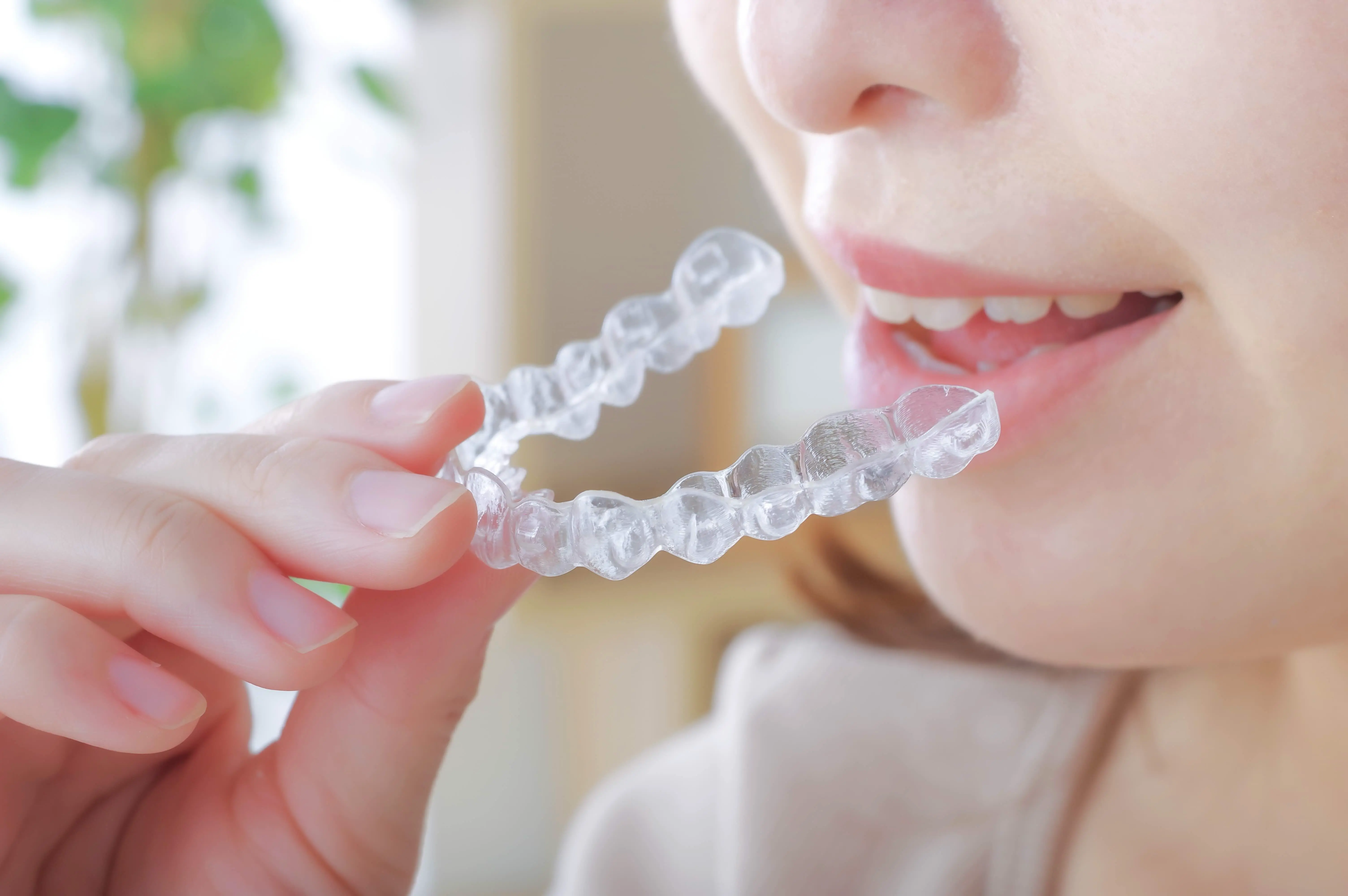
A custom night guard is a thin shell of dental material — typically 2 to 4 millimeters thick at the biting surface — molded precisely to fit either the upper or lower arch of teeth. The appliance covers the chewing surfaces and slightly wraps around the cheek-side and tongue-side of the teeth to grip in place during sleep.
The construction has two functional zones:
- Tooth-contact surface — conforms exactly to the teeth being protected, providing retention and even pressure distribution
- Bite surface — the side that the opposite arch contacts during clenching or grinding, designed to absorb force and protect both upper and lower teeth
Materials vary by clinical need. The four main material types — soft, hard acrylic, dual-laminate, and NTI — are covered in detail in types of night guards.
What a night guard is NOT
To clarify common misconceptions:
- Not a retainer — retainers hold teeth in position after orthodontic treatment; night guards protect from grinding force
- Not an aligner — aligners (Invisalign) move teeth into new positions; night guards protect existing positions
- Not a sleep apnea device — mandibular advancement devices treat sleep-disordered breathing; standard night guards do not
- Not a sports mouthguard — though similar in concept, sports guards are thicker, designed for impact protection during athletics
- Not a TMJ splint — TMJ splints are precision-engineered to reposition the jaw; though related, splints have specific clinical indications beyond simple grinding protection
For TMJ-specific guidance, see night guard for TMJ. For the night guard vs splint distinction in detail, see night guard vs bite splint.
How do night guards protect teeth?
Three protective mechanisms work simultaneously:
1. Force distribution
Without a guard, grinding forces concentrate on the contact points between specific teeth. Forces of 200-250 PSI are common per ADA clinical research, with peak forces in heavy grinders documented above 300 PSI. The guard spreads force across the entire bite surface, dramatically reducing per-tooth load.
2. Material absorption
Hard acrylic and dual-laminate guards absorb a portion of grinding energy through deformation — the material flexes microscopically under load, dissipating force as heat rather than transmitting it to teeth. Soft guards absorb more energy but wear faster.
3. Muscle reflex modulation
Hard guards alter the bite plane slightly, which changes proprioceptive feedback to jaw muscles. Per studies cited in American Academy of Dental Sleep Medicine literature, this can reduce muscle activity by 30 to 40 percent during sleep in some patients, easing morning soreness independently of the protective barrier effect.
Six signs you need a night guard
Dr. Husna Khan evaluates patients for night guard need based on multiple signs aligned with ADA bruxism diagnostic criteria. Any one or combination indicates evaluation:
1. Visible tooth wear
Flattening of cusps, smooth wear facets where teeth meet, chipped enamel edges, or shortened tooth length. Wear patterns from grinding are typically symmetrical and located on the chewing surfaces of molars or biting edges of front teeth.
2. Morning jaw soreness or tightness
Waking with sore jaw muscles, especially in the temples (temporalis muscle) or along the side of the face (masseter muscle). Pain typically improves through the day and returns the next morning.
3. Frequent morning headaches
Tension headaches centered in the temples, often described as a band around the head. Per American Headache Society data, sleep bruxism is linked to recurrent morning headaches in adults.
4. Partner reports of grinding sounds
A bed partner hearing teeth grinding during sleep is one of the most reliable indicators. Many patients are unaware they grind because the activity occurs during deep sleep.
5. Repeatedly cracked fillings or crowns
Dental work that fails sooner than expected — crowns chipping in 2-3 years instead of 10-15, fillings cracking repeatedly, dental work coming loose — often indicates excessive bite force.
6. Bitten cheek or tongue
Bite marks on the inside of the cheek or sides of the tongue, especially when present in the morning, indicate clenching or grinding during sleep.
The four main types
| Type | Material | Lifespan | Best for |
|---|---|---|---|
| Soft | Flexible silicone | 1-3 years | Light grinders, first-time wearers |
| Hard acrylic | Rigid acrylic resin | 5-10 years | Moderate-to-heavy grinders, durability |
| Dual-laminate | Soft inner + hard outer | 3-7 years | Comfort + heavy-grinder protection |
| NTI | Small front-tooth-only | 3-7 years | Tension headaches, clenching |
For complete material comparisons including pros, cons, and clinical decision criteria, see types of night guards.
How is a night guard made?
Custom guards follow a standardized process at Serenity Dental.
Visit 1: Examination and impressions (45-60 min)
- Clinical exam looking for wear patterns, jaw muscle tenderness, TMJ joint sounds
- Discussion of symptoms and grinding history
- X-rays as needed to evaluate teeth and jaw structure
- Digital scan or traditional impressions of upper and lower arches
- Bite registration (recording how teeth come together)
- Selection of material type based on clinical findings
- Records sent to dental laboratory
Lab fabrication (7-14 days)
- Lab pours models from impressions
- Guard fabricated using selected material
- Polished and trimmed to final shape
Visit 2: Delivery and adjustment (30-45 min)
- Try the guard for fit, comfort, and retention
- Bite check using articulating paper to verify even contact
- Adjustment of any pressure points
- Patient education on insertion, removal, cleaning, storage
- Follow-up visit scheduled at 2-4 weeks
Optional Visit 3: Adjustment follow-up (15-30 min)
About 30 percent of patients need 1-2 minor adjustment visits in the first month to fine-tune the fit. Adjustments are typically included in the original guard fee.
For fabrication detail across all guard types, see types of night guards and custom vs over-the-counter night guards.
Cost overview
Custom night guard cost varies by material (soft, hard acrylic, dual-laminate, or specialty NTI), your specific clinical needs, and your insurance benefits. Over-the-counter options are less expensive but provide significantly less protection and durability.
Insurance coverage
Most PPO insurance plans cover custom night guards at 50 percent after deductible when bruxism is documented and the appliance is coded as CDT D9944 (occlusal guard, hard appliance, full arch). Some plans require pre-authorization. Frequency limit typically allows one guard per 3-5 years.
Medicaid and Medicare Advantage dental coverage for occlusal guards varies substantially by plan — some cover the appliance fully, others not at all, and some cover only after a periodontal or TMJ diagnosis is documented.
For uninsured patients or those wanting predictable cost, the in-office membership plan ($399 individual annual; $299 each additional family member) bundles preventive care plus discounts on additional treatment, including night guards. CareCredit and in-house payment plans are also available.
For a written estimate that reflects your specific case and insurance, call (630) 359-0105 or use online booking. For complete cost detail and insurance navigation, see night guard cost and insurance.
Daily life with a night guard
Adapting to a night guard takes most patients 1 to 2 weeks.
First night
- Brief discomfort from the unfamiliar object in the mouth
- Slightly increased saliva production
- Sleeping position adjustment minor
First week
- Saliva production normalizes by night 3-4
- Most patients sleep through the night with the guard from night 1
- Speech only affected briefly while inserting/removing
- Morning routine adds 30 seconds to clean and store
Long-term
- Guard becomes habitual; many patients feel uncomfortable sleeping without it
- Cleaning routine adds 1-2 minutes daily
- Professional cleaning at 6-12 months helps remove deeper buildup
- Annual fit check at routine dental visits
For comprehensive cleaning protocols, see how to clean a night guard.
When is a night guard NOT enough?
A night guard protects against the damage of grinding but does not always address the underlying cause. Patients with persistent grinding despite proper guard wear may benefit from evaluation for:
- Stress and anxiety — counseling, lifestyle changes, relaxation techniques
- Sleep apnea — per American Academy of Dental Sleep Medicine evidence, sleep apnea correlates strongly with bruxism in adults; a sleep study may be warranted
- Bite imbalances — some grinding is driven by misaligned bite; orthodontic evaluation may help
- Medication side effects — some SSRIs and stimulants increase grinding; medication review with primary care helpful
- Caffeine and alcohol — both increase nighttime grinding intensity
For comprehensive treatment approaches, see how to stop grinding teeth and bruxism and teeth grinding explained.
When should you see a dentist?
Schedule an evaluation if you experience:
- Visible tooth wear or chipping
- Morning jaw pain or headaches
- Partner reports of grinding sounds
- Cracked dental work or recurrent dental problems
- Sensitive teeth without obvious cause (worn enamel)
- Bitten cheek, tongue, or persistent jaw tightness
The exam typically takes 30-45 minutes and may be combined with routine cleaning. Insurance-covered exams often include the bruxism evaluation at no additional cost.
Why do Serenity Dental patients choose us for night guards?
Serenity Dental of Bloomingdale provides:
- All four main night guard types — soft, hard acrylic, dual-laminate, NTI
- Digital scanning for precise fit (no goopy traditional impressions)
- Same-week delivery for most cases
- Bruxism evaluation included in routine exam
- Insurance coordination including pre-authorization where required
- Written cost estimates before treatment
- 2-week follow-up included for fit fine-tuning
- Long-term care including annual fit checks and replacement scheduling
Schedule a night guard consultation at (630) 359-0105. Dr. Husna Khan reviews symptoms, examines for grinding wear patterns, and recommends the right material based on grinding intensity and comfort priorities.
Related: night guards service page · custom vs OTC · cost and insurance.
Cost figures in this article are typical ranges for the Chicago area, compiled from regional fee data. They are not quotes from Serenity Dental of Bloomingdale; your fee depends on exam findings, materials, and insurance benefits, and we provide a written, itemized estimate before any treatment begins.
FAQs
What is a night guard?
How does a night guard work?
Who needs a night guard?
What is the difference between a night guard and an occlusal splint?
How long do night guards last?
Are night guards safe to wear every night?
Can a night guard stop teeth grinding?
How much does a night guard cost?
Educational content only. Recommendations are personalized after an exam and any needed imaging.
About this article
Reviewed by Dr. Husna Khan, DDS, of Serenity Dental of Bloomingdale. Bruxism evaluation and night guard protocols here align with American Dental Association (ADA) clinical practice guidance on bruxism diagnosis and protective appliance therapy, including documented wear-pattern assessment, material selection by grinding intensity, and structured follow-up adjustment protocols.
Educational content. Individual treatment recommendations depend on clinical evaluation. Cited sources: American Dental Association (ADA) clinical practice guidance on occlusal appliance therapy, Centers for Disease Control and Prevention (CDC) National Health Interview Survey data on adult bruxism prevalence, NIH National Institute of Dental and Craniofacial Research data on tooth wear and bruxism, FDA labeling guidance for dental appliances, AAOMS guidelines on temporomandibular disorders.
Related: night guards service page.
Need help with this in real life?
Reading helps. Talking to someone who can look at your actual teeth and symptoms helps more. If you want a clear next step, we’re here.
Related articles
Night guard cost and insurance: 2026 pricing guide
Custom night guards run $300 to $800 in the Chicago area. What PPO plans pay under CDT D9944, soft vs hard vs NTI pricing, OTC and mail-order compared.
Read article →Custom vs over-the-counter night guards: honest comparison
Custom dental night guards vs OTC boil-and-bite. Cost $300-$800 vs $20-$50. Compare fit, durability, protection, and long-term value.
Read article →