Sedation Dentistry
Sedation dentistry in Bloomingdale, IL
Dental anxiety keeps a lot of people away from care they need. Sedation dentistry changes that. At Serenity Dental, Dr. Husna Khan and Dr. Rafia Jabeen offer nitrous oxide and oral conscious sedation depending on what each person needs, from mild relaxation to deep calm; genuinely complex cases are referred to a trusted local oral surgeon.
You stay conscious and can respond throughout. The goal isn't to put you to sleep; it's to make dental care genuinely manageable for people who've been avoiding it.
Who sedation dentistry helps
Sedation isn't only for extreme dental phobia. There are several situations where it makes treatment safer and more comfortable for everyone involved.
Dental anxiety or phobia
From mild nerves to full avoidance, sedation resets the experience and makes it possible to get care you've been putting off.
Strong gag reflex
A hyperactive gag reflex can make even a routine cleaning uncomfortable. Sedation significantly reduces the gag response.
Long or complex procedures
Multiple extractions, implant placement, or significant restorative work can be completed in fewer visits under sedation.
Low tolerance for local anaesthetic
Some patients don't numb fully or find injections highly stressful. Sedation makes local anaesthetic administration easier for both patient and dentist.
Sensitivity to dental sounds or smells
The drill, the suction, the smell of the materials: sensory sensitivities that cause significant distress respond well to sedation.
Children needing extra support
Young children or kids with special needs who can't complete treatment with standard technique. Dr. Rafia Jabeen discusses sedation options with parents at the consultation.
Nitrous oxide (laughing gas)
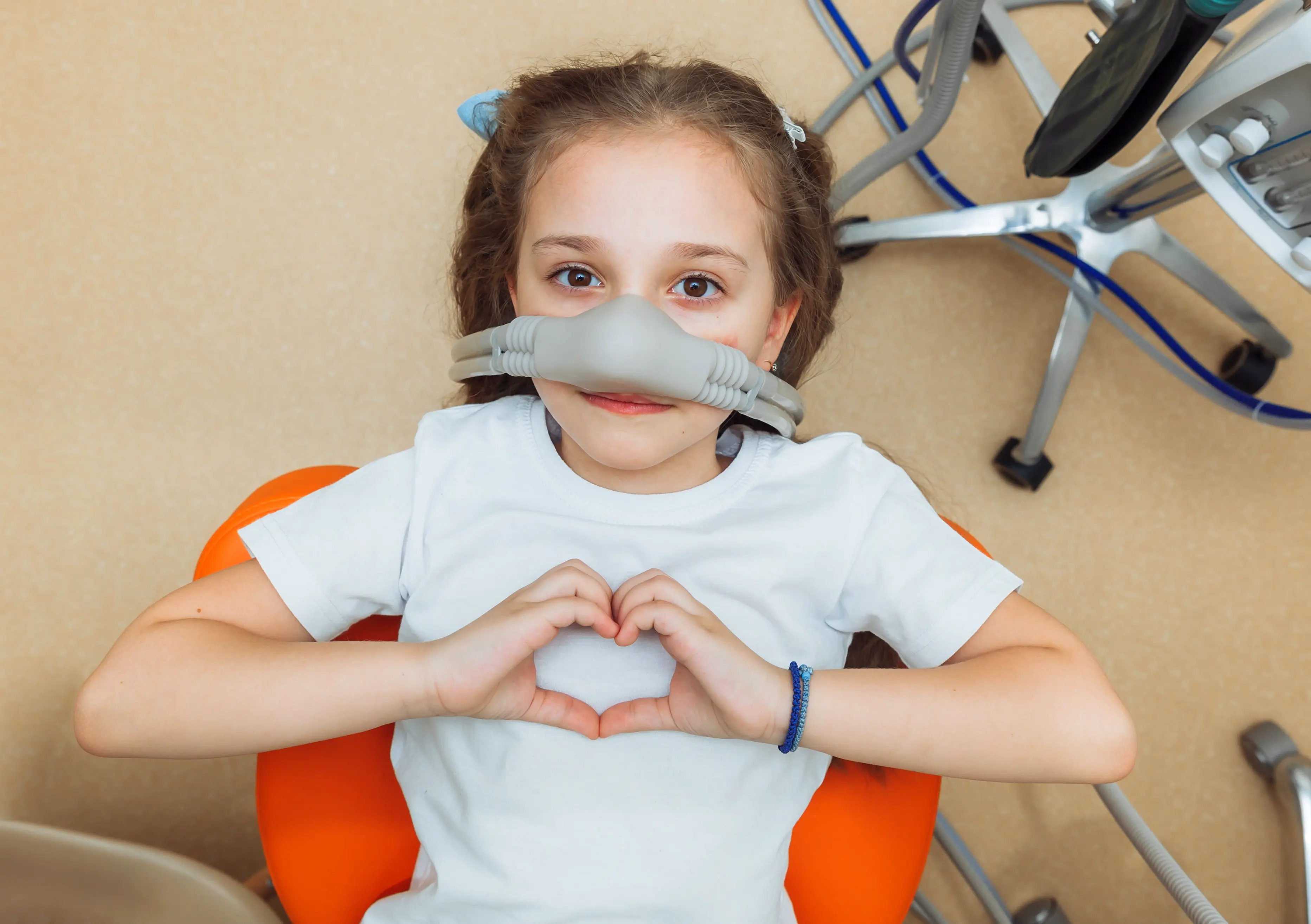
Nitrous oxide is the most widely used dental sedation agent and the one with the longest safety record. A small nose mask delivers a carefully regulated mix of nitrous oxide and oxygen. Within minutes, most patients feel noticeably calmer, with a warm, slightly floaty sensation without loss of consciousness.
2–3 min
Time to take effect
5 min
Recovery after mask removed
70%
Oxygen in the mix
Same day
Return to normal activities
Nitrous works well for
- ✓Mild to moderate anxiety
- ✓Routine procedures: cleanings, fillings, extractions
- ✓Children 3+ who can breathe through their nose
- ✓Patients who want to drive themselves home
- ✓Short appointments where quick recovery matters
May not be sufficient for
- →Severe anxiety that nitrous alone can't manage
- →Nasal congestion or blocked airways
- →Very lengthy or complex procedures
- →Patients who don't tolerate the mask
- →Those who need deeper sedation for comfort
The standard dental concentration is 30% nitrous oxide and 70% oxygen, so you're actually breathing more oxygen than room air. The "laughing gas" name is a misnomer from recreational use at much higher concentrations. At clinical dental doses, the effect is relaxation and mild dissociation, not euphoria.
Oral conscious sedation
Oral sedation uses a prescribed medication taken by mouth before the appointment. You become drowsy and deeply relaxed, awake and able to respond if asked, but significantly less aware of what's happening and often with little or no memory of the procedure afterward.
Medication is prescribed at the consultation, usually triazolam (Halcion), diazepam (Valium), or hydroxyzine for children. Fasting instructions given in writing.
Taken 30–60 minutes before the appointment. A companion drives you to the office. The medication begins working in transit.
Dr. Husna Khan or Dr. Rafia Jabeen confirms the sedation level is appropriate before starting. Nitrous oxide is often added alongside. Vital signs monitored throughout.
A companion drives you home. Grogginess lasts several hours. No driving, operating machinery, or making important decisions that day. Full recovery is typically complete by evening.
Reduced memory is intentional
A patient who doesn't have a vivid memory of a difficult procedure is more likely to return for future care, and less likely to carry dental anxiety further into adulthood. The amnesia effect of benzodiazepines is a clinical feature, not a side effect.
Comparing your sedation options
The right choice depends on your anxiety level, the procedure, and practical factors like whether you need to drive yourself home. Dr. Husna Khan will recommend the option that fits your situation, not the most intensive one by default. Genuinely complex cases are referred to a local oral surgeon.
| Factor | Nitrous oxide | Oral sedation |
|---|---|---|
| Consciousness | Fully awake | Drowsy, aware |
| How given | Nose mask | Pill / liquid |
| Onset | 2–3 minutes | 30–45 minutes |
| Recovery | ~5 minutes | Several hours |
| Fasting needed | No | Yes — 6–8 hrs |
| Drive home | Yes | Companion required |
| Memory of visit | Normal | Often reduced or absent |
| School/work same day | Yes | No · rest at home |
| Typical cost (added) | $50-$125 typical | $150-$500 typical |
Cost figures on this page are typical Chicago-area ranges, not quotes. Fees depend on exam findings, materials, and insurance benefits; we provide a written, itemized estimate before treatment.
How much does it cost and what does insurance cover?
Sedation adds cost to any appointment; the amount depends on which type and how long the procedure runs. Most PPO dental plans cover nitrous oxide at partial rates for covered procedures. Oral sedation coverage varies significantly by plan.
Nitrous oxide
$50-$125 typical
Often partially covered by PPO insurance when combined with a covered procedure. Most affordable option.
Oral sedation
$150-$500 typical
Coverage inconsistent across plans. Sometimes covered when medically necessary documentation is submitted.
Insurance and payment at Serenity Dental
- ✓ We verify your sedation benefits before scheduling, no surprises at checkout
- ✓ Illinois Medicaid (All Kids / EPSDT) may cover sedation when medically necessary
- ✓ PPO plans: nitrous most commonly covered, oral sedation requires case-by-case review
- ✓ No insurance? We explain out-of-pocket costs and payment options before you decide
Sedation dentistry near me in Bloomingdale, IL
We see patients from Bloomingdale, Glendale Heights, Carol Stream, Roselle, Addison, Hanover Park, and surrounding DuPage County communities. Dr. Husna Khan and Dr. Rafia Jabeen offer sedation consultations for patients who've been avoiding dental care due to anxiety, previous difficult experiences, or complex treatment needs.
Not sure which option is right for you? Call (630) 359-0105 and describe your situation and we'll tell you honestly what makes sense before you book.
Sedation Dentistry FAQs
The questions patients ask most before deciding whether sedation is right for them.
What is sedation dentistry?
Sedation dentistry uses medication to help patients relax during treatment. In our office it ranges from mild relaxation (nitrous oxide) to deep calm with reduced memory of the procedure (oral conscious sedation). You remain conscious throughout; it is not general anaesthesia. The goal is making dental care manageable for patients with anxiety, a strong gag reflex, or the need for lengthy work.
Is sedation dentistry safe?
Yes, when administered by a trained provider. Nitrous oxide has a decades-long safety record. Oral sedation requires full health history review, weight-based dosing, and monitoring throughout. Dr. Husna Khan and Dr. Rafia Jabeen review every patient's medical history and medications before recommending any sedation.
How much does sedation dentistry cost?
Nitrous oxide typically adds $50-$125 per visit (Chicago-area typical). Oral sedation generally runs $150-$500. Many PPO plans cover nitrous at partial rates; oral sedation coverage is less consistent. We provide a complete cost estimate before scheduling any in-office sedation appointment.
Will I be unconscious during sedation?
Not with nitrous or oral sedation, which both keep you awake and responsive. Deeper IV sedation and general anaesthesia are not offered at our office; when a case truly needs them, we refer to a local oral surgeon or hospital-based provider.
Does nitrous oxide (laughing gas) work for dental anxiety?
Yes. Nitrous is the most widely used sedation option. It takes effect within 2–3 minutes, significantly reduces anxiety, and wears off within 5 minutes of removing the mask. Most patients drive themselves home and resume normal activities the same day. It works well for mild to moderate anxiety, but may not be sufficient for severe phobias or lengthy treatment.
How long does sedation dentistry last?
Nitrous wears off within 5 minutes. Oral sedation lasts several hours, so patients need a driver and should rest for the day. A companion is always required for oral sedation appointments. Written post-sedation instructions are given at every appointment.
Do I need to fast before a sedation appointment?
Nitrous oxide requires no fasting. Oral sedation requires nothing by mouth for 6-8 hours before the appointment; exact instructions vary by age and medication and are given in writing when scheduling. Not following fasting instructions is a safety issue and may require rescheduling.
Who is a good candidate for sedation dentistry?
Good candidates include patients with significant dental anxiety or phobia, a strong gag reflex that makes treatment difficult, low pain tolerance, sensitivity to dental sounds or smells, need for extensive treatment in fewer visits, or difficulty sitting still for long periods. Patients with certain medical conditions, some medications, or pregnancy require additional evaluation before sedation is recommended.
What drug is used for oral sedation at the dentist?
Oral sedation in dentistry most commonly uses benzodiazepines: triazolam (Halcion) or diazepam (Valium) are the most frequently prescribed. Hydroxyzine is an antihistamine-based alternative sometimes used for children or patients who need a milder option. The specific medication depends on the person's age, weight, health history, anxiety level, and what procedure is planned.
Can children receive sedation at the dentist?
Yes. Nitrous oxide is routinely used for children from age 2–3. Oral sedation is appropriate for some children depending on age, weight, and treatment. Dr. Rafia Jabeen offers nitrous for pediatric appointments and discusses oral sedation when a child hasn't been able to complete treatment without it. All options are discussed with parents before proceeding.
Educational content only. Sedation decisions are made after evaluating each patient's health history, medications, and procedure needs. Individual situations vary.
Related services
Pediatric Dentistry
Dr. Rafia Jabeen sees children from their first tooth through their teen years. Nitrous oxide available for children who need extra support.
Emergency Dentistry
Tooth pain, broken teeth, swelling: we see urgent cases. Sedation can be arranged for emergency procedures when needed.
Tooth Extractions
Nitrous oxide or oral sedation is routinely available for extractions, including wisdom teeth removal.
Learn more about sedation dentistry
In-depth guides covering anxiety, sedation levels, laughing gas, and pediatric options.
Anxiety
Dental anxiety and sedation options
Sedation levels matched to anxiety severity and what to say before your appointment.
Basics
Sleep dentistry: are you actually asleep?
What 'sleep dentistry' actually means versus general anaesthesia.
Nitrous oxide
Laughing gas at the dentist
How nitrous oxide works, who it suits, and why it wears off in minutes.
Kids
Pediatric sedation dentistry
Sedation options for children: safety, dosing, and what parents should know.
Quick facts
| Levels offered | Nitrous oxide (laughing gas) and oral conscious sedation, in office |
|---|---|
| Driver required | Yes for oral sedation; no for nitrous |
| Recovery | Nitrous: minutes; oral: 4-6 hours |
| Typical cost | $50-$125 (nitrous); $150-$500 (oral) per visit, Chicago-area typical |
| Eligibility | Most healthy adults; medical history reviewed first |
| Best for | Dental anxiety, gag reflex, long procedures, complex surgical care |
Clinical references
We rely on guidance from established clinical organizations. The references below inform how we explain options, expected outcomes, and aftercare on this page.
- American Dental Association Guidelines for the Use of Sedation and General Anesthesia by Dentists define minimal, moderate, and deep sedation levels and required training.
- American Academy of Pediatric Dentistry publishes age-specific sedation guidance for managing dental anxiety and treatment access in children.
- Cochrane Oral Health Group evidence reviews on conscious sedation in dentistry across pediatric and adult populations.
- American Society of Anesthesiologists monitoring standards apply to all levels of dental sedation, including pulse oximetry, blood pressure, and capnography for moderate-and-deeper sedation.
For patient education only. Treatment recommendations depend on individual diagnosis. Reviewed by Dr. Husna Khan, DDS.
Visit us
Sedation Dentistry at our Bloomingdale, IL office
Serenity Dental of Bloomingdale is at 1 Tiffany Pt, Suite 205, Bloomingdale, IL 60108. Patients come to us for sedation dentistry from Bloomingdale and from Glendale Heights, Roselle, Carol Stream, Itasca, Medinah, Addison, and Bartlett. Our team speaks 7 languages, including Spanish, Polish, Hindi, Urdu, and Arabic.
Hours
- Mon9:00 AM – 5:00 PM
- Tue10:00 AM – 6:30 PM
- Wed9:00 AM – 5:00 PM
- Thu9:00 AM – 5:00 PM
- Fri9:00 AM – 5:00 PM
- Sat9:00 AM – 3:00 PM
- SunClosed
Saturday hours and Tuesday evenings available.
Book sedation dentistry
Online booking works for consultations and routine visits. For pain, swelling, or a broken tooth, call so we can fit you in sooner.