Simple · Surgical · Sedation Available
Wisdom teeth removal in Bloomingdale, IL
Not every wisdom tooth needs to come out. Dr. Husna Khan evaluates your X-rays and gives you a direct answer -- then, if removal is recommended, performs simple or surgical extractions with nitrous oxide or oral sedation available for patients who want it.
Written cost estimate before scheduling. Most PPO dental plans cover wisdom tooth removal at major surgical benefit rates. Same-day emergency appointments for acute wisdom tooth pain.
Emergency wisdom tooth pain? Call us -- same-day slots prioritized for acute pain patients.
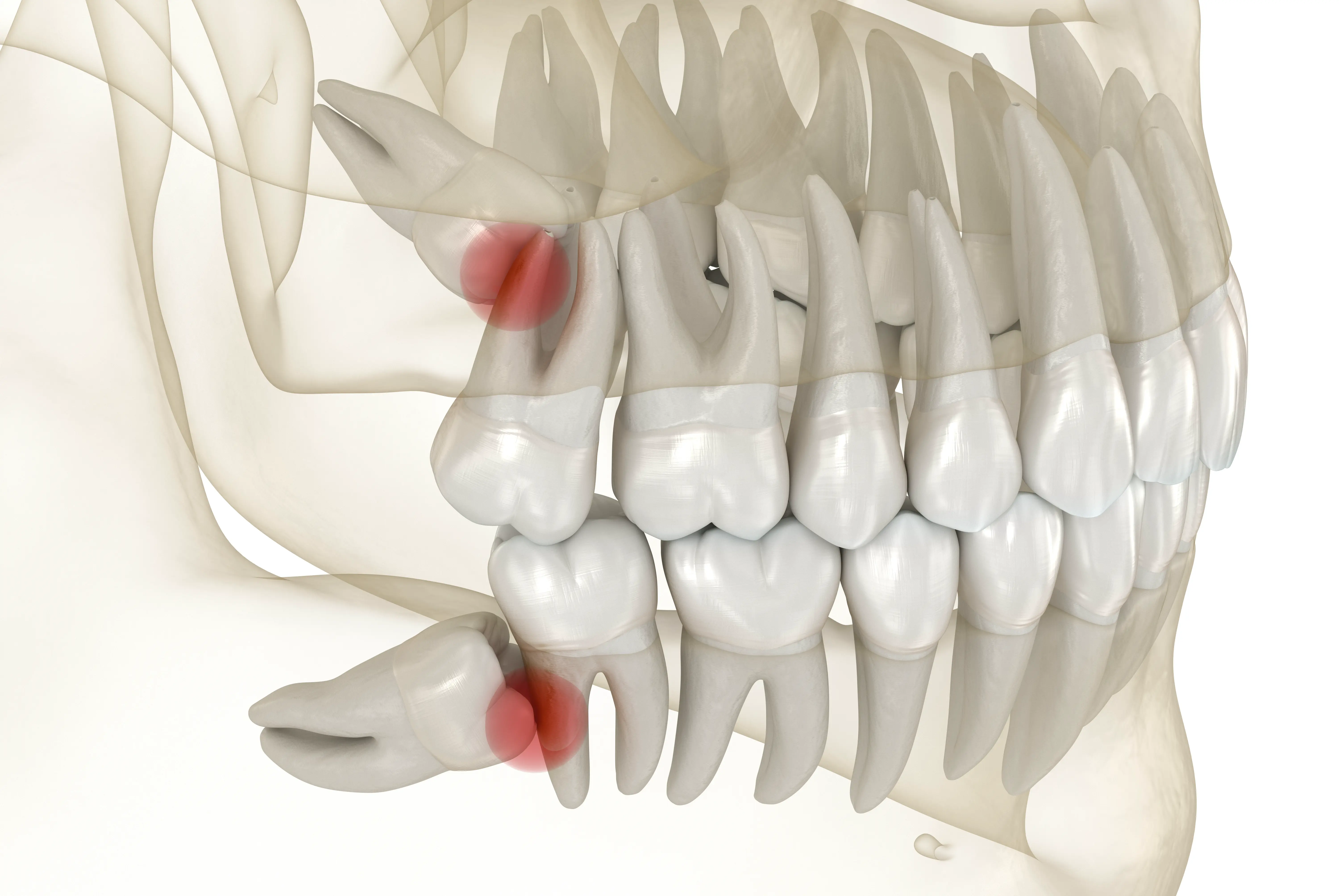
When wisdom teeth need to come out
Not all wisdom teeth require removal. Dr. Husna Khan reviews your panoramic X-ray and makes a clear recommendation either way.
Removal is recommended when
- →Tooth is impacted -- partially or fully trapped below the gumline
- →Partially erupted tooth is collecting bacteria and causing recurring infection
- →Pressure from erupting tooth is crowding or damaging adjacent molars
- →A cyst or other pathology has developed around the tooth
- →Position makes effective cleaning impossible long-term
- →Ongoing pain or pericoronitis (gum inflammation around the crown)
Removal is not always necessary when
- ✓Tooth has fully erupted in correct alignment with the bite
- ✓Adequate space exists and surrounding gum tissue is healthy
- ✓Tooth is accessible for effective daily brushing and flossing
- ✓No pressure on adjacent teeth is visible on imaging
- ✓Tooth is fully impacted with no infection risk and stable position
- ✓Patient has no pain, no recurring infection, and healthy adjacent teeth
The four types of wisdom tooth impaction
Impaction type determines procedure complexity, recovery length, and risk. Dr. Husna Khan identifies the type from your X-ray at the evaluation.
Gold = wisdom tooth. White = adjacent molar. Horizontal impaction always requires surgical extraction.
| Type | Angle | Complexity | Notes |
|---|---|---|---|
| Mesial | Angled toward front of mouth | Moderate | Most common impaction type |
| Distal | Angled toward back of mouth | Moderate | Least common type |
| Vertical | Upright, blocked from erupting | Moderate | Sometimes partially erupts |
| Horizontal | Lying on side into molar root | High | Most complex -- always surgical |
Sedation options
Every wisdom tooth removal includes local anesthesia. Additional sedation is available based on your comfort level and case complexity.
Local anesthesia
Numbs the surgical site completely. Standard for all extractions. You remain fully awake and aware during the procedure.
Best for: Most patients for simple erupted teeth
Cost: Included
Nitrous oxide
Inhaled through a small nose mask. Produces relaxation and mild euphoria without sleep. Wears off within minutes -- you can drive yourself home.
Best for: Mild dental anxiety, simpler cases
Cost: +$50 to $100
IV sedation (by referral)
Administered through a vein at the oral surgery office we refer complex cases to. You remain in a twilight state with minimal awareness. A driver is required. Most patients have little memory of the procedure.
Best for: Significant anxiety, multiple teeth, complex surgical cases
Cost: +$200 to $600
How long does recovery take?
Most patients are comfortable within 3 to 5 days. Here is what to expect at each stage.
Immediate aftercare
- ·Bite gauze for 30-60 min to control bleeding
- ·Ice packs 20 min on / 20 min off for 24 hrs
- ·No straws, no spitting, no rinsing forcefully
- ·Soft diet only -- start with liquids
- ·Take pain relief as prescribed before numbness wears off
Peak swelling
- ·Swelling peaks at 48-72 hours -- this is normal
- ·Switch from ice to moist heat on day 2 or 3
- ·Continue soft diet: eggs, yogurt, mashed potatoes
- ·Gentle warm salt water rinses after 24 hours
- ·Most patients take 1-2 OTC ibuprofen + acetaminophen
Rapid improvement
- ·Swelling noticeably subsides
- ·Sutures dissolve or are removed around day 7
- ·Begin transitioning to slightly firmer soft foods
- ·Most patients return to work or school
- ·Call us if pain is worsening -- may indicate dry socket
Full tissue healing
- ·Gum tissue closes over the socket
- ·Normal eating typically resumes by week 2
- ·Socket fully closes over 3-6 weeks
- ·Follow-up imaging if clinically indicated
- ·No restrictions after full healing is confirmed
How much does it cost and what does insurance cover?
Wisdom tooth removal cost depends on whether the tooth is erupted or impacted, the impaction type, how many teeth are removed, and whether sedation is used. The per-tooth ranges below reflect typical 2026 pricing across the Chicago metropolitan area before insurance. Most dental PPO plans cover removal when it is clinically indicated.
| Simple extraction (erupted) | $200 to $700 per tooth |
| Soft tissue impaction | $250 to $850 per tooth |
| Partial bony impaction | $300 to $950 per tooth |
| Complete bony impaction | $350 to $1,100 per tooth |
| Nitrous oxide | +$50 to $100 |
| IV sedation (at referral office) | +$200 to $600 |
| Typical PPO coverage | 50 to 80% after deductible |
| Estimated cost with insurance | $50 to $200 per tooth |
Per-tooth ranges reflect 2026 Chicago metropolitan-area pricing and national benchmarks (including the American Dental Association) and are not a treatment quote. Removing all four wisdom teeth in one visit usually lowers the per-tooth cost. A written itemized estimate is provided before scheduling, and we verify your specific dental benefits at the consultation.
Schedule a wisdom teeth evaluation
Dr. Husna Khan reviews your X-ray and tells you clearly whether your wisdom teeth need to come out, which ones, and what the procedure would involve. No pressure, no default removal recommendation.
Serving Bloomingdale, Glendale Heights, Carol Stream, Addison, Schaumburg, and DuPage County.
Emergency wisdom tooth pain
Severe pain, swelling of the jaw or cheek, difficulty swallowing, or fever alongside wisdom tooth pain require same-day evaluation. Call (630) 359-0105 immediately.
In-depth guides on wisdom tooth removal
Sixteen patient guides authored by Dr. Husna Khan covering every stage of wisdom tooth care -- from understanding eruption and impaction through procedure decisions, sedation prep, recovery, and complications.
Related from our extraction guides
Wisdom-tooth removal is one type of extraction. These guides cover topics that apply to any tooth extraction.
Tooth extraction healing stages
Day-by-day biological healing from clot formation through bone remodeling at six months
Tooth extraction cost
Per-tooth fees for simple and surgical extractions across all tooth types with PPO coverage breakdown
Tooth Extraction
Tooth Extraction Aftercare: Day-by-day Dos and Don'ts
Complete tooth extraction aftercare checklist -- gauze, rinsing, smoking, straws, sleeping position, brushing, and exercise. What to do and avoid by day.
Dental Bone Graft
Types of Dental Bone Grafts: Autograft to Synthetic
The four bone-graft materials in dentistry: what each is, where it's from, and how to choose, with guidance for religious, ethical, or vegan concerns.
Dental Bone Graft
What Is a Dental Bone Graft? A Complete Patient Guide
A dental bone graft rebuilds jawbone where a tooth was lost. What it is, when it's needed, why bone disappears, and how it restores volume for an implant.
Broken Tooth
Broken Tooth Extraction: What to Expect
How broken tooth extraction differs from simple extraction -- surgical approach, cost, recovery, and whether a regular dentist can remove a broken tooth.
Infected Tooth
Infected Tooth Extraction: When It's Needed and What to Expect
When an infected tooth needs extraction vs saving, antibiotics before extraction, post-op infection signs, and what recovery looks like.
Tooth Extraction
Root Canal vs Extraction: How to Decide
Tooth extraction vs root canal -- cost, pain, success rates, longevity, and when each makes sense. Clear framework for deciding which procedure is right.
Sinus Lift
What Is a Sinus Lift? How It Makes Upper Implants Possible
A sinus lift adds bone to the upper jaw for safe implant placement. Why bone loss makes it necessary, lateral vs. crestal approaches, and what to expect.
Related services at Serenity Dental
Tooth Extractions (general)
Simple and surgical extractions for damaged or non-restorable teeth beyond wisdom teeth
Sedation Dentistry
Nitrous oxide and oral sedation for anxious extraction patients, with IV sedation by referral
Emergency Dental Care
Same-day appointments for severe wisdom tooth pain, infection, or facial swelling
Quick facts
| Treatment time | 30 to 60 minutes for all four |
|---|---|
| Anesthesia | Local; nitrous or oral sedation common; IV by referral |
| Recovery | 3 to 5 days off normal activity; 1 to 2 weeks for full soft-tissue healing |
| Typical cost | $200 to $1,100 per tooth depending on impaction type |
| Best age | Late teens to early twenties before roots fully form |
| When to remove | Pain, infection, cyst formation, crowding, or recurring pericoronitis |
Cost figures on this page are typical Chicago-area ranges, not quotes. Fees depend on exam findings, materials, and insurance benefits; we provide a written, itemized estimate before treatment.
Clinical references
We rely on guidance from established clinical organizations. The references below inform how we explain options, expected outcomes, and aftercare on this page.
- American Association of Oral and Maxillofacial Surgeons guidelines indicate that impacted third molars often require removal when associated with infection, pathology, or symptomatic crowding.
- Cochrane Oral Health Group evidence reviews compare outcomes of prophylactic removal versus retention of asymptomatic wisdom teeth.
- American Dental Association guidance on third-molar imaging, sedation safety, and informed consent for elective extraction.
For patient education only. Treatment recommendations depend on individual diagnosis. Reviewed by Dr. Husna Khan, DDS.
Wisdom teeth removal -- questions answered
Do I need to get my wisdom teeth removed?
What is an impacted wisdom tooth?
How is wisdom tooth removal performed?
Does wisdom tooth removal hurt?
How long does wisdom tooth removal take?
How much does wisdom teeth removal cost?
How long is wisdom teeth recovery?
What is dry socket and how do I prevent it?
Can I drive myself home after wisdom tooth removal?
What can I eat after wisdom teeth removal?
Educational content only. Recommendations are personalized after an exam and any needed imaging.
Book Online
Schedule your dental appointment online
Choose a time that works for you using our secure online booking tool.
This is a good option for new patient visits, routine exams, and many general dental appointments. If you have severe pain, swelling, or a broken tooth, call us so we can help you more quickly.
Having trouble with the booking tool, or not sure which appointment type fits your situation? Call us and we’ll help you choose the right visit.
Visit us
Wisdom Teeth Removal at our Bloomingdale, IL office
Serenity Dental of Bloomingdale is at 1 Tiffany Pt, Suite 205, Bloomingdale, IL 60108. Patients come to us for wisdom teeth removal from Bloomingdale and from Glendale Heights, Roselle, Carol Stream, Itasca, Medinah, Addison, and Bartlett. Our team speaks 7 languages, including Spanish, Polish, Hindi, Urdu, and Arabic.
Hours
- Mon9:00 AM – 5:00 PM
- Tue10:00 AM – 6:30 PM
- Wed9:00 AM – 5:00 PM
- Thu9:00 AM – 5:00 PM
- Fri9:00 AM – 5:00 PM
- Sat9:00 AM – 3:00 PM
- SunClosed
Saturday hours and Tuesday evenings available.
Book wisdom teeth removal
Online booking works for consultations and routine visits. For pain, swelling, or a broken tooth, call so we can fit you in sooner.