Dental Bonding
Dental bonding for a chipped tooth: cost, process, and what to expect
Bonding can fix a chipped front tooth in a single 30-45 minute visit. How the repair works, how long it lasts, and when you need a crown instead.
Cost figures in this article are typical ranges for the Chicago area, compiled from regional fee data. They are not quotes from Serenity Dental of Bloomingdale; your fee depends on exam findings, materials, and insurance benefits, and we provide a written, itemized estimate before any treatment begins.
Dental bonding is the most common professional repair for a chipped front tooth. A skilled cosmetic dentist applies tooth-colored composite resin to the chipped area, sculpts it to match the original tooth shape, cures it with a blue light, and polishes the surface to a natural gloss in 30 to 45 minutes total. The cost typically runs $300–$600 per tooth for chip repair, with insurance often covering 50 to 80 percent when the chip is restorative (covered by basic restorative benefits as CDT codes D2330-D2335). Composite bonding handles chips ranging from tiny edge nicks up to about one-third of the visible tooth surface; larger fractures may need a veneer or crown. This guide walks through what to expect at each stage, when bonding is appropriate, and what to do immediately after chipping a tooth.

Written by Dr. Husna Khan, DDS
Serenity Dental of Bloomingdale · April 28, 2026
Same-day or next-day chipped tooth emergencies welcomed. Call (630) 359-0105 to schedule.
For the broader picture of bonding options, see the dental bonding service page. To learn the procedure step by step, see dental bonding procedure. Related: does dental bonding hurt.
Why does bonding work so well for chips?
A chipped tooth has lost a small piece of enamel, with an uneven edge or surface left behind. Composite resin bonding solves the problem in three ways:
- Restores shape: The composite is sculpted to match the original tooth contour
- Bonds chemically to enamel: Phosphoric acid etching plus a bonding agent creates a durable connection
- Matches color: Multi-shade composite blends with surrounding enamel for an invisible repair
The American Dental Association considers direct composite bonding the standard treatment for small to moderate anterior tooth fractures (chips on front teeth) when the pulp is not exposed and the tooth structure is otherwise sound.
Types of chips bonding can fix
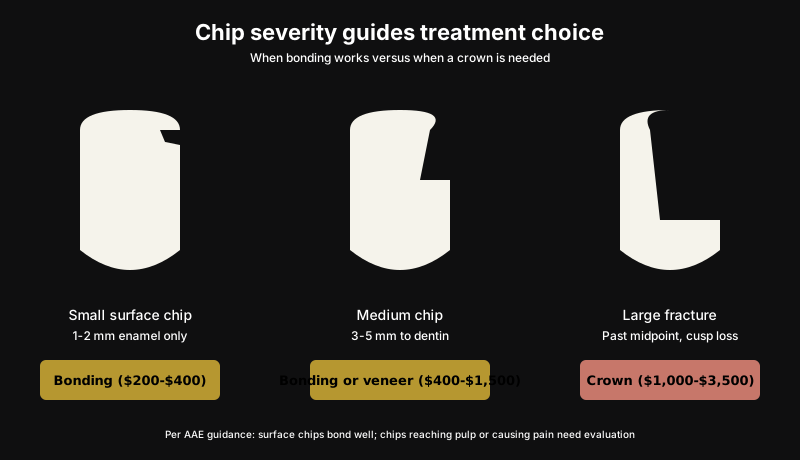
Not all chips are the same. Tooth-colored composite handles most categories well, with a few exceptions.
| Chip type | Description | Bonding outcome |
|---|---|---|
| Tiny edge nick | <1 mm chip on biting edge | Smoothing alone (no composite) often enough |
| Small corner chip | Sharp piece off corner | Excellent; 30-min repair |
| Medium chip with edge involvement | Notch in biting edge | Very good; 45-min repair |
| Cusp tip fracture | Tip of canine broken | Good; may need extra reinforcement |
| Half the tooth missing | Major loss of structure | Marginal; veneer or crown often better |
| Chip with visible crack into root | Fracture line below gumline | Bonding alone insufficient; crown needed |
| Chip with pulp exposure (red dot visible) | Inner nerve exposed | Root canal first, then crown |
Roughly one-third of the visible tooth marks the dividing line between “bond it” and “crown it” — bonding above that threshold, crown below. Per American Dental Association clinical guidance on anterior tooth fractures, this 30 to 35 percent threshold is widely accepted as a clinical decision point.
What should you do in the first 24 hours?
If you have just chipped a tooth, take these steps before the dental visit:
- Save any tooth fragment — store in milk or saliva (saline if available); avoid tap water for storage longer than 30 minutes
- Rinse mouth gently with warm water to clear debris
- Control bleeding with gentle pressure using gauze or clean cloth for 5 to 10 minutes if needed
- Reduce swelling with a cold compress on the cheek (15 minutes on, 15 off)
- Cover sharp edges with sugar-free gum or dental wax if the chip is rough against the lip or tongue
- Avoid chewing on the affected side
- Manage pain with over-the-counter ibuprofen 400 to 600 mg every 6 hours if needed (per package directions)
- Call a dentist within 24 to 48 hours for evaluation
Per International Association of Dental Traumatology emergency protocols, the chip repair has the best outcome when treated within 1 week, ideally within 24 hours for clean fractures.
What not to do
- Do not apply aspirin directly to the gum (causes chemical burns)
- Do not use over-the-counter “tooth bonding” kits sold online (poor results, can damage tooth)
- Do not ignore the chip thinking it will heal (teeth do not regenerate)
- Do not chew on the affected tooth even if it does not hurt
- Do not delay treatment for cosmetic reasons — chips can propagate into fractures
What happens at the appointment?
A typical chipped tooth bonding visit at Serenity Dental of Bloomingdale follows this sequence.
1. Consultation and exam (5 to 10 minutes)
Dr. Husna Khan examines the tooth, takes a periapical X-ray to confirm there is no deeper crack into the pulp or root, discusses bonding versus alternative options, and provides a written cost estimate.
2. Shade selection (3 to 5 minutes)
The shade guide is held against the tooth in good lighting before any drying takes place. Most cases use 1 to 3 shades of composite for natural multi-layer color matching.
3. Anesthesia if needed (5 to 7 minutes)
Small chips often need no anesthesia. Larger chips that involve the dentin layer or extend close to the gum may use a small amount of local anesthetic for comfort.
4. Surface preparation (3 to 5 minutes)
The chipped area is gently cleaned with pumice, then etched with 35 to 37 percent phosphoric acid gel for 15 to 20 seconds. The acid is rinsed thoroughly, the tooth is dried, and a thin layer of bonding agent is applied and cured with a blue LED light.
5. Composite layering (10 to 15 minutes)
Tooth-colored composite is placed in 1.5 to 2 millimeter layers, each cured with the LED light for 10 to 20 seconds before the next layer is added. Multi-shade layering recreates the natural dentin-enamel optical effect.
6. Shaping and polishing (10 to 15 minutes)
A series of fine diamond burs and polishing discs shape the bonding to match natural tooth anatomy. Final diamond paste polishing brings the surface to an enamel-like gloss.
7. Bite check (3 minutes)
Articulating paper checks how the bonded tooth contacts the opposite teeth. Adjustments are made until the bite feels even.
Total chairside time runs 30 to 45 minutes for a single small to medium chip.
Pain expectations during and after
For most chip repairs, the procedure is painless. Anesthesia is used at Serenity Dental whenever the chip extends near sensitive areas. Patients describe the experience as similar to a dental cleaning — pressure and water spray, no sharp pain.
After the appointment:
- Day of: Slight tenderness if anesthesia was used; resolves within a few hours
- First 1 to 2 days: Mild cold sensitivity on the bonded tooth as the dentin adjusts
- First week: Bite feels slightly different until the brain adapts to the restored shape
- Beyond first week: Tooth should feel completely normal
If pain persists beyond 1 week or worsens, schedule a follow-up. Persistent pain can indicate the chip extended deeper than initially visible and the pulp may be inflamed.
Bonding cost breakdown for a chip
| Cost component | Range | Insurance coverage |
|---|---|---|
| Consultation visit | $50-$150 | Often included with treatment |
| X-ray (PA periapical) | $25-$50 | Usually covered 80-100% |
| Anesthesia if needed | Included in fee | Included |
| Bonding repair (small chip) | $300-$600 | 50-80% (D2330-D2331) |
| Bonding repair (medium chip) | $350-$700 | 50-80% (D2331-D2332) |
| Polish at follow-up | Free at Serenity Dental | N/A |
Typical out-of-pocket scenarios
Small chip, $350 fee, PPO with $50 deductible and 80% coverage:
- Deductible: $50
- Remaining: $300
- Insurance pays 80%: $240
- Patient out-of-pocket: $110
Medium chip, $300–$600 fee, no insurance:
- Patient out-of-pocket: $110
- Optional CareCredit financing: roughly $19/month over 6 months at 0% promotional interest, subject to approval
Two adjacent chips bonded same visit, $700 total, 50% PPO, deductible already met:
- Insurance pays: $350
- Patient out-of-pocket: $110
When is bonding not the right choice?
Some chipped teeth need different treatment. Honest consultation discusses these scenarios.
Crown territory
- Chip exceeds 30 to 35 percent of visible tooth structure
- Visible crack extends below the gumline
- Pulp (nerve) exposure visible (red or pink spot in the chip)
- Tooth has had previous large fillings that compromise remaining structure
- Patient is a heavy grinder without protection plans
Veneer territory
- Patient also wants to address adjacent slightly imperfect teeth
- Six or more teeth are involved
- Long-term durability priority over reversibility
- Heavy stainer (coffee, tea, red wine, tobacco) wants stain resistance
Root canal first
- Pulp exposure with bleeding
- Severe pain on biting indicating pulp involvement
- Discoloration of the tooth indicating pulp death
- Spontaneous throbbing pain
- Documented previous trauma to the tooth that may have affected the nerve
Dr. Husna Khan walks through these scenarios at the consultation and recommends the appropriate treatment. When bonding is not enough, the alternative is explained clearly with cost ranges.
How do you make the bonding last?
Longevity on a chipped tooth depends largely on patient habits.
Things that extend bonding life
- Brushing twice daily with non-abrasive toothpaste
- Daily flossing
- Professional cleaning and polishing every 6 months
- Custom night guard if you grind or clench (extends life 3 to 5 years)
- Avoiding ice chewing, nail biting, and using teeth as tools
- Eating hard foods (apples, carrots) on the back teeth, not front
- Treating any underlying bite issues (severe wear, edge-to-edge bite)
Things that shorten bonding life
- Grinding without a night guard
- Chewing ice, hard candy, pen caps
- Heavy coffee and tea staining without polishing
- Skipping cleanings beyond 12 months
- Using whitening toothpaste with high abrasivity
- Excessive at-home whitening with strong gels (composite cannot lighten with bleach)
- Sports without a mouthguard
Per Centers for Disease Control oral health surveillance data, patient hygiene and habits are among the strongest predictors of restoration longevity for any tooth-colored material.
Common chipped tooth scenarios
Sports impact (basketball, baseball, hockey, soccer)
Most common in patients aged 12 to 35. Front tooth chips from sports are usually clean fractures repairable with bonding. A custom sports mouthguard ($300–$600) protects against future chips. Many parents schedule a chipped tooth bonding visit immediately after a sports game and a custom mouthguard fitting at the same appointment to prevent recurrence.
Biting hard food (popcorn kernels, hard candy, ice)
Adults of all ages. Often involves the biting edge of a front tooth. New composite restores the edge cleanly. Identify and avoid the offending habit. Popcorn kernels and ice are the two most frequent culprits in office; hard candy and bread crusts also rank high.
Fall or facial trauma
Variable severity. May involve multiple teeth. X-rays rule out cracks extending into root. Repair handles small to medium fractures; larger trauma needs veneer, crown, or root canal first. Per International Association of Dental Traumatology emergency protocols, a thorough exam at every traumatized tooth catches deeper damage before it becomes a problem weeks later.
Years of wear (grinding without protection)
Edges become flat, then chip in pieces. Multi-shade composite restores edge length and shape. Custom night guard is essentially mandatory afterward.
Old chip never fixed
Chip from years ago may have rough edge, slight discoloration. Bonding cleans and restores the area. May need 1 to 2 shades of composite to blend with surrounding tooth that has aged differently.
Serenity Dental’s chipped tooth approach
At Serenity Dental of Bloomingdale, chipped front tooth repair is a standard same-day or next-day appointment:
- Same-day or next-day scheduling for chipped front tooth concerns
- X-ray included to rule out deeper fracture or pulp involvement
- Written estimate before treatment with insurance verification
- Multi-shade composite for natural blending on visible cases
- 30 to 45 minute appointment for single-chip repair
- Polish-and-touchup visit at no charge within first year on cosmetic chip cases
- Custom night guard recommended for grinders to protect new bonding
- Sports mouthguard available for athletes to prevent recurrence
Schedule a chipped tooth evaluation by calling (630) 359-0105. Dr. Husna Khan reviews each chip with X-ray and clinical exam before recommending bonding versus alternatives, so you know whether bonding is genuinely the right repair for your specific case. Related: dental bonding service page.
FAQs
Can dental bonding fix a chipped tooth?
How much does it cost to fix a chipped tooth with bonding?
How long does it take to bond a chipped tooth?
Will my chipped tooth need a crown instead of bonding?
Does bonding hurt for a chipped tooth?
How long will bonding last on a chipped tooth?
Can a really small chip just be smoothed without bonding?
What should I do right after chipping a tooth?
Can the original tooth fragment be bonded back?
Educational content only. Recommendations are personalized after an exam and any needed imaging.
About this article
Reviewed by Dr. Husna Khan, DDS, of Serenity Dental of Bloomingdale. Dr. Husna Khan offers same-day or next-day chipped tooth repair appointments, with X-rays and written estimates before any treatment begins.
Educational content. Individual treatment recommendations depend on chip size, depth, location, and underlying tooth condition. Schedule a consultation for evaluation specific to your situation. If pain is severe, swelling is present, or the tooth is mobile, treat the situation as a dental emergency. Cited sources: American Dental Association clinical guidance on direct composite restoration of anterior fractures (CDT codes D2330-D2335), International Association of Dental Traumatology guidelines on management of crown fractures and emergency dental trauma, Centers for Disease Control and Prevention oral health surveillance data on restoration outcomes.
Related: dental bonding service page.
Pricing note. Prices shown are approximate Chicago-area 2026 ranges compiled from public cost guides — not a quote or a Serenity Dental fee schedule. Your actual cost depends on your clinical needs, the materials chosen, and your insurance. We provide a written estimate before any treatment begins. Call (630) 359-0105 to confirm pricing for your situation.
Need help with this in real life?
Reading helps. Talking to someone who can look at your actual teeth and symptoms helps more. If you want a clear next step, we’re here.
Related articles
Dental bonding vs veneers: which is right for your smile?
Bonding runs a few hundred dollars per tooth and lasts 4-8 years; porcelain veneers cost more and last 10-15. When each makes sense and how to decide.
Read article →What is dental bonding? Complete patient guide for 2026
Dental bonding uses tooth-colored composite resin to repair chips, gaps, and edges in one visit. What it is, how it works, cost, lifespan, and alternatives.
Read article →