
Emergency Dentistry
Emergency Root Canal: Same-Day Care for Severe Pain
When tooth pain needs same-day treatment. Emergency root canal signs, what happens at the urgent visit, antibiotics, and emergency endodontic care options.
Cost figures in this article are typical ranges for the Chicago area, compiled from regional fee data. They are not quotes from Serenity Dental of Bloomingdale; your fee depends on exam findings, materials, and insurance benefits, and we provide a written, itemized estimate before any treatment begins.
Severe tooth pain, facial swelling, or a gum abscess all warrant same-day dental evaluation. Most tooth infections don’t resolve on their own, get worse quickly, and can become dangerous within days if untreated. An emergency root canal (sometimes called emergency endodontics) delivers rapid pain relief by removing the source of the infection — usually the inflamed or infected pulp inside the tooth.
This guide covers when tooth pain qualifies as a dental emergency, what happens at an urgent visit, how pain management works while waiting, and when tooth pain actually needs the ER rather than a dentist.
For related context: signs you need a root canal, pain after root canal.
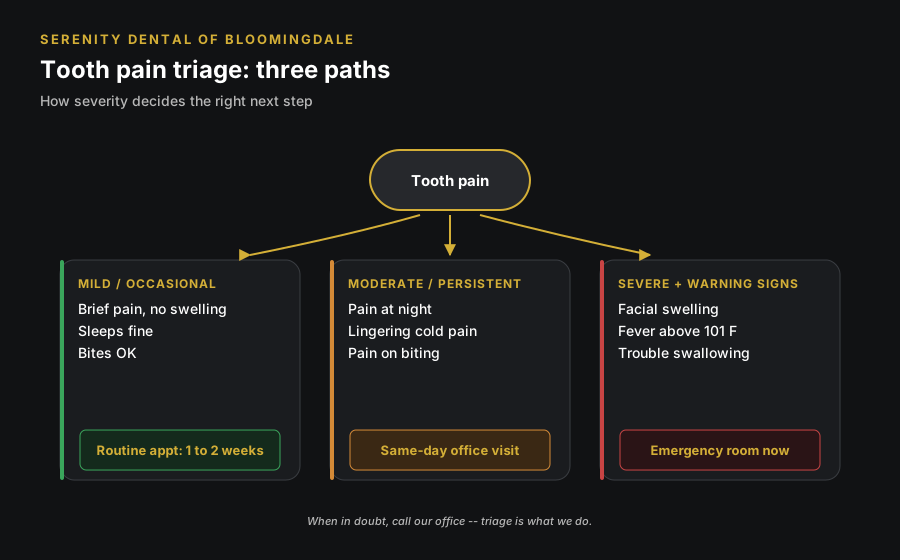
What counts as a dental emergency?
Not every painful tooth is an emergency. Five clear signs do warrant same-day care.
1. Severe pain unresponsive to OTC medication
Throbbing tooth pain that doesn’t improve with maximum-dose ibuprofen (600 mg) plus acetaminophen (1,000 mg) suggests significant pulp or periapical involvement. Pain severe enough to prevent sleep, eating, or normal function needs same-day evaluation.
2. Facial swelling near a tooth
Swelling visible on the cheek, jaw, or near the eye around an affected tooth indicates infection has spread beyond the pulp into surrounding tissues. The larger the swelling, the more urgent the situation.
- Localized gum swelling: within 24 hours
- Facial swelling: same day
- Swelling extending toward the eye or down the neck: emergency room
3. Pus or drainage
Pus coming from around a tooth or from a gum pimple indicates an active infection. The body is attempting to drain the infection naturally — this doesn’t mean the infection is resolving.
4. Fever with tooth pain
A fever above 100.4°F accompanying tooth pain signals that infection is affecting the body systemically. This warrants same-day evaluation and often antibiotics.
5. Trauma-related severe pain
A tooth that’s been hit, knocked, or cracked and is now in severe pain needs urgent evaluation. Some traumatic injuries allow bacteria rapid access to the pulp, turning into acute infections within days.
Emergency signs that need the ER, not a dentist
Some dental infections escalate into medical emergencies requiring hospital-level care. Go to the emergency room for:
- Difficulty swallowing or breathing
- Significant swelling of the neck or under the jaw (can be Ludwig’s angina, a life-threatening spreading infection)
- Swelling extending toward the eye (can involve the brain via the cavernous sinus)
- Inability to open the jaw fully (trismus)
- High fever with chills or altered mental status
- Severe infection in immunocompromised patients (diabetes, chemotherapy, HIV)
These situations need IV antibiotics, possible surgical drainage, and medical monitoring beyond what a dental office provides. Once stabilized, definitive root canal or extraction follows.
What happens at an emergency appointment?
A typical emergency dental visit for suspected root canal situation follows a consistent sequence.
Triage phone call
Most practices ask several screening questions when you call about severe tooth pain:
- How severe is the pain (scale of 1 to 10)?
- How long has it been happening?
- Is there swelling? Where?
- Is there fever?
- Is breathing or swallowing affected?
Based on the answers, the office either schedules a same-day slot, advises to go to the ER, or prescribes antibiotics while scheduling treatment for the next available day.
At the office
History and exam (10 minutes). Specific questions about symptoms, prior dental work on the tooth, medical history, and medications.
Imaging (5 minutes). Digital X-ray of the suspect tooth and adjacent teeth. CBCT if complex anatomy is suspected.
Diagnostic testing (5 to 10 minutes). Cold test, percussion, bite test, and gum palpation identify which tooth is the source and how far the problem has progressed.
Treatment plan discussion (5 to 10 minutes). The provider explains the diagnosis, treatment options (root canal, extraction, medication-first-with-treatment-later), and cost.
Treatment options at emergency visit
Depending on the case, three paths are typical:
Full root canal same day (most cases). Complete root canal treatment delivering immediate pain relief. Typically 1 to 2 hours.
Pulpotomy plus scheduled completion. The inflamed pulp in the crown portion is removed under anesthesia (giving immediate relief), and the full root canal is scheduled within 1 to 2 weeks. Used when time doesn’t allow a full procedure or when severe infection warrants a medicated interval.
Antibiotics plus scheduled treatment. For cases with significant spreading infection, facial swelling, or fever, antibiotics start immediately (typically amoxicillin or clindamycin for penicillin-allergic patients) with the root canal scheduled in 24 to 72 hours once the infection is under better control.
Extraction. Sometimes the tooth is not restorable (vertical root fracture, advanced bone loss) and extraction is the appropriate emergency treatment. Replacement planning (implant, bridge) follows at a later visit.
Managing pain before your appointment
When an emergency appointment is hours or a day away, these measures help:
Medication (most effective)
Ibuprofen 400 to 600 mg every 6 hours with food. Addresses pain and inflammation.
Acetaminophen 500 to 1,000 mg every 4 to 6 hours. Additional pain control.
Alternating them every 3 hours provides more consistent coverage than either alone. Current evidence shows this combination is comparable to most prescription opioids for acute dental pain.
Maximum doses: 2,400 mg ibuprofen, 3,000 mg acetaminophen per 24 hours.
Physical measures
- Cold compress on the outside of the cheek for 15 to 20 minutes at a time reduces swelling
- Head elevation when sleeping (extra pillow) reduces pressure in the inflamed tooth
- Warm salt water rinses (1/2 teaspoon salt in 8 oz warm water) ease gum discomfort
- Avoid chewing on the affected side
- Avoid extreme temperatures in food and drink — both hot and cold can aggravate the pain
What not to do
- Don’t apply aspirin directly to the gum. This causes chemical burns, not pain relief.
- Don’t stop eating completely. Hydration and nutrition help the body fight infection.
- Don’t wait through weekend. Severe symptoms need care, not toughing it out.
- Don’t assume pain that stops means it’s resolved. Sudden resolution of severe pain sometimes indicates the nerve has died, not that the infection is gone.
When are antibiotics appropriate?
Current American Dental Association and American Association of Endodontists guidance is conservative about antibiotic use for dental infections. The principles:
Antibiotics are appropriate when:
- Infection is spreading (facial swelling, fever, lymph node swelling)
- The patient is immunocompromised (diabetes, chemo, transplant)
- Immediate definitive treatment isn’t possible
- Surgical intervention is needed and infection must be controlled first
Antibiotics are not appropriate when:
- Pain is present but no signs of spreading infection
- Definitive treatment (root canal or extraction) can happen promptly
- Patient requests them for a non-infected tooth
- They’re used as a substitute for definitive treatment
Why this matters: Antibiotics don’t cure tooth infections — they only reduce bacterial load temporarily. The infection source (infected pulp or abscess) must be removed. Antibiotic overuse contributes to resistance and doesn’t help the actual tooth problem.
Common dental antibiotic regimens:
| Medication | Typical course |
|---|---|
| Amoxicillin | 500 mg three times daily, 5 to 7 days |
| Clindamycin (penicillin allergy) | 300 mg four times daily, 5 to 7 days |
| Augmentin (severe infection) | 875/125 mg twice daily, 7 days |
Antibiotics should start 24 to 72 hours before the definitive procedure when prescribed, not days ahead of time or instead of treatment.
After-hours and weekend care
Options when pain develops outside normal business hours:
Your regular dental office’s after-hours line. Most practices have a number that routes to an on-call dentist for triage and urgent prescriptions. Check your provider’s voicemail or website.
Emergency dental clinics. Some areas have dental offices that specialize in emergency and after-hours care. Search “emergency dentist near me” for options.
24-hour dental lines. Online telehealth services can triage symptoms and prescribe antibiotics or pain medication, bridging the gap until you can be seen.
Hospital emergency room. Appropriate for dental situations that include facial swelling with breathing or swallowing issues, severe fever, or spreading infection. ERs can provide IV antibiotics, pain management, and imaging, but typically do not provide definitive dental treatment (no root canals in the ER). You’ll still need a dental follow-up for the actual problem.
Preventing emergencies
Most dental emergencies trace back to missed symptoms that could have been addressed earlier:
- Lingering sensitivity that wasn’t evaluated
- A small gum pimple that was ignored
- Tooth discoloration without follow-up
- A cracked or chipped tooth left untreated
- A missed routine dental visit where X-rays would have caught early infection
The earliest symptoms of pulp problems are typically mild and easy to dismiss. Recognizing them early usually means simpler, less expensive treatment — and no emergency visit. See the signs you need a root canal article for the early warning signs worth watching.
Individual cases vary in urgency and treatment approach. Per American Association of Endodontists clinical guidelines, the appropriate response to acute symptoms depends on whether the pulp is reversibly inflamed, irreversibly inflamed (irreversible pulpitis), or already necrotic with a periapical abscess. Each stage carries a different risk profile and treatment plan, which is why clinical examination — not symptom self-assessment — determines the right next step. Dr. Husna Khan evaluates emergency presentations in-office to identify which stage you’re in before recommending treatment.
Call Serenity Dental at (630) 359-0105 for same-day evaluation of severe tooth pain or suspected dental emergency. Dr. Husna Khan performs root canals in-house, with same-day treatment available when scheduling allows. For situations with facial swelling affecting breathing or swallowing, or high fever, go to the emergency room first. Related: root canal service page.
In our practice, we map every canal with electronic apex location before obturation, and we schedule the final crown promptly because timing the restoration well is one of the strongest predictors of long-term tooth survival.
Clinical references and sourcing
Clinical guidance in this article reflects current standards from the American Association of Endodontists (AAE) consensus statements on diagnosis, retreatment, and outcomes; American Dental Association (ADA) procedure coding and clinical guidance; American Association of Oral and Maxillofacial Surgeons (AAOMS) parameters of care for adjacent surgical decisions; Cochrane systematic reviews of endodontic outcomes; and outcome studies indexed in the Journal of Endodontics (JOE). Cited timelines and survival rates are drawn from these primary sources.
Emergency root canal - questions answered
What qualifies as an emergency root canal?
Can I get a same-day emergency root canal?
How much does an emergency root canal cost?
What is the difference between emergency root canal and scheduled root canal?
Will antibiotics help a tooth that needs a root canal?
How do I manage severe tooth pain while waiting for an appointment?
When should I go to the ER for a tooth infection?
Can emergency dental pain wait until morning?
Educational content only. Recommendations are personalized after an exam and any needed imaging.
About this article
Reviewed by Dr. Husna Khan, DDS, of Serenity Dental of Bloomingdale. Dr. Husna Khan performs endodontic treatment in-house at our office using rubber-dam isolation, rotary nickel-titanium instrumentation, electronic apex location, and CBCT imaging when canal anatomy warrants it.
This article is for general educational and informational purposes and is not a substitute for an in-person dental evaluation. Individual cases vary — a specific treatment plan is determined after clinical examination and imaging. If you have ongoing tooth pain, swelling, or a tooth you are unsure about, please call our office or schedule an evaluation so we can examine the tooth and review your imaging with you.
Cited sources: AAE clinical guidelines, ADA procedure coding and clinical guidance, AAOMS parameters of care, Cochrane systematic reviews of endodontic outcomes, and Journal of Endodontics (JOE) outcome studies.
Pricing note. Prices shown are approximate Chicago-area 2026 ranges compiled from public cost guides — not a quote or a Serenity Dental fee schedule. Your actual cost depends on your clinical needs, the materials chosen, and your insurance. We provide a written estimate before any treatment begins. Call (630) 359-0105 to confirm pricing for your situation.
Need help with this in real life?
Reading helps. Talking to someone who can look at your actual teeth and symptoms helps more. If you want a clear next step, we’re here.
Related articles
Infected Tooth Extraction: When It's Needed and What to Expect
When an infected tooth needs extraction vs saving, antibiotics before extraction, post-op infection signs, and what recovery looks like.
Read article →What to Do When a Tooth Breaks or Chips: First Steps
Fracture types, first aid for a broken tooth, treatment from bonding to root canal, and when to go to the ER vs. calling the dentist.
Read article →How to Tell If a Dental Problem Is an Emergency
Not sure if your tooth pain, swelling, or broken tooth needs urgent care? Common dental emergencies, when to call a dentist, and when to go to the ER.
Read article →