
Cosmetic Dentistry
What Are Dental Veneers? How They Work, Cost ($900-$2,500), Lifespan
A veneer is a thin porcelain or composite shell bonded to the front of a tooth. A Bloomingdale, IL dentist explains how veneers work, what they cost per tooth, and how long they last.
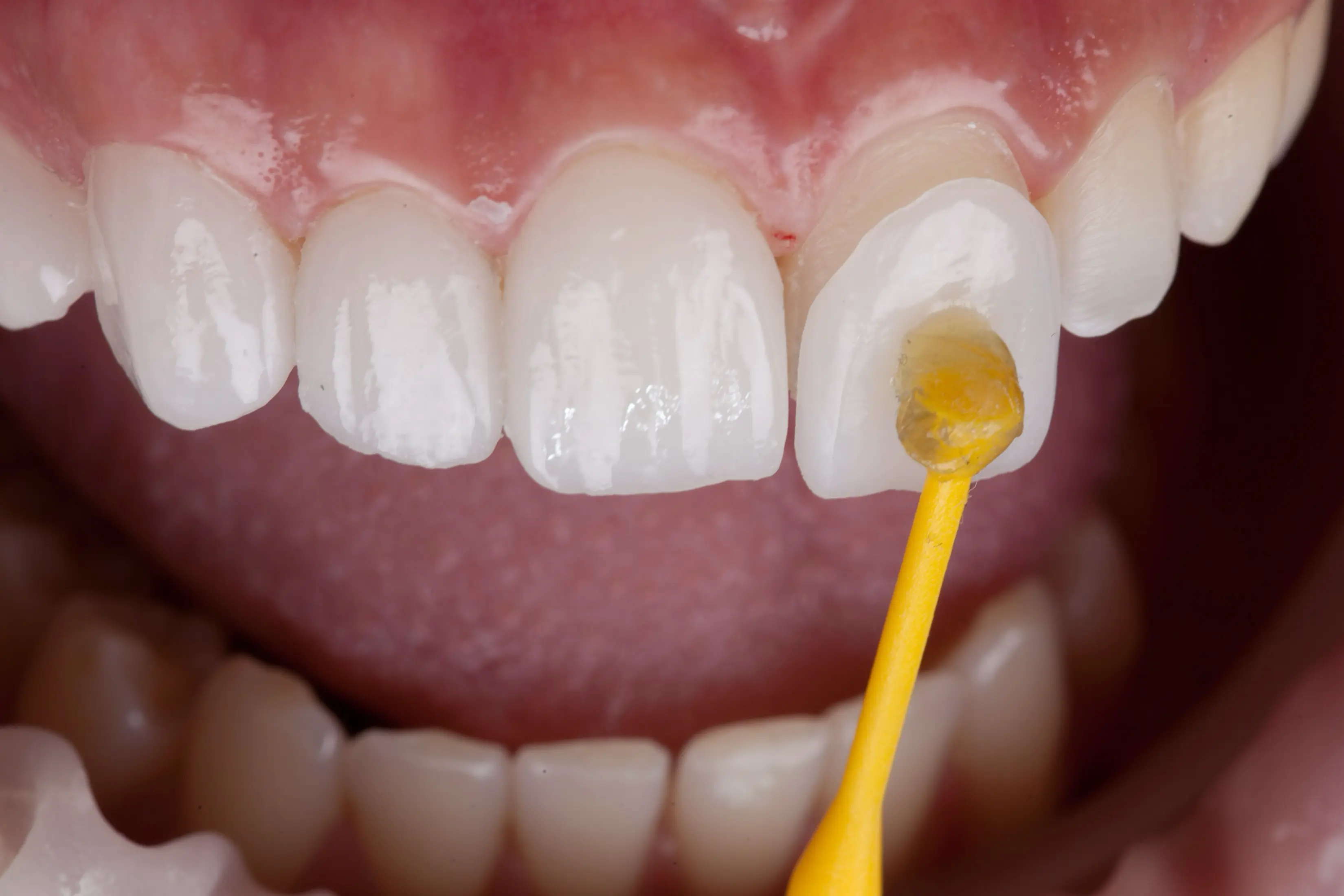
A dental veneer is a thin, custom-shaped shell that bonds to the front surface of a tooth to change how that tooth looks. Patients in our Bloomingdale practice usually ask about veneers because something specific bothers them: an old chip, a tooth that has darkened, a small gap between the two front teeth, or a smile that feels slightly off-balance in photos.
This guide covers the whole arc: what veneers are, how they work, what they realistically fix, what they cost, how long they last, and where they fall short. The goal is honest information. Your consultation should start from solid ground, not from a sales script.
A clear definition
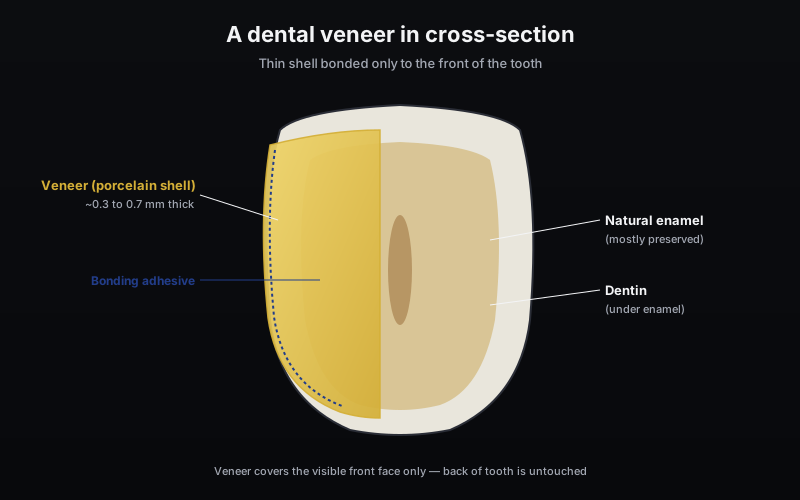
Veneers are tooth-shaped facings that cover the visible front of a tooth, fabricated from porcelain or composite resin and made to match the neighbors in shade, length, and surface texture. Porcelain veneers are made in a dental lab and bonded to the tooth at a separate appointment, while composite veneers are sculpted directly on the tooth in a single visit, which is most of why the two carry such different fees. Both bond with a dental adhesive the American Dental Association recognizes as standard restorative technique, cured against a cleaned and etched enamel surface so the shell and the tooth behave as one structure under load.
A veneer covers the front surface and a sliver of biting edge. A crown wraps the whole tooth. That difference matters because veneers are designed to improve appearance with as little change to the underlying tooth as the case allows.
Thickness is the detail most people are surprised by. Conventional porcelain runs about half a millimeter thin. A fingernail clipping, roughly. Making that sliver read as a whole tooth is the entire craft.
How do veneers actually work?
Veneers work by bonding a thin custom shell, about half a millimeter of porcelain or composite, to the cleaned and etched front surface of a tooth. The shell replaces what you see when you smile: the color, the shape, the length, and the surface texture. The tooth underneath stays alive and keeps doing the chewing. Nothing moves and nothing is extracted.
Three things make a veneer look natural rather than obvious.
The first is shape. Dr. Husna Khan reviews tooth length, edge curvature, and how the upper teeth sit against the lower lip when you smile. A veneer that ignores those references tends to look flat or boxy.
Color is the second. Natural teeth are never one solid shade. Light passes through the enamel, scatters, and reflects off the dentin underneath, and any veneer that fails to reproduce that layered translucency reads as opaque and slightly dead next to living teeth. Quality porcelain gets this right. Done well, a single veneer beside natural teeth is hard to spot.
Bonding is the third. According to the American Academy of Cosmetic Dentistry, the cement layer between veneer and tooth becomes part of the final color, so cement selection and the cleanliness of the bonding surface both affect the result.
What can veneers improve?
Veneers tend to help most with cosmetic problems that live on the front surface of teeth:
- Discoloration that resists whitening, especially deep intrinsic stains or tetracycline staining
- Chipped front teeth and worn edges from age or grinding
- Small gaps and minor shape differences between adjacent teeth
- A smile that reads as uneven because two or three teeth sit slightly out of position
- Front teeth that look short or worn compared with the rest of the smile
Often the trigger is one tooth. A single chip or one discolored incisor, lived with for years, is what finally brings someone in. One or two veneers may be enough.
Veneers for front teeth
Nearly every veneer case is a front teeth case. The usual canvas is the six or eight upper teeth that show when you talk, and the design question is how far around the smile the veneers need to reach before the transition to natural teeth stops being visible.
The hardest version is a single front tooth. Matching one veneer to the living tooth beside it demands more shade skill than matching eight veneers to each other, which is why photographs and a try-in appointment matter so much for that case. Chips and rotations bring their own rules; our guide to veneers for crooked or chipped front teeth covers when a veneer is enough and when alignment should come first.
What can’t veneers fix?
Veneers do not move teeth. They do not repair cavities. They do not strengthen a structurally weak tooth, and no amount of well-made porcelain bonded to the front surface changes what is happening underneath it, which is why the exam comes before the design conversation. They are a cosmetic surface treatment.
A front tooth carrying a large old filling, a fracture, or a root canal usually calls for a crown instead, because full coverage and structural support matter more there than conserving the last of the enamel. Alignment problems belong to orthodontics. Invisalign or braces often deliver a better outcome there, because moving teeth can avoid removing tooth structure at all.
Gum disease and decay come first. Bonding porcelain over an inflamed gum margin produces a result that looks wrong within months, so periodontal health comes before cosmetics in the sequence.
This is why our consultations include a frank conversation about whether veneers are even the right tool for what you want to change.
Porcelain or composite
Both materials are used in cosmetic dentistry, and each carries tradeoffs.
Porcelain resists stain and holds its polish. Survival above 90 percent at ten years is what the Journal of Esthetic and Restorative Dentistry reports for well-placed porcelain in suitable patients.
Composite veneers cost less, can usually be placed in a single visit, and are easier to repair if a small chip occurs. The tradeoff is longevity: composite picks up stain over time, dulls at the surface, and typically needs polishing or outright replacement years sooner than a lab-fired porcelain unit ever would.
Choosing between them depends on budget, the number of teeth involved, and how much wear the front teeth take during chewing and grinding. Our comparison of porcelain and composite veneers goes deeper.
What do veneers cost?
Pricing comes up first at almost every consultation. Here is the honest shape of it.
A single porcelain veneer in the United States generally falls somewhere between roughly nine hundred and twenty-five hundred dollars. Composite typically runs about half that per tooth. Three variables move the number: the material, how many teeth are involved, and how complex the bite and gum work turn out to be. Treat those as typical ranges for the Chicago area rather than a quote; the exam determines the real number.
Insurance rarely helps. Carriers classify veneers as cosmetic under the American Dental Association CDT coding system, which means most plans contribute nothing. Exceptions exist when a veneer restores a fractured or congenitally malformed tooth, and those are settled case by case.
Financing is the practical route for most cosmetic cases. Our Bloomingdale office works with Cherry, CareCredit, and Sunbit, and we review all three at the consultation without steering toward one. For the full breakdown, see our guides to what veneers cost and whether insurance covers veneers.
How long do they last?
Porcelain veneers average ten to fifteen years. Composite generally needs refreshing every five to seven.
Grinding is the variable that swamps the rest, and it is also the one patients most often underestimate at the consultation. A patient who clenches at night without a guard can fracture a porcelain veneer within a few years, while the same patient wearing a custom night guard may keep the same veneers in good shape well past a decade. Recession is second. As the gum line migrates it exposes the junction between porcelain and root surface.
Our longer article on veneer lifespan covers the maintenance side in detail.
What does the appointment usually look like?
Most porcelain veneer cases in our practice run across two or three visits. The first is a consultation and design appointment, where Dr. Husna Khan reviews the smile, takes photographs, and works through whether veneers are the right plan. If they are, a second appointment prepares the teeth and places temporary veneers. The third visit is when the lab-made porcelain is tried in, checked for fit and shade, and bonded. Nervous about any of it? Nitrous oxide can be added to any visit — the sedation dentistry page covers every comfort option we offer.
Composite compresses all of that into one longer visit.
Temporaries deserve a mention. They are not just placeholders. Wearing them for a week or two amounts to a real-world test drive of the new tooth shape and length, in your own mouth and your own mirror, and adjustments made at that stage cost essentially nothing compared with remaking finished porcelain after it has been fired and glazed.
A few honest cautions
Three things come up often with patients weighing veneers.
Veneers are a long-term commitment. Once enamel has been reduced for porcelain, that tooth will need a veneer or crown going forward. That is part of why we discuss alternatives like bonding and whitening before recommending a full veneer case.
Cost is real, and the number is not small. We provide written estimates before any treatment begins so there are no surprises at the seating appointment.
Maintenance matters. Veneers themselves do not decay, but the natural tooth around and beneath them can. Daily brushing and flossing, regular cleanings, and a night guard if you grind all shape how long the result holds.
When to call rather than wait
Most veneer questions can wait for a scheduled appointment, and a scheduled appointment is where they belong, because a rushed answer over the phone helps nobody. A few cannot wait.
Same-day call: a veneer that has come off entirely. Save the veneer if you can find it, keep it dry, and do not attempt to reattach it with any household adhesive. In many cases the original veneer can be rebonded if the underlying tooth is sound.
Call promptly about sharp cold or sweet sensitivity along a veneer edge. Sensitivity at a margin can mean the bond is leaking. Bacteria under porcelain get more expensive the longer they wait.
Call about any gum that swells, turns tender, or bleeds along a veneer. Early on, that kind of inflammation often traces back to something mechanical, an overhanging margin or a bonding flaw, and mechanical problems are cheap to correct while the bone underneath is still untouched.
Seek urgent care for any trauma to a front tooth, veneered or not. The International Association of Dental Traumatology recommends evaluation within 24 hours after an injury to a front tooth, because the pulp status can change in the days that follow.
When should you book a consultation?
Booking makes sense when something specific bothers you. A chipped front tooth, persistent discoloration, a small gap, an uneven smile: any of these is reason enough to sit down and find out what the realistic options are, what they cost, and what they would involve for your particular teeth. A consultation does not commit you to treatment. The point is to leave with a clear picture of what veneers would and would not do for your particular smile.
This article is general education and not individualized medical advice. To talk through whether veneers fit your goals, contact our Bloomingdale office to schedule a cosmetic consultation with Dr. Husna Khan, or read more about veneers at our practice.
FAQs
What is a dental veneer in simple terms?
How do veneers work to change a smile?
What problems do veneers actually fix?
Are veneers reversible?
Is a veneer the same as a crown?
How much does a dental veneer cost?
How long do dental veneers last?
Does dental insurance pay for veneers?
Do veneers damage the teeth underneath?
Can you get a single veneer on one tooth?
Educational content only. Recommendations are personalized after an exam and any needed imaging.
Need help with this in real life?
Reading helps. Talking to someone who can look at your actual teeth and symptoms helps more. If you want a clear next step, we’re here.
Related articles
Does Insurance Cover Dental Veneers? Coverage and Payment Options
Plain answers about veneer insurance coverage, what counts as cosmetic, and what payment plans actually work for patients in Bloomingdale, IL.
Read article →How Long Do Dental Veneers Last? Lifespan, Wear, and Replacement
Real numbers on how long porcelain and composite veneers last, what wears them down, and how to make them last longer, from a Bloomingdale, IL dentist.
Read article →Porcelain vs Composite Veneers: An Honest Comparison
Porcelain or composite veneers? A Bloomingdale, IL dentist breaks down cost, lifespan, appearance, and which option fits which kind of patient.
Read article →