Preventive Dentistry
Dental Sealants Pros and Cons for Adults and Parents
What sealants do well, what they don't, and where the trade-offs are. A direct, no-spin look at the benefits and limits for adults and parents.
The honest summary: sealants are one of the most evidence-supported preventive interventions in dentistry, with limited and well-characterised downsides. Approximately 80 percent reduction in molar cavities, painless placement, low cost with PPO or Medicaid coverage. The cons are real but narrow — sealants protect only chewing surfaces, they wear and need monitoring, and they require careful placement technique. For school-age children with newly erupted permanent molars, and for adults with deep-grooved unrestored molars and a cavity history, the trade-off favours sealing.

Written by Dr. Husna Khan, DDS
Serenity Dental of Bloomingdale · April 27, 2026
Educational purposes only. Sealant candidacy depends on each child’s groove anatomy, cavity history, and age window. Call (630) 359-0105 to discuss specifics for your situation.
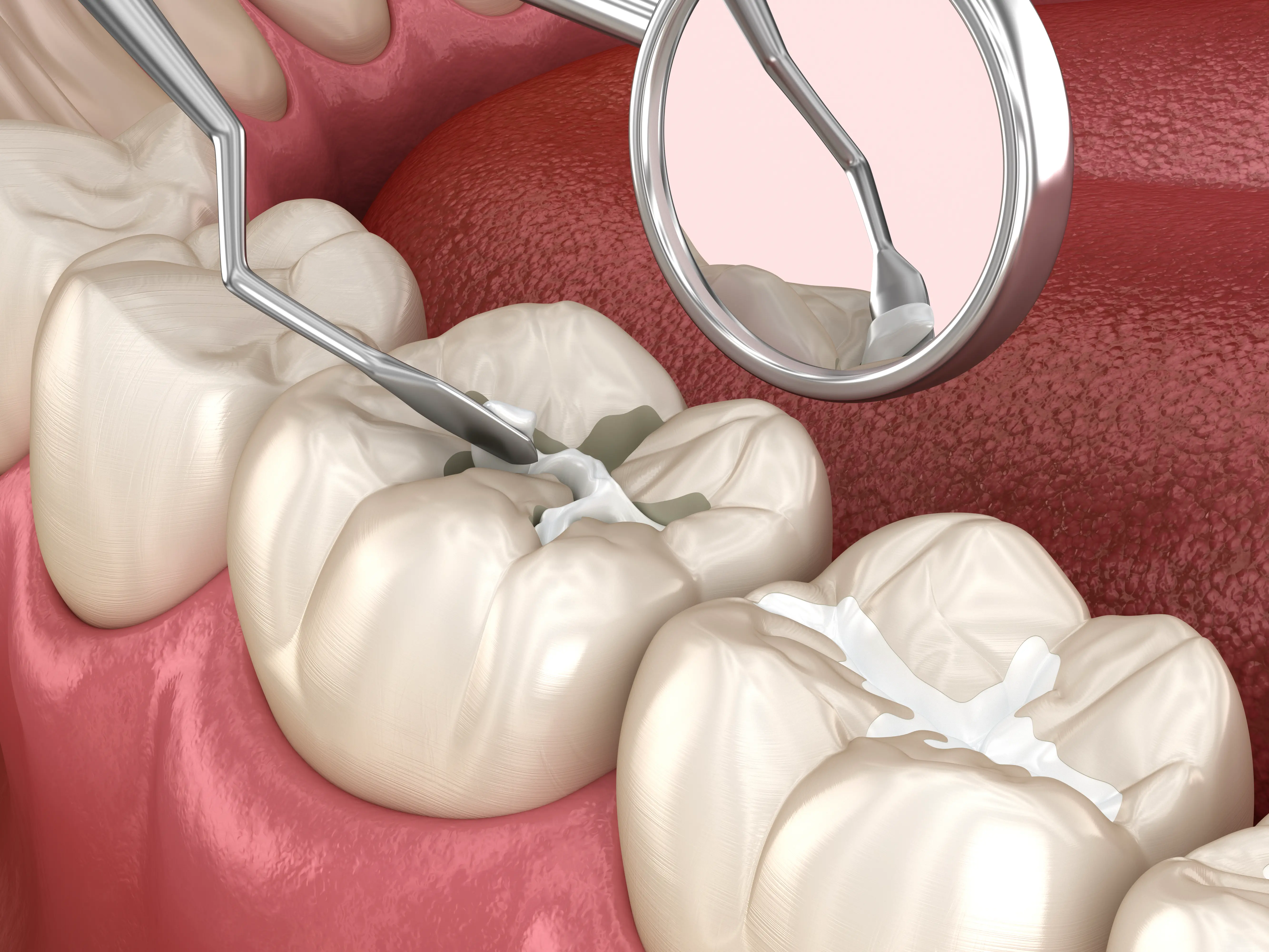
The pros are substantial and well-documented. The cons are real but narrow. The balance tilts strongly toward sealing for the right candidate.
The pros
Strong cavity prevention
CDC-cited research found sealants reduced decay in permanent molars by nearly 80 percent over nine years versus unsealed teeth. A 2016 Cochrane systematic review of 38 trials confirmed comparable effects. The evidence base is among the strongest in preventive dentistry.
Painless and brief
No drilling, no injection, no anaesthetic, no recovery. Five to ten minutes per tooth. A typical four-molar appointment runs 30 to 45 minutes including the cleaning beforehand. Most patients leave the chair surprised by how short the visit was.
Low cost, often $0 for kids
Most PPO dental plans cover sealants for children at 80 to 100 percent on permanent molars through age 14 or 16. Illinois Medicaid through All Kids and EPSDT covers eligible children. For adults, coverage is typically lower; out of pocket runs $40-$80 per tooth.
Endorsed by every major authority
ADA, AAPD, CDC, FDA, and NIDCR all recommend sealants for children with permanent molars. The 2016 ADA/AAPD clinical practice guideline — published in JADA — specifically calls them a first-line preventive intervention.
Long-lasting protection
Sealants typically last 5 to 10 years, with some lasting beyond 10. Cochrane review data shows 86 percent retention at one year and 71 percent at two years on permanent molars. Even partial retention provides meaningful protection in the protected groove.
Strong economic case
CDC analysis of school-based programs found $11.70 in averted restorative treatment per dollar invested in sealants. AAPD economic guidance reaches similar conclusions. Sealants are among the few interventions with documented cost-effectiveness in peer-reviewed literature.
The cons
Only protects chewing surfaces
Sealants do not protect between-teeth surfaces, smooth surfaces, or the gum line. Brushing and flossing still do that work. A child with sealants who skips brushing will still develop cavities — just on different surfaces. Sealants are part of the prevention picture, not all of it.
Wear and need monitoring
Sealants chip. Bite forces, grinding, and hard-food habits accelerate normal wear. A small chip caught early is repairable in minutes; the same chip ignored allows bacteria underneath. We check integrity at every routine visit — the monitoring is the other half of the procedure.
Technique-sensitive placement
Sealants placed with poor moisture control bond worse and fail earlier. ADA clinical guidelines emphasise isolation quality as the primary determinant of long-term success. The procedure is straightforward; the consistency varies between providers.
Trace BPA-related exposure
Modern resin-based sealants release approximately 0.09 nanograms of BPA-related compounds per day — comparable to handling a thermal grocery receipt. CDC, ADA, and FDA reviews place this far below any clinically significant level, but it is not zero. Glass ionomer sealants are an alternative for families with specific concerns.
What the cons are not
Three concerns get repeated in consumer health writing that do not match the evidence:
The first is that sealants damage enamel. The etching gel creates microscopic surface texture for bonding but does not remove or damage tooth structure — the surface is restored within seconds and intact under the sealant.
The second is that sealants cause cavities by trapping bacteria. This concern is real only if a cavity was already present and was missed at exam — which is why a thorough pre-placement clinical assessment matters. A sealant placed on a confirmed decay-free groove does not trap bacteria; the groove is filled.
The third is that sealants are unnecessary because brushing should be sufficient. This concern conflicts with the basic anatomy — many fissures run deeper than a toothbrush bristle is wide. CDC and AAPD data on cavity rates in unsealed children with normal brushing habits make this point clearly.
A short note on the candidacy conversation
Sealants are not for every tooth on every patient. Some patients have shallow groove anatomy that brushing cleans effectively, and sealing those teeth offers limited benefit beyond the cost. Children with high cavity risk benefit from sealing premolars in addition to molars. Adults with deep grooves, a documented cavity history, and unrestored chewing surfaces are reasonable candidates per ADA guidance. Patients with active decay need restoration first and sealing afterward. The conversation at the exam is brief — we look at the specific teeth, give a tooth-by-tooth answer, and seal where it actually helps.
Weighing the decision
The honest pros-and-cons summary is asymmetric. The pros are substantial, well-documented, and supported by every major dental authority — ADA, AAPD, CDC, FDA, NIDCR, and the Cochrane review consensus. The cons are real but narrow: sealants only protect chewing surfaces, they need monitoring, and placement requires careful technique. None of those cons rise to the level of “do not seal.” They rise to the level of “use a careful provider and keep up with routine recall visits.”
For a six-year-old with newly erupted permanent molars and deep groove anatomy, the math is simple. For a fifteen-year-old who never had sealants but whose molars remain cavity-free, still good candidates. For a thirty-five-year-old adult with a history of cavities and unrestored deep grooves, ADA recognised candidacy. The decision rarely turns on the cons. It turns on whether the specific tooth meets the candidacy criteria, which the clinical exam answers tooth by tooth.
Decide at the appointment. The pros-and-cons abstract conversation is less useful than the tooth-specific clinical assessment that the exam provides, because the actual question is not “are sealants good in general” — the answer to that one is yes per ADA, AAPD, CDC, and Cochrane evidence — but rather “do these specific molars at this specific stage have anatomy that benefits from sealing right now.” That second question gets answered in three minutes at the chair.
Most candidate teeth do qualify. Some do not. The dentist looks tooth by tooth, gives a direct recommendation either way, and respects the patient’s choice on whether to proceed. Call (630) 359-0105 to schedule.
Quick reference
| Stage | What to expect |
|---|---|
| Pros | Reduce molar cavities by approximately 80% (CDC); painless application; protect deep pits and fissures |
| Cons | Can chip or wear and need reapplication; do not protect tooth surfaces between teeth |
| Best candidates | Children with newly erupted permanent molars; adults at high cavity risk |
| Lifespan | 5 to 10 years on average |
| Cost | $40-$80 per tooth |
| Insurance | Pediatric: usually covered; adult: varies by plan |
Cost figures in this article are typical ranges for the Chicago area, compiled from regional fee data. They are not quotes from Serenity Dental of Bloomingdale; your fee depends on exam findings, materials, and insurance benefits, and we provide a written, itemized estimate before any treatment begins.
Sealant pros and cons -- questions answered
What are the pros of dental sealants?
What are the cons of dental sealants?
Are dental sealants worth it?
Can dental sealants cause problems?
Do sealants damage tooth enamel?
Are sealants only for kids, or can adults get them too?
Are dental sealants better than fluoride?
How do I decide if I or my child should get sealants?
Educational content only. Recommendations are personalized after an exam and any needed imaging.
About this article
Educational purposes only. Pros and cons assessment reflects current ADA, AAPD, CDC, and Cochrane evidence on sealant effectiveness, safety, and limitations. Individual candidacy is determined at clinical exam. Individual results may vary based on clinical findings at your exam.
Related: sealants service page.
Pricing note. Prices shown are approximate Chicago-area 2026 ranges compiled from public cost guides — not a quote or a Serenity Dental fee schedule. Your actual cost depends on your clinical needs, the materials chosen, and your insurance. We provide a written estimate before any treatment begins. Call (630) 359-0105 to confirm pricing for your situation.
Need help with this in real life?
Reading helps. Talking to someone who can look at your actual teeth and symptoms helps more. If you want a clear next step, we’re here.
Related articles
Dental X-Ray Types and Safety: What to Expect at Your Visit
Dental X-ray types explained, bitewing, periapical, panoramic, CBCT, with radiation safety, frequency, and what each X-ray reveals about your teeth.
Read article →Best At-Home Dental Products: A Bloomingdale Dentist's Honest Guide
A Bloomingdale dentist's honest guide to at-home dental products -- toothbrushes, toothpaste, floss, water flossers, mouthwash, and more.
Read article →What Is a Dental Sealant? A Plain-English Guide
A dental sealant is a thin protective coating on a back-tooth chewing surface. What sealants are made of, how they prevent cavities, and who needs them.
Read article →