
Pediatric Dentistry
How Often Should Kids Go to the Dentist? A Clear Answer by Age
AAPD recommends every 6 months — but some kids need every 3. What sets the schedule, the age-7 milestone, and what a routine visit covers.
The answer most parents have heard is “every six months.” That’s right — but it’s incomplete. Some kids need to come in every three months. Others, with perfect teeth and ideal home care, might be fine with annual visits once they’re older. The frequency question is actually more interesting than it sounds, and the answer depends on a few specific things about your child.

Written by Dr. Husna Khan, DDS
Serenity Dental of Bloomingdale · April 15, 2026
Educational content — individualized clinical decisions are made case by case. Guidance reflects AAPD recommendations — individual needs vary. Ask Dr. Husna Khan what schedule makes sense for your child specifically.
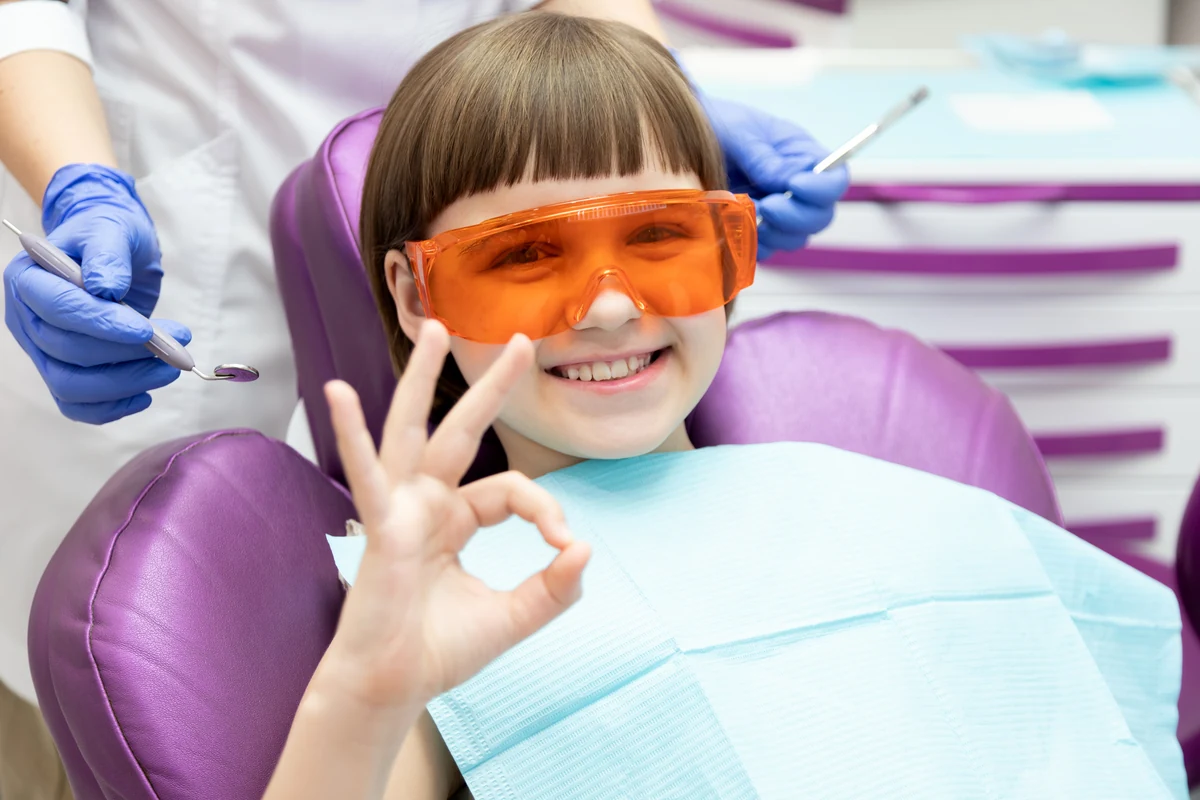
Here’s what actually determines how often your child should see the dentist, what changes at key ages, and what happens at each visit.
The baseline: every six months, and why it matters even when nothing’s wrong
The American Academy of Pediatric Dentistry recommends dental visits every six months starting at age one. For most children, that schedule holds through childhood and adolescence.
The reason it applies even to children whose last visit was perfectly clean is that the six-month interval is preventive, not reactive. A lot can change in a child’s mouth in six months — new teeth come in, brushing habits slip, dietary patterns shift. The visit is checking ahead, not catching up.
60
min average visit
Exam, cleaning, fluoride, and X-rays if indicated
Age 1
first visit
By first birthday or first tooth — whichever comes first
2×
per year standard
AAPD recommendation for most children — regardless of cavity history
What a routine visit actually covers at our office:
- A thorough exam of teeth, gums, jaw development, and bite
- Professional cleaning to remove buildup a toothbrush can’t reach
- Fluoride treatment applied after cleaning — takes two minutes, significantly reduces cavity risk
- X-rays when clinically indicated (not automatically every visit)
- A clear conversation about what we found, what’s going well, and what to watch
The “clean visit” problem is that parents sometimes interpret a clean visit as a reason to space out appointments. The clean visit means the current schedule is working. Changing the schedule is how you find out that it isn’t.
When is every three months the right call?
Some children need more frequent visits — not as a punishment for bad hygiene, but because their risk profile genuinely calls for it.
Standard — every 6 months
- ✓No cavities in the past year
- ✓Brushing effectively with fluoride toothpaste
- ✓No orthodontic appliances trapping plaque
- ✓Low sugar diet, no sipping juice throughout the day
- ✓Gums look healthy — pink, no bleeding
Higher risk — every 3 months
- →Two or more cavities in the past year
- →Active decay or ongoing restorative treatment
- →Braces, expanders, or other orthodontic appliances
- →Difficulty brushing effectively (fine motor, sensory)
- →Dry mouth from medication or medical conditions
Baby teeth matter here more than parents sometimes expect. They’re not permanent, but they serve as placeholders that guide permanent teeth into position. A cavity in a baby molar that’s lost early can allow neighboring teeth to drift — and a crowding problem that required orthodontics may have started with an untreated baby tooth.
If Dr. Husna Khan recommends more frequent visits for your child, she’ll explain exactly why. It’s not a revenue suggestion — it’s a specific clinical reason.
Do kids really need dental X-rays?
Parents often ask whether X-rays at every visit are actually necessary. Short answer: not necessarily every visit.
Why X-rays matter for kids
- →Detect cavities between teeth — invisible to visual exam
- →Check how permanent teeth are developing under the gums
- →Identify impacted teeth before they cause problems
- →Confirm bone levels and root development
When we skip them
- ✓No cavity history and teeth with visible spacing
- ✓Recent X-rays from another provider on file
- ✓Low individual risk based on exam findings
Digital X-rays at our office use significantly lower radiation than conventional film — and lead aprons are always used.
The radiation from dental X-rays is extremely low — a set of bitewing X-rays delivers less radiation than a few hours of normal background exposure from the environment. The concern about radiation is understandable, but it’s consistently outweighed by the clinical value of catching cavities between teeth early, before they become cavities that need crowns or extractions.
At Serenity Dental, Dr. Husna Khan decides on X-rays visit by visit based on what’s clinically indicated. We don’t take them automatically on a fixed schedule regardless of risk.
The age-7 milestone: what it is and what it isn’t
By age seven, most children have a mix of baby teeth and their first permanent molars and incisors — enough to evaluate how the adult teeth are developing.
Key milestones in children’s dental development
The American Association of Orthodontists recommends an orthodontic screening by age 7. Most children who come in at 7 don’t need any treatment at that point — but the evaluation tells us whether issues are developing that will be much easier to address while the jaw is still growing than after growth is complete.
Common things an age-7 evaluation identifies: crowding that a palate expander could address early, crossbites, significant overbites or underbites, and the rare case where a tooth is developing in the wrong position. Catching any of these at 7 versus 12 changes the treatment significantly — often from a simple appliance to surgery.
At Serenity Dental, Dr. Husna Khan assesses bite and jaw development at every routine visit and refers to an orthodontist when she identifies something worth evaluating.
The cleaning and exam — what we’re actually looking for
Parents sometimes wonder what’s really being checked beyond “are there cavities.” The clinical exam at a children’s visit covers more than that.
Cavities
Including between-tooth cavities that only X-rays can find. We also look at enamel quality and early demineralisation — the stage before a cavity actually forms.
Gum health
Gum inflammation in children is common and often precedes gum disease in adults. We check pocket depth, colour, and bleeding response — and flag any signs of early gum problems.
Bite and jaw development
Crossbites, open bites, deep bites. These are easier to correct while the jaw is still growing — which is why catching them early matters more than waiting until all adult teeth are in.
Soft tissue
The cheeks, tongue, palate, and floor of the mouth. We're checking for anything unusual that warrants monitoring or referral — including any oral lesions.
Eruption pattern
Are the right teeth erupting at the right time? A baby tooth that hasn't fallen out when it should, or a permanent tooth erupting in the wrong position, gets flagged here.
Brushing effectiveness
We can tell from the pattern of buildup whether a child is brushing effectively, missing certain areas, or brushing too aggressively. That feedback goes directly to the parent and child.
What should you do between visits?
The visit every six months matters. What happens in the other 179 days matters more.
Brush before bed — not after
Bedtime is the most important brushing. Saliva production drops during sleep, which removes the natural protection against cavity-causing acid. Two minutes with fluoride toothpaste, every night, is worth more than five brushings at other times.
Floss once the teeth touch
When baby molars come in with no gap between them, a toothbrush can’t clean that contact point. Floss picks work well for younger children. This is the single habit that has the most impact on between-tooth cavities.
Watch what they’re sipping, not just eating
Juice, sports drinks, and flavoured milk sipped throughout the day create a near-constant acid environment in the mouth. Bacteria produce acid every time sugar is present. A child who drinks apple juice slowly over an hour is exposing their teeth to more acid than one who drinks the same amount in five minutes.
The bedtime snack problem
A cracker, a banana, a glass of milk after brushing — all of these leave sugar and starch on teeth through the night. Brush last. If your child needs something after brushing, water is the only safe option.
Does it have to be a pediatric dentist?
Not necessarily. A general or family dentist with experience treating children can handle the vast majority of routine pediatric care — exams, cleanings, fluoride, sealants, and fillings. That’s exactly what Dr. Husna Khan does at Serenity Dental for children from age one through their teen years.
A specialist pediatric dentist is typically appropriate for: children who need treatment under general anesthesia, complex cases requiring hospital dentistry, or children with significant medical conditions or special needs beyond what a general practice is set up to manage.
If Dr. Husna Khan ever identifies something that needs specialist care, she’ll refer directly. Most of the time, for most children, routine dental care doesn’t require a specialist.
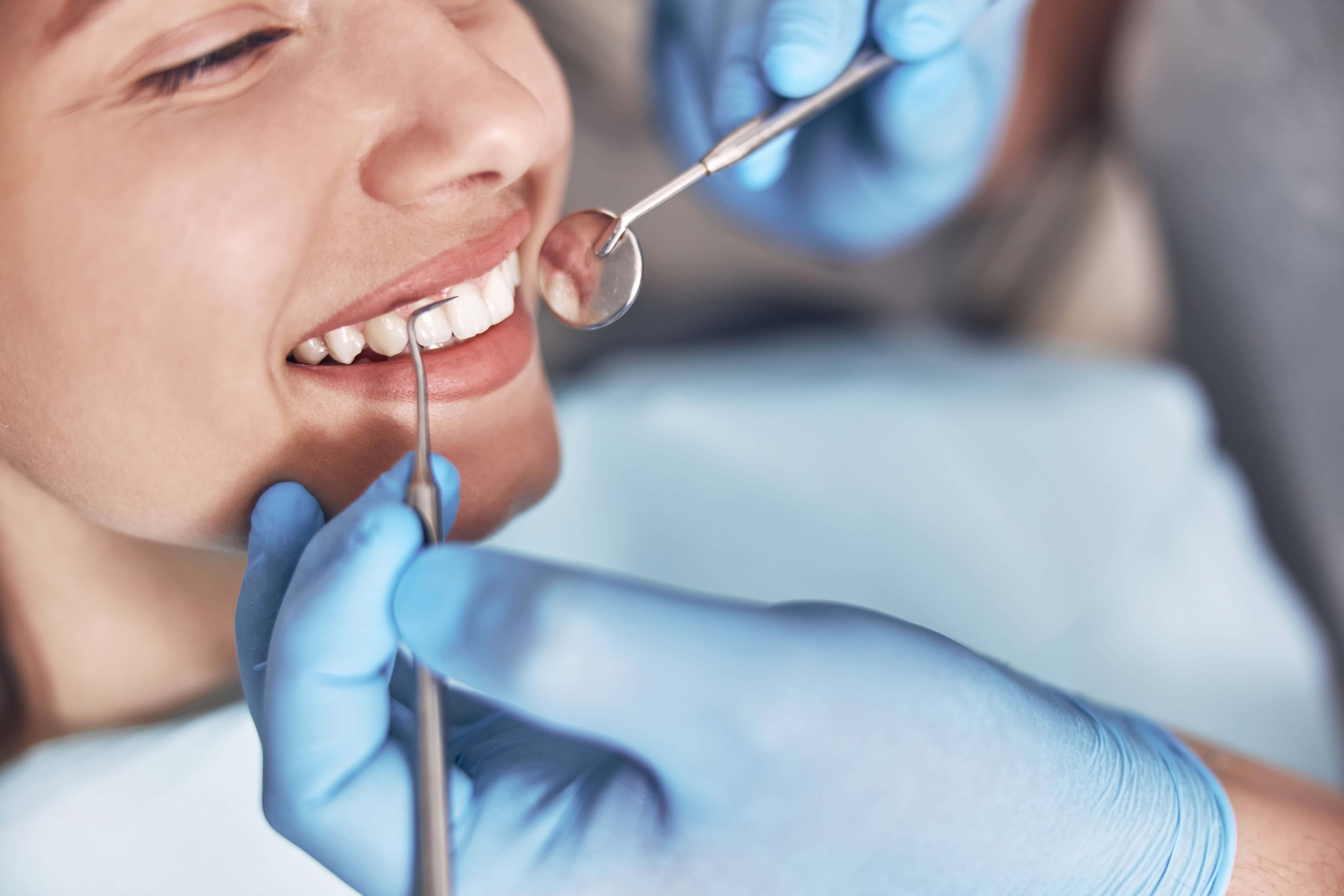
If you’re in Bloomingdale and looking for consistent pediatric dental care for your child, the pediatric dentistry page covers how Dr. Husna Khan approaches first visits, anxious kids, sedation, sealants, and Medicaid coverage. For anything urgent, call us at (630) 359-0105.
Questions parents ask about dental visit frequency
How often should a child go to the dentist?
Do kids need dental X-rays at every visit?
At what age should a child have an orthodontic evaluation?
Why does my child need a cleaning if their teeth look fine?
How do I know if my child needs more frequent dental visits?
What should my child avoid to prevent cavities between visits?
Can a general dentist see my child, or do they need a pediatric dentist?
What happens at a routine kids' dental visit?
Educational content only. Recommendations are personalized after an exam and any needed imaging.
About this article
Educational content — individualized clinical decisions are made case by case. Frequency recommendations follow American Academy of Pediatric Dentistry (AAPD) guidelines. Individual schedules depend on each child’s cavity risk, hygiene habits, orthodontic status, and health history. Ask Dr. Husna Khan what interval she recommends for your child specifically.
Related reading: sedation options for anxious kids · pediatric dentistry at Serenity Dental.
Need help with this in real life?
Reading helps. Talking to someone who can look at your actual teeth and symptoms helps more. If you want a clear next step, we’re here.
Related articles
Pediatric Sedation Dentistry: What Parents Should Know
A parent's guide to dental sedation for children — nitrous oxide, oral sedation, what to expect, and how Dr. Rafia Jabeen decides what's right for your child.
Read article →Dental Sealants Pros and Cons for Adults and Parents
What sealants do well, what they don't, and where the trade-offs are. A direct, no-spin look at the benefits and limits for adults and parents.
Read article →What Is a Dental Sealant? A Plain-English Guide
A dental sealant is a thin protective coating on a back-tooth chewing surface. What sealants are made of, how they prevent cavities, and who needs them.
Read article →