Dentures
Getting used to dentures: eating, speaking, daily life guide
Adjust to dentures in 2-8 weeks. Eating with dentures, speech changes, kissing, sleeping, sore spots, and the realistic week-by-week timeline.
Cost figures in this article are typical ranges for the Chicago area, compiled from regional fee data. They are not quotes from Serenity Dental of Bloomingdale; your fee depends on exam findings, materials, and insurance benefits, and we provide a written, itemized estimate before any treatment begins.
Adapting to a new denture takes most patients 2 to 8 weeks of consistent wear, with comfort continuing to improve over the first 6 months as facial muscles adapt to the new appliance. Per American College of Prosthodontists (ACP) patient surveys, 80 percent of denture patients reach acceptable comfort and function within 4 weeks when daily wear is consistent and follow-up adjustments are scheduled promptly. The keyword “getting used to wearing dentures” generates significant search volume per SEMRush data, with related queries spanning eating with new dentures (5,400/mo), speaking with dentures (2,400/mo), kissing with dentures (880/mo), and pain with dentures (1,300/mo). This comprehensive guide walks through realistic week-by-week expectations, the eating progression that prevents sore spots and protects healing, speech adaptation tips, social situations including kissing and dating, and the warning signs that indicate something more than normal adjustment is happening.

Written by Dr. Husna Khan, DDS
Serenity Dental of Bloomingdale · April 26, 2026
New denture patient? Schedule sore-spot adjustments at (630) 359-0105 — adjustments included in the first 30 days.
For broader context, see dentures service page, denture care and cleaning, and denture relining and rebasing.
Realistic week-by-week timeline
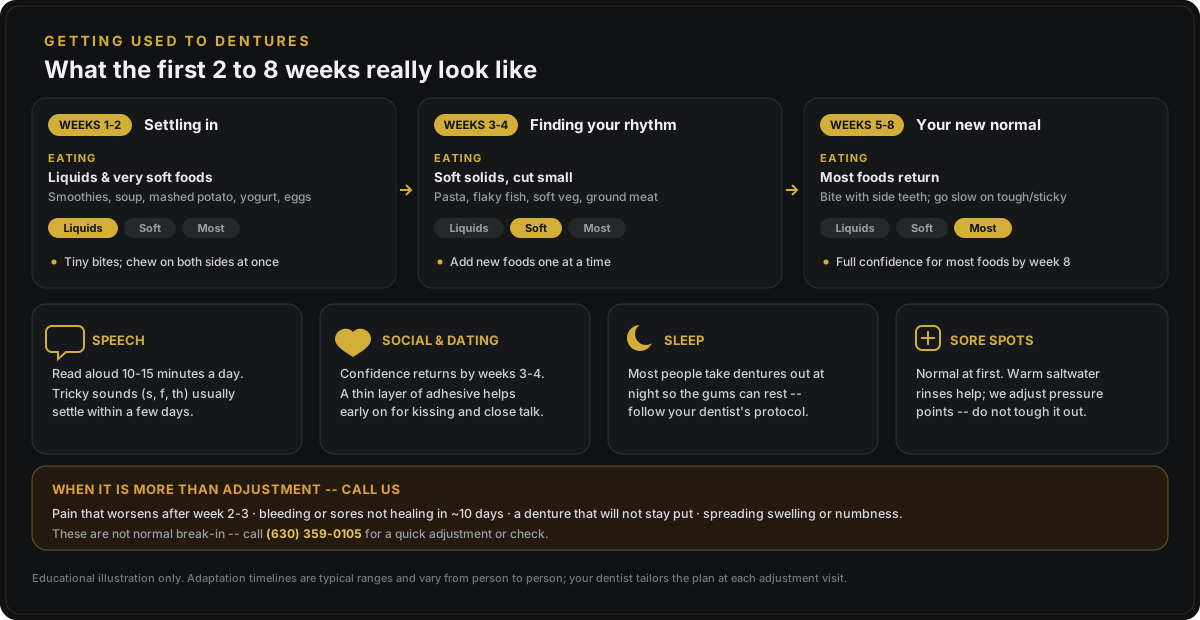
Adaptation follows a predictable pattern. Knowing what to expect at each stage prevents alarm at normal sensations.
Week 1: Initial adaptation
| Day | Common experiences |
|---|---|
| Day 1 | Bulky feeling, increased saliva, awareness of denture, possible mild discomfort |
| Days 2-3 | Saliva peaking, tongue exploring denture edges, possible sore spots developing |
| Days 4-5 | Saliva normalizing, sore spots may need adjustment, speech still adapting |
| Days 6-7 | Adapted to most basic functions, ready for first follow-up visit |
Recommended action: schedule first sore-spot adjustment visit for day 3-5. Most patients need 1-2 adjustments in week 1.
Week 2: Routine emergence
| Aspect | Status |
|---|---|
| Saliva | Mostly normalized |
| Speech | Improving daily; minor lisp may persist |
| Eating | Soft foods well-tolerated; ready to expand |
| Comfort | Sore spots resolving; new ones may emerge |
| Confidence | Returning gradually |
Most patients feel significantly better in week 2 than week 1.
Weeks 3-4: Significant improvement
- Speech essentially normalized for most patients
- Soft and semi-soft foods comfortable
- Routines for cleaning, insertion, and removal feel natural
- Social comfort increases
Weeks 4-8: Full functional adaptation
- Most foods accessible with proper technique
- Chewing efficiency reaches 60-80 percent of natural teeth
- Speech fully normal in most situations
- Confidence in social settings restored
- The denture feels like “part of the mouth”
Months 2-6: Continued refinement
- Comfort continues to improve as muscles adapt
- Eating efficiency continues to improve
- Some patients describe a noticeable improvement around month 3
- Periodic adjustment visits address any new sore spots
Beyond 6 months
By 6 months, the denture should feel like a comfortable, functional part of daily life. Persistent discomfort beyond this point typically indicates a fit problem requiring evaluation rather than continued adaptation.
Eating with new dentures: progression diet
The right eating progression prevents tissue damage and accelerates adaptation.
Week 1: Liquids and very soft foods
| Acceptable | Examples |
|---|---|
| Liquids | Smoothies, soups (cooled), broth, juice, milk |
| Soft proteins | Yogurt, scrambled eggs, soft tofu, well-cooked beans |
| Soft starches | Mashed potatoes, oatmeal, cream of wheat, soft bread (no crust) |
| Soft fruits | Applesauce, banana, melon, peeled peaches |
| Soft dairy | Pudding, ice cream (without nuts) |
Week 2: Soft solid foods
Add: pasta, soft fish (no bones), ground meat well-cooked, cooked vegetables (broccoli, carrots, squash), soft cheese, cottage cheese, soft hummus, well-cooked rice.
Weeks 3-4: Most foods cut small
Add most regular foods, cut into smaller pieces than typical:
- Tender meats cut very small
- Cooked vegetables of any type
- Bread (with practice)
- Sandwiches cut into quarters
- Most fruits except very crisp
After first month: Approaching normal
Most foods become accessible. Special techniques help:
- Cut steak across the grain into very small pieces
- Bite raw fruits and vegetables with side teeth, not front
- Drink water during meals to lubricate
- Take smaller bites than feels natural
- Chew slowly with both sides simultaneously
Foods to permanently avoid (or remove dentures for)
Some foods damage any denture regardless of adaptation level:
| Food | Why to avoid |
|---|---|
| Caramel, taffy | Sticks to teeth, can pull denture out |
| Chewing gum | Sticks to denture, hard to remove |
| Hard candy (biting) | Cracks teeth |
| Whole nuts | Cracking forces damage denture |
| Popcorn kernels | Get stuck under denture, hard to dislodge |
| Ice (biting) | Cracks acrylic |
| Crusty bread | Hard crust pulls denture |
| Steak (large pieces) | Tough chewing dislodges denture |
| Whole apples | Biting force pulls denture |
The keyword “eating with new dentures” generates 5,400 monthly searches at moderate competition per SEMRush data, indicating widespread patient need for this guidance.
Speech adaptation
Speech changes affect virtually every new denture patient.
Common speech changes
- Lisping — especially S, F, and TH sounds
- Whistling — caused by air escaping through new tooth gaps
- Mumbling — patients reduce volume to compensate for unfamiliar feel
- Lip clicking — denture moves slightly during certain sounds
- Increased awareness of own voice while speaking
What to do about it
Practice reading aloud for 10-15 minutes daily. The keyword “speaking with dentures” generates 2,400 monthly searches per SEMRush — this is one of the most common adjustment concerns.
Specific exercises:
- Read children’s books aloud — simple, structured language
- Newspaper articles — varied vocabulary and rhythm
- Tongue twisters focusing on troublesome sounds
- Recording your voice to monitor improvement
- Singing — engages full vocal range
Most speech changes resolve in 1-3 weeks. Persistent problems beyond 3 weeks may indicate:
- Denture is too thick (especially behind front teeth)
- Lower denture is too bulky
- Bite is incorrect causing tongue to compensate awkwardly
- Adjustment needed at follow-up visit
Social situations and dating
Practical guidance for navigating common social scenarios.
Eating with friends or family
- Order softer menu items in restaurants during early adaptation
- Avoid foods notorious for denture trouble (steak, ribs, corn on cob)
- Cut food into smaller pieces than seems necessary
- Keep water at hand
- Excuse yourself briefly to clean if food gets significantly stuck
Dating
- Avoid first dates during week 1 of new denture adaptation if possible
- Choose date activities that don’t center on difficult foods
- Use denture adhesive for added security
- Stay hydrated — dry mouth can affect kissing comfort
- Build confidence gradually — comfort increases with experience
Kissing with dentures
The keyword “kissing with dentures” generates 880 monthly searches at very low competition per SEMRush. This is a more common concern than patients realize:
- Kissing with dentures is similar to kissing without dentures once adapted
- Confidence builds with practice
- Use adhesive if concerned about security
- Avoid extremely passionate kissing for the first 2-4 weeks
- Lower denture may need more attention than upper
- Most long-term denture wearers report normal romantic life
Public speaking
- Build up gradually — conversations first, then meetings, then presentations
- Practice the specific words/phrases planned
- Stay hydrated — dry mouth amplifies denture awareness
- Use adhesive for important presentations
- Most patients return to comfortable public speaking by week 4-6
Sports and physical activity
- Most activities are fine with dentures
- Contact sports may benefit from a custom mouthguard over the denture
- Avoid biting down during intense exertion
- Keep adhesive available for activities involving heavy breathing or speaking
- Remove dentures for activities where they could be lost (swimming pools without depth, water sports)
Sleeping with new dentures
The first week is the only time continuous wear is recommended.
Week 1: Continuous wear
For immediate dentures placed same-day as extractions, wear continuously including at night for the first 5-7 days. The denture acts like a bandage, applying gentle pressure to control bleeding and protect extraction sites.
After week 1: Remove at night
Once initial healing has stabilized:
- Remove denture each night before sleep
- Soak in water or denture solution overnight
- Reinsert in morning after cleaning
This routine:
- Allows gum tissue to rest
- Reduces bacterial and yeast growth (denture stomatitis affects 65 percent of always-wear denture wearers per ACP data)
- Prevents accidental swallowing if dislodged during sleep
- Extends denture lifespan by reducing continuous stress
- Reduces risk of aspiration in the rare event of dislodgement
For complete care detail, see denture care and cleaning.
Pain management
Some discomfort is normal in early adaptation. Pain management is straightforward.
Normal early pain
- Mild soreness at pressure points (resolves with adjustment)
- Dull awareness of denture during eating
- Brief sharp twinges from sore spots
- General fatigue of jaw muscles unfamiliar with the denture
Acceptable pain management
- Saltwater rinses 4 times daily (1 tsp salt in 8 oz warm water)
- Over-the-counter pain medication (ibuprofen, acetaminophen)
- Topical oral pain gel (Anbesol, Orajel) for specific sore spots
- Cold compresses externally on cheek for swelling
When to call the office
- Sharp pain at specific location (sore spot needing adjustment)
- Pain not resolving with normal home measures
- Bleeding under the denture
- Increasing pain rather than improving over days
- Pain accompanied by fever (could indicate infection)
- Pain that prevents wearing the denture
- Pain persisting beyond 2 weeks
The keyword “pain with dentures” generates 1,300 monthly searches per SEMRush. Most pain is addressable with adjustment ($0-$100, often included in original denture price for first 30 days).
What should you do at follow-up adjustments?
The first 30 days typically include 1-3 adjustment visits at no additional charge at most practices including Serenity Dental.
What to bring to adjustments
- The denture (in mouth or in container)
- A list of specific problems noticed
- Notes on which foods cause difficulty
- Any times of day when issues are worst
- The location of sore spots if known
What the adjustment involves
- Examination of the denture and underlying tissue
- Identification of pressure points causing soreness
- Brief grinding of acrylic at offending locations (5-15 minutes typically)
- Bite check and minor occlusal adjustments
- Polishing of any rough edges
Most adjustments take 15-30 minutes total. Patient leaves with significantly improved comfort.
When should you be concerned, not just adapting?
Some symptoms suggest more than normal adaptation.
Adjustment-correctable issues
- Specific localized sore spot that won’t heal
- Denture rocks visibly when biting
- Food persistently traps in same area
- Pressure on a single tooth (for partials)
- Cheek biting because lower denture moves
- Speech problems with specific sounds
Issues requiring more than adjustment
- Pain at multiple locations not resolving
- Continued looseness despite multiple adjustments
- Denture won’t stay in even with adhesive
- Persistent burning sensation under the denture (possible denture stomatitis)
- Difficulty chewing any normal food
- Discomfort that significantly disrupts sleep
- Symptoms persisting beyond 8 weeks of regular wear
Persistent issues beyond 8 weeks should be evaluated comprehensively — the denture may need significant adjustment, relining, or in some cases remaking.
Why do Serenity Dental patients adapt successfully?
Serenity Dental of Bloomingdale provides:
- Multiple adjustment visits included in original denture cost (first 30 days)
- Same-day sore-spot relief for urgent discomfort
- Honest expectations at delivery — patients know what’s normal vs concerning
- Practical guidance on eating, speaking, and social situations
- Patient education materials for daily care reference
- Phone support for between-visit questions
- Long-term follow-up including annual fit evaluation
Schedule any sore-spot adjustment or daily-life concern at (630) 359-0105. Dr. Husna Khan provides realistic timelines and honest assessment at every visit.
Related: dentures service page.
FAQs
How long does it take to get used to dentures?
How do you eat with new dentures?
Will dentures change my speech?
Can you kiss with dentures?
Why does my denture cause pain?
Why does my mouth produce more saliva with new dentures?
What does it feel like to wear dentures for the first time?
How do I deal with sore spots from dentures?
Educational content only. Recommendations are personalized after an exam and any needed imaging.
About this article
Reviewed by Dr. Husna Khan, DDS, of Serenity Dental of Bloomingdale. Adaptation guidance here aligns with American College of Prosthodontists (ACP) clinical practice guidelines on patient education and follow-up adjustment protocols, and with ADA evidence-based recommendations on denture-wearer adaptation timelines.
Educational content. Individual adaptation experiences vary. Cited sources: American College of Prosthodontists (ACP) clinical practice guidelines on denture patient education and adaptation, American Dental Association (ADA) recommendations on follow-up care for new denture patients, NIH National Institute of Dental and Craniofacial Research data on denture stomatitis and adaptation, Centers for Disease Control and Prevention (CDC) data on adult tooth loss prevalence and denture-related health considerations.
Related: dentures service page.
Need help with this in real life?
Reading helps. Talking to someone who can look at your actual teeth and symptoms helps more. If you want a clear next step, we’re here.
Related articles
Palateless (horseshoe) upper dentures: when to choose them
Palateless upper dentures eliminate roof coverage to restore taste and reduce gag reflex. They require 4 or more implants for support.
Read article →Implant-supported dentures: snap-in and overdenture guide
Implant-supported dentures snap onto 2-6 implants for stability. Compare snap-in, bar-retained, and fixed options, plus the procedure and recovery.
Read article →