Dentures
Palateless (horseshoe) upper dentures: when to choose them
Palateless upper dentures eliminate roof coverage to restore taste and reduce gag reflex. They require 4 or more implants for support.
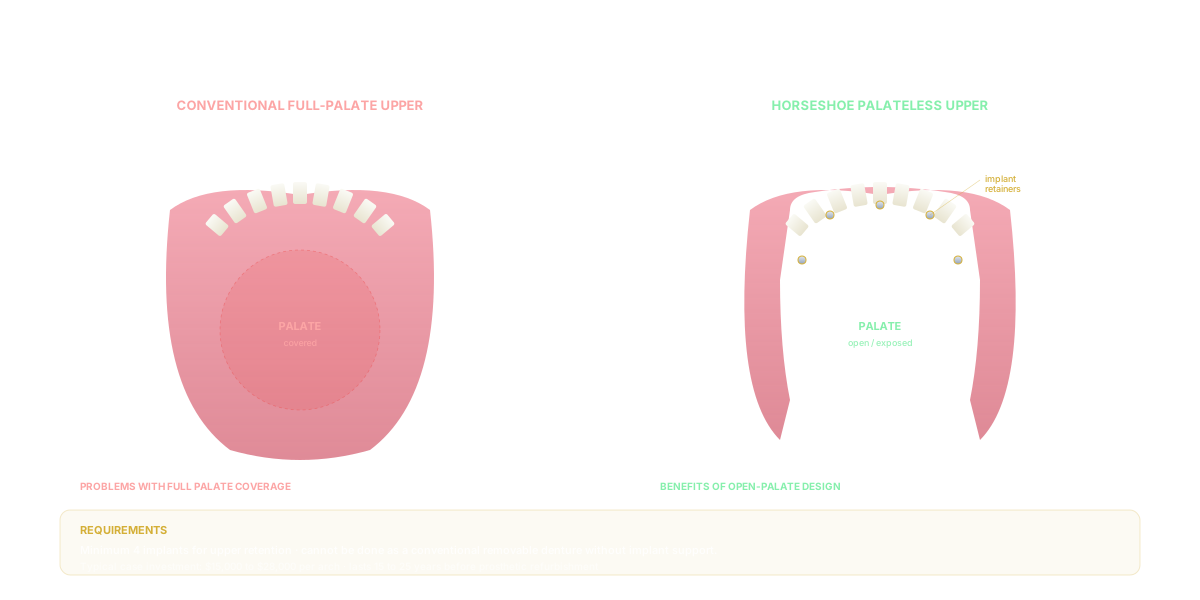
A conventional full upper denture covers the entire roof of the mouth (palate) to create the suction seal that keeps it in place. That palatal coverage is also what causes the most common patient complaints: muted taste, increased gag reflex, altered speech, and a feeling of bulkiness. Palateless upper dentures, also called horseshoe or U-shaped dentures, remove this central palatal section. The tradeoff: they require 4 or more implants for support because suction is no longer available. This guide covers when palateless dentures are the right choice, how the procedure works, and what the realistic outcomes look like.
Why do patients want palateless dentures?
Four common complaints drive interest in palateless designs:
Lost taste sensation. The soft palate contains taste buds that contribute to flavor perception. Covering the palate with acrylic blocks these taste buds and reduces overall food enjoyment. Patients commonly report that food tastes “muted” or “less interesting” with a full-coverage denture.
Gag reflex. The posterior palate is a highly sensitive gag trigger zone. Patients with hyperactive gag reflexes may struggle for months or years to tolerate a full upper denture. Some never adapt and abandon the denture entirely.
Speech changes. A 1.5 to 2 mm thick acrylic plate on the palate alters how the tongue contacts the roof of the mouth, affecting the production of consonants like t, d, n, l, s, and th. Most patients adapt within 4 to 8 weeks but professional voice users (singers, broadcasters, teachers, musicians) often find the speech change unacceptable.
Bulky feel. The palatal coverage adds significant material to the mouth. Patients describe it as feeling like “something stuck to the roof of my mouth” that they remain aware of constantly.
Palateless dentures eliminate all four issues by simply removing the palatal section.
How do palateless dentures work?
A palateless upper denture is shaped like a horseshoe or U, with acrylic only along the dental ridge where the teeth attach. The central palate is completely open. This design creates two requirements:
Implant support is mandatory. Without palatal suction for retention, the denture must be anchored to dental implants. Most palateless overdentures use 4 to 6 implants placed across the upper arch.
Different denture base material. Some palateless dentures use a metal framework (cobalt-chrome) instead of acrylic for the base because metal can be made thinner and stronger in the U-shape, increasing tongue space.
The denture either snaps onto the implants (removable overdenture) or screws onto them (fixed bridge or All-on-4 design).
Two implant configurations
Snap-in palateless overdenture. The denture has 4 to 6 attachments inside that snap onto matching abutments on the implants. Patient removes the denture nightly for cleaning. Cost $1,500–$3,000 per arch. Easier to clean and modify, but requires nightly removal.
Fixed palateless bridge (All-on-4 or All-on-X). The acrylic teeth are screwed permanently onto the implants and only the dentist can remove them. No nightly removal. Cost $1,500–$3,000 per arch. Closest to natural teeth in feel and function.
Both are palateless. The choice between them depends on patient preference for removable versus fixed, oral hygiene capability, and budget.
What does restoring taste actually feel like?
Patients who switch from full-coverage upper dentures to palateless implant overdentures consistently describe specific changes:
Hot and cold detection returns. A covered palate insulates from temperature; palateless designs allow normal sensing of hot soup, cold ice cream, and warm beverages.
Texture perception improves. The tongue can feel food more accurately when the palate is uncovered, helping with sense of food crunchiness, smoothness, and consistency.
Specific flavors return. Patients particularly notice spicy foods, citrus, and complex savory flavors becoming more vivid.
Wine and coffee taste closer to normal. Connoisseurs of beverages with subtle flavor profiles often report dramatic improvement.
These improvements occur because roughly 30% of taste perception comes from taste buds, with significant numbers located on the palate (especially the soft palate). The other 70% comes from smell (retronasal olfaction). Conventional dentures only block the taste bud component but that 30% is what patients describe regaining.
Who is a candidate?
Good candidates for palateless dentures:
Patients with hyperactive gag reflex. The palate uncoverage eliminates the trigger zone. Some patients can wear palateless dentures who could not wear conventional uppers at all.
Patients with healthy upper jaw bone. 4 to 6 implants require adequate bone width and height. CBCT scan determines candidacy.
Patients seeking maximum function and taste. Palateless designs deliver the closest experience to natural teeth.
Wine, coffee, food professionals. Anyone whose work depends on taste perception benefits dramatically.
Singers, broadcasters, public speakers. Speech with palateless designs more closely matches pre-denture speech.
Less appropriate candidates:
Severely resorbed upper jaw without grafting plan. Patients without enough bone for 4 implants would need extensive sinus lifts and bone grafts, often costing $2,000-$8,000 additional.
Patients with major medical contraindications to surgery. Uncontrolled diabetes, recent radiation, certain bisphosphonate use, severe cardiovascular disease.
Patients on extreme budget. A conventional full upper denture runs $1,500–$3,000 versus runs $5,000–$15,000 for palateless implant treatment.
Heavy smokers. Implant failure rates are 2 to 3x higher in heavy smokers per implant longevity studies.
Treatment timeline
Week 1: Consultation and imaging. CBCT scan, intraoral photos, treatment plan and cost discussion.
Week 2 to 4: Implant placement surgery. 4 to 6 implants placed in upper jaw. Local anesthesia, with oral sedation available. Recovery 3 to 7 days.
Month 1 to 6: Osseointegration. Implants integrate with bone. Patient wears a temporary denture (often the existing conventional denture, modified) during this period.
Month 4 to 6: Final palateless denture. Impressions taken, denture fabricated, attachments connected to implants.
Month 6+: Adjustment and maintenance. 2 to 3 follow-up visits for fine-tuning. Annual maintenance visits ongoing.
For patients who qualify, immediate-load protocols (sometimes called Teeth in a Day) can deliver a temporary palateless bridge on the same day as implant placement, with the final restoration delivered after healing.
What does this look like at our practice?
At Serenity Dental of Bloomingdale we discuss palateless options with every full upper denture patient who has adequate bone for implant placement. The palateless design is overwhelmingly the preferred experience for patients who can fund it, and the difference in patient satisfaction between conventional full coverage and palateless implant overdentures is one of the clearest in clinical dentistry. We use guided implant surgery with CBCT planning to optimize implant positions for both bone availability and attachment alignment.
When should you call us?
Schedule a consultation if you:
- Currently wear a full upper denture and find the palatal coverage unbearable
- Have a strong gag reflex that prevented you from adapting to a conventional denture
- Want to restore taste sensitivity for food enjoyment
- Are a singer, broadcaster, or food professional considering upper denture treatment
- Are planning All-on-4 or implant overdenture treatment
Same-day or urgent care for:
- Implant pain or swelling after placement
- Loose denture from broken or worn attachments
- Bleeding around implant sites
Medical disclaimer
Implant treatment outcomes depend on individual bone quality, gum health, oral hygiene, smoking status, and overall medical health. Cost ranges are 2026 averages from American Academy of Implant Dentistry and American College of Prosthodontists surveys. Palateless implant treatment requires surgical procedures with associated risks discussed during consultation. This guide is general information, not personalized treatment advice. Schedule an evaluation with Dr. Husna Khan at Serenity Dental of Bloomingdale to determine candidacy.
Cost figures in this article are typical ranges for the Chicago area, compiled from regional fee data. They are not quotes from Serenity Dental of Bloomingdale; your fee depends on exam findings, materials, and insurance benefits, and we provide a written, itemized estimate before any treatment begins.
FAQs
What is a palateless upper denture?
Can you get an upper denture without the roof?
How much do palateless dentures cost?
Will I get my taste back with a palateless denture?
Are palateless dentures stable enough to eat with?
Who should not get palateless dentures?
How long does the palateless denture treatment take?
Is the palate covered or uncovered in All-on-4?
Educational content only. Recommendations are personalized after an exam and any needed imaging.
Pricing note. Prices shown are approximate Chicago-area 2026 ranges compiled from public cost guides — not a quote or a Serenity Dental fee schedule. Your actual cost depends on your clinical needs, the materials chosen, and your insurance. We provide a written estimate before any treatment begins. Call (630) 359-0105 to confirm pricing for your situation.
Need help with this in real life?
Reading helps. Talking to someone who can look at your actual teeth and symptoms helps more. If you want a clear next step, we’re here.
Related articles
Implant-supported dentures: snap-in and overdenture guide
Implant-supported dentures snap onto 2-6 implants for stability. Compare snap-in, bar-retained, and fixed options, plus the procedure and recovery.
Read article →Getting used to dentures: eating, speaking, daily life guide
Adjust to dentures in 2-8 weeks. Eating with dentures, speech changes, kissing, sleeping, sore spots, and the realistic week-by-week timeline.
Read article →