Crowns
What is a dental crown? Complete guide for patients
A dental crown is a tooth-shaped cap that covers a damaged tooth. What crowns do, when they are needed, materials, procedure, and cost.
A dental crown is a tooth-shaped cap that covers a damaged tooth above the gumline. Also called a tooth cap, a crown restores the tooth’s original size, shape, strength, and appearance. Modern crowns are custom-made from ceramic materials (zirconia or lithium disilicate, the most common today), porcelain-fused-to-metal (PFM), or gold alloy, and they are cemented permanently onto the prepared tooth. Crowns last 10 to 25 years on average and cost $1,000 to $3,500 without insurance. This guide explains what a dental crown is, when one is clinically needed, how the procedure works, what materials and costs to expect, and how a crown compares with other restorations like fillings and veneers.

Written by Dr. Husna Khan, DDS
Serenity Dental of Bloomingdale · April 19, 2026
Call (630) 359-0105 to schedule a crown consultation and find out whether your tooth genuinely needs one.
For the full crown service overview, see the dental crowns service page. For material comparisons and cost, see types of dental crowns and dental crown cost.
The short answer
A dental crown (also called a tooth crown or tooth cap) is a custom-made cover that fits over an entire tooth to protect, strengthen, or restore it. Think of it as a helmet for a tooth — the underlying tooth is still there, but the crown protects it from further damage, restores normal function, and returns the appearance to what a healthy tooth should look like.
In our Bloomingdale office, the usual path to a crown is a large old filling that finally cracked rather than a dramatic injury. We see patients surprised by how normal a well-made crown feels within a week or two.
Modern crown workflows have quietly removed most of the historical downsides, because digital scanning replaced the gagging impression trays, stronger ceramics removed the metal margin that once darkened gumlines, and same-day milling now lets some patients skip the temporary phase entirely. Better tools, easier visits. Success over decades depends less on the crown itself than on the habits around it, given that the porcelain cannot decay but the margin where it meets natural tooth can, which keeps brushing, flossing, and a nightguard for grinders doing the real long-term work. Margins need maintenance.
Crowns differ from other restorations in how much of the tooth they cover:
| Restoration | Coverage | Typical use |
|---|---|---|
| Filling | Small portion of tooth | Small-to-medium cavities |
| Inlay | Between cusps of back tooth | Medium cavities, more durable than filling |
| Onlay | Covers one or more cusps | Larger cavities, preserves more tooth than crown |
| Crown (cap) | Entire visible tooth | Significantly damaged or weakened teeth |
| Veneer | Front surface only | Cosmetic improvement, structurally sound tooth |
This guide focuses on full crowns — the workhorse restoration when a tooth needs the most protection.
What a crown actually is (physical description)
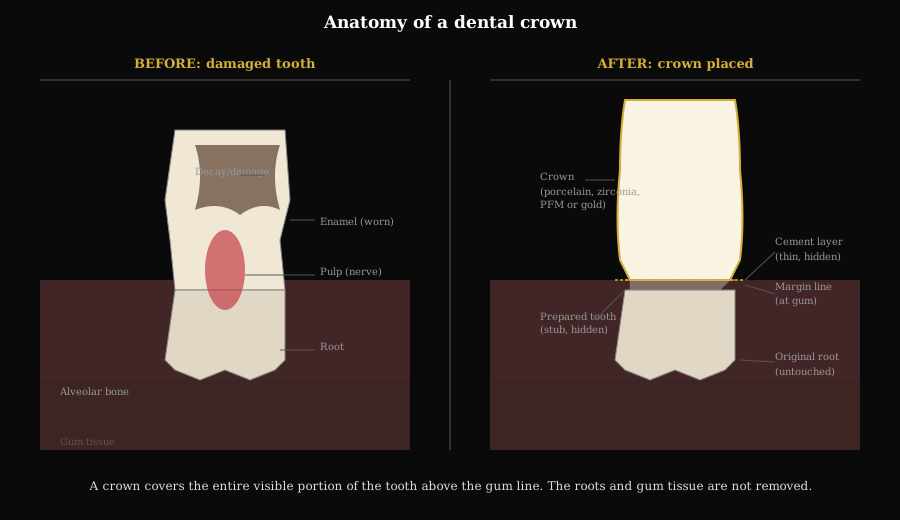
A dental crown is a hollow, tooth-shaped shell designed to fit precisely over a prepared tooth. The specifications:
- Thickness: 1 to 2 millimeters on most surfaces, slightly thicker on chewing surfaces for durability
- Shape: custom-milled or layered to match the original tooth anatomy
- Color: matched to surrounding teeth (for visible crowns) or selected by patient preference
- Material: ceramic, metal, or ceramic-over-metal depending on location and preference
- Attachment: cemented permanently with dental adhesive that bonds to both the crown and underlying tooth
Once cemented, the crown is a permanent part of the mouth. It cannot be removed without being cut off, and under normal conditions it functions identically to a natural tooth for biting, chewing, speaking, and smiling.
What the underlying tooth looks like
The tooth under a crown has been shaped (prepared) to accommodate the crown. The dentist removes approximately 1 to 2 millimeters of outer tooth structure from all sides of the tooth, leaving a slightly smaller, tapered core. Any decay or damaged material is removed as part of this preparation. Sometimes a core buildup (additional filling material) is added if too much tooth has been lost, creating a stable foundation for the crown.
What does a dental crown look like?
A finished crown looks like the tooth it replaced, only whole. Porcelain and zirconia crowns are shade-matched to the neighboring teeth from a shade guide before they are made, so from a normal speaking distance the crown is not visible as a crown; the giveaway, when there is one, is a slightly more uniform surface than a natural tooth. On a front tooth the edge of the crown is tucked just under the gum line so no dark line shows when you smile. On a molar the crown covers the whole chewing surface with the cusps and grooves rebuilt so food does not pack against the neighbors.
Temporary crowns look different. They are acrylic, usually a shade lighter and less glossy than the final crown, and slightly bulkier at the gum line; they are meant to last two or three weeks, not to be admired. Gold and metal crowns are still used on back molars for patients who want maximum durability and do not mind the color, and porcelain-fused-to-metal crowns show a thin grey line at the gum if the gum recedes over the years, which is the main reason we place fewer of them now. In our Bloomingdale practice we photograph the shade match at the try-in appointment so you can see the crown next to your own teeth before it is cemented.
When you actually need a dental crown
Not every damaged tooth needs a crown. Dr. Husna Khan follows evidence-based criteria aligned with American Dental Association (ADA) restoration guidelines. The six primary indications:
1. Large filling failure or risk
Without crown coverage, the remaining tooth structure is thin and prone to fracture. Placing a crown redistributes biting forces and prevents the tooth from splitting. This is the single most common reason for crowns in adult dentistry per ADA restorative care guidelines.
2. Cracked or fractured tooth
A tooth that has cracked (either visibly or with symptoms like pain when biting) often needs a crown to hold it together. Untreated cracks typically propagate and lead to tooth loss. Once placed in time, a well-fitted crown can arrest crack progression.
3. After a root canal
Back teeth that have had a root canal become brittle because the pulp (nerve/blood supply) has been removed. A crown is the standard of care per American Association of Endodontists (AAE) guidelines to protect the tooth from fracture, which otherwise happens in approximately 1 of every 4 untreated teeth within 10 years.
4. Severe wear from grinding
Patients with bruxism (grinding) can wear teeth down significantly. Crowns restore lost tooth height, protect remaining tooth structure, and restore proper bite function.
5. Advanced decay
When decay has destroyed too much of the tooth for a filling, a crown covers the remaining structure and provides a durable sealed surface. Combined with a core buildup, crowns can save teeth that would otherwise need extraction.
6. Dental implants
Crown placement sits on top of every single-tooth dental implant. The implant post replaces the tooth root; the crown replaces the visible tooth. This is the primary application of crowns in implant dentistry.
What is NOT an indication for a crown
A crown is generally not indicated for:
- Small to moderate cavities — fillings are more appropriate
- Purely cosmetic reasons on structurally sound teeth — veneers preserve more tooth
- Temporary discoloration — whitening is more conservative
- Chipping of a corner — bonding or onlay may be better
Dr. Husna Khan discusses conservative alternatives before recommending a crown and will always choose the least invasive effective option for each situation.
How the procedure works
Understanding what actually happens during the procedure makes it less intimidating.
Traditional two-visit approach
Visit 1 (60 to 90 minutes):
- Local anesthetic to numb the area (no pain during the procedure)
- Removal of any decay or damaged material
- Reshaping of the tooth (preparation) to create space for the crown
- Optional core buildup if substantial tooth is missing
- Digital scan or traditional impression of the prepared tooth
- Selection of shade (color) to match surrounding teeth
- Fabrication and placement of a temporary crown
- Bite check and final adjustments
Between visits the impression goes to a dental laboratory where a technician fabricates the permanent crown. Lab time is typically 2 to 3 weeks.
Visit 2 (30 to 45 minutes):
- Removal of the temporary crown
- Try-in of the permanent crown for fit, shade, and bite
- Minor adjustments if needed
- Permanent cementation with dental adhesive
- Final bite check and polishing
Same-day CEREC approach
Some crowns can be made in a single 90-minute to 2-hour visit using in-office milling technology:
- Digital scan of the prepared tooth
- Design of the crown in CAD software on-screen
- Milling of the crown from a ceramic block (10 to 20 minutes)
- Glazing and firing in the in-office oven (15 to 25 minutes)
- Cementation same day
CEREC produces results comparable to lab-made crowns for single-tooth restorations. For complex multi-unit cases or premium esthetic zones, lab fabrication is often still preferred.
Crown materials explained
Five materials dominate modern crown dentistry. Full material comparisons are in types of dental crowns; this is the brief overview.
Zirconia
The most common crown material today. Very strong, good esthetics, compatible with most situations. Zirconia crowns last 15 to 25 years and cost $1,000 to $2,500. Works well for back and front teeth.
Lithium disilicate (e.max)
Premium ceramic prized for translucency and natural appearance. Best for front teeth where esthetics matter most. Strength is adequate for most positions but not quite zirconia-level. Lifespan 10 to 20 years, cost $1,000 to $2,500.
Porcelain-fused-to-metal (PFM)
The traditional workhorse. Metal core covered by porcelain. Strong and budget-friendly but can show a dark margin at the gumline over years. Lifespan 10 to 15 years, cost $900 to $2,000.
Gold alloy
The most durable material, lasting 20 to 30+ years. Rarely chosen today for esthetic reasons (gold color), but still excellent for back molars where durability matters more than appearance. Cost $1,200 to $3,000, moving with the gold market.
Stainless steel
Preformed crowns used primarily for pediatric teeth (baby molars) per American Academy of Pediatric Dentistry (AAPD) guidelines. Occasionally used as adult temporaries. Cost $300 to $600.
What a crown costs
Typical crown costs across materials:
| Material | Cost without insurance | Cost with 50% PPO insurance |
|---|---|---|
| PFM | $900-$2,000 | $450-$1,000 |
| Zirconia | $1,000-$2,500 | $500-$1,250 |
| Lithium disilicate (e.max) | $1,000-$2,500 | $500-$1,250 |
| Gold alloy | $1,200-$3,000 | $600-$1,500 |
| Stainless steel (pediatric) | $150-$300 | $75-$150 |
Additional costs that may apply:
- Core buildup (D2950): $200 to $450 when substantial tooth is missing
- Post and core (D2952): $250 to $500 when a root canal has left the tooth hollow
- Same-day CEREC: similar cost to lab crowns of matching material
- Crown lengthening: $600 to $1,500 when the tooth is too short for crown retention
For a full cost breakdown including insurance strategies and financing, see dental crown cost.
What a crown does for you (functional benefits)
A properly placed crown restores:
- Chewing function equivalent to a natural tooth
- Bite balance so forces distribute evenly across all teeth
- Speech clarity that had been affected by broken or missing tooth structure
- Appearance matched to surrounding natural teeth
- Protection of remaining tooth structure from further damage
- Sealing against bacterial entry and future decay
- Stability for the tooth so it does not shift or over-erupt
Dr. Husna Khan has placed thousands of crowns at Serenity Dental of Bloomingdale and prioritizes preservation of remaining natural tooth structure at every step.
How a crown feels day-to-day
Once cemented and adjusted, a crown should feel like a natural tooth. Normal day-to-day experience:
- Chewing: normal, with no pain or sensitivity
- Temperature: normal sensitivity to hot and cold (possibly slightly reduced because the crown insulates the tooth)
- Appearance: indistinguishable from natural teeth for ceramic crowns
- Speech: no change after a brief adaptation period (a few days at most)
- Flossing: requires proper technique to clean around the crown margin
- Brushing: standard technique, crown resists wear from brushing
When a crown does NOT feel right
Report any of these to the office:
- Ongoing pain or sensitivity after the first 2 to 3 weeks
- Bite feels high or uneven
- Sharp or rough edge catching the tongue or cheek
- Food persistently trapped under the crown
- Gum irritation at the crown margin
- A feeling of crown mobility
All are addressable. See crown pain troubleshooting for detail.
Crown vs other restorations at a glance
Understanding when a crown is the right choice vs other options:
Crown vs filling
Choose a filling when the cavity is small enough that adequate tooth structure remains. Choose a crown when the damage exceeds about 50 percent of the tooth. Fillings cost less (typically $150 to $550) but survive less force; crowns cost more but last longer on compromised teeth.
Crown vs inlay or onlay
An inlay fits inside the tooth like a large puzzle piece. An onlay covers one or more cusps (the bumps on chewing surfaces). Both preserve more natural tooth than a crown and last roughly as long. Choose an onlay instead of a crown when the tooth has enough structure to support one.
Crown vs veneer
A veneer covers only the front surface of a tooth (typically a front tooth) for cosmetic reasons. A crown covers the entire tooth. Choose a veneer when the tooth is structurally healthy but aesthetically unsatisfactory. Choose a crown when the tooth is both damaged and needs cosmetic improvement.
Crown vs implant
A crown restores a damaged tooth you still have. An implant replaces a tooth that was lost. If the tooth can be saved with a crown, saving it typically runs $1,000 to $3,500. If the tooth must be extracted, replacement with an implant plus crown runs $3,500 to $6,000. Save the tooth if clinically feasible.
For a detailed decision framework, see crown vs filling vs inlay.
How long a crown lasts
Average lifespans by material:
- Gold crowns: 20 to 30+ years
- Zirconia crowns: 15 to 25 years
- Lithium disilicate: 10 to 20 years
- Porcelain-fused-to-metal: 10 to 15 years
Real-world lifespan is driven primarily by:
- Oral hygiene around the crown margin (decay under the margin is the #1 replacement cause)
- Bite forces (grinders wear crowns 2 to 3 times faster)
- Tooth position (molars see more force than front teeth)
- Quality of placement (properly-fitting crowns last significantly longer)
Crowns do not need to be replaced on a schedule. They are replaced when they fail. See how long do crowns last for detail.
What to expect at your first crown appointment
Preparation for the first visit:
- Before: have a meal ahead of the appointment, take any prescribed pre-medication, plan 60 to 90 minutes
- Arrival: normal appointment check-in
- Numbing: topical gel, then injection, fully numb within 5 minutes
- Procedure: preparation and impression as above
- Leaving: temporary crown in place, numbness lasts 2 to 4 hours, avoid chewing sticky foods on that side
Between visits:
- Temporary crown care: avoid very sticky or hard foods, brush carefully, floss by pulling out sideways
- If temporary falls off: call the office, it can usually be re-cemented
- Sensitivity: mild cold sensitivity is normal under a temporary
For the full procedural walkthrough, see crown procedure step by step.
Why Serenity Dental patients choose us for crowns
Serenity Dental of Bloomingdale provides:
- Conservative crown philosophy — crowns recommended only when clearly indicated
- Written cost estimates before treatment begins
- Digital impressions (no goopy traditional impressions)
- Multiple material options matched to each specific tooth and patient preference
- Insurance coordination and pre-authorization
- Same-day CEREC available for suitable cases
- Experienced lab partnerships for premium esthetic zone work
- Ongoing maintenance guidance to maximize crown lifespan
- Warranty support for workmanship-related issues
Schedule a consultation at Serenity Dental by calling (630) 359-0105. Dr. Husna Khan will review whether a crown is genuinely indicated for your situation and discuss all appropriate options.
Related: dental crowns service page · dental crown cost.
Cost figures in this article are Chicago-area reference ranges compiled from regional fee data, not quotes from Serenity Dental of Bloomingdale. Every dental insurance carrier negotiates its own fee schedule, and Medicaid and Medicare Advantage plans set separate schedules of their own, so the amount a plan allows can sit above or below these ranges. Your actual fee depends on exam findings, materials, and benefits, and we provide a written, itemized estimate before any treatment begins.
A note on this article
This overview is general information about crowns as a treatment category. It does not replace an in-person exam. Whether a crown, an onlay, or a filling is right for a specific tooth depends on how much sound structure remains, which only an exam and X-rays can show.
Crowns occupy a specific rung on the restorative ladder that makes the decision less mysterious than it feels, because fillings repair what a tooth has lost, onlays rebuild what a filling cannot, and a crown takes over only when the remaining walls are too thin to trust under chewing force. Structure decides, not preference. Delaying a recommended crown rarely saves the fee and often multiplies it, since a cracked or hollowed tooth that finally fractures below the gumline can convert a single-visit restoration into a root canal, a surgical extraction, or an implant conversation that costs several times the original quote. Waiting compounds cost. Longevity statistics for crowns reward patients who read the fine print, because the fifteen-year and twenty-five-year figures in this guide describe crowns on teeth that get brushed, flossed, and examined on schedule, and the failures that drag averages down cluster heavily among neglected margins and unprotected grinding habits, which makes home care the least expensive longevity upgrade on this entire page. Averages hide habits.
When to call rather than wait
Crown decisions are usually made calmly at a planned visit. Three situations are different.
Call the same day if a cracked tooth suddenly hurts on release after biting. That release-pain pattern is the classic sign of a crack that is spreading, and a crown placed early can stop it before the crack reaches the root.
Call promptly when a large piece of tooth or an old filling breaks off, even without pain. Exposed inner tooth structure softens quickly, and knowing when to call preserves enough structure for a straightforward crown.
Call right away at (630) 359-0105 for swelling or throbbing around a broken or heavily filled tooth. Infection changes the plan from a crown to a root canal plus crown, and earlier treatment is simpler treatment.
FAQs
What is a dental crown?
What is a tooth cap?
When do you need a dental crown?
How does a dental crown work?
How long does a dental crown procedure take?
What is the typical cost range for the major crown types?
How long does a dental crown last?
Are dental crowns worth it?
What does a dental crown look like?
Educational content only. Recommendations are personalized after an exam and any needed imaging.
About this article
Reviewed by Dr. Husna Khan, DDS, of Serenity Dental of Bloomingdale. The standard of care at Serenity Dental aligns with American Dental Association (ADA) restorative guidelines, which recommend crowns only when conservative alternatives (fillings, inlays, onlays) cannot reliably restore a compromised tooth long-term.
Educational content. Individual treatment recommendations depend on clinical evaluation. Cited sources: American Dental Association (ADA) restorative care guidelines, American Association of Endodontists (AAE) post-root-canal restoration recommendations, American Academy of Pediatric Dentistry (AAPD) guidelines on stainless steel crowns, Centers for Disease Control and Prevention (CDC) oral health surveillance data.
Related: dental crowns service page.
Need help with this in real life?
Reading helps. Talking to someone who can look at your actual teeth and symptoms helps more. If you want a clear next step, we’re here.
Related articles
Dental crown cost in 2026: real pricing by material type
Zirconia crowns cost $1,000-$2,500; PFM $900-$2,000; gold $1,200-$3,000. Insurance typically covers 50%. What drives cost and how to budget.
Read article →Temporary crown guide: care, problems, and what to expect
Temporary crowns bridge the gap between prep and final. What to eat and avoid, what to do if it falls off, pain troubleshooting, care tips.
Read article →