
Cosmetic Dentistry
Does Insurance Cover Dental Veneers? Coverage and Payment Options
Plain answers about veneer insurance coverage, what counts as cosmetic, and what payment plans actually work for patients in Bloomingdale, IL.
No, most dental insurance plans do not cover dental veneers. That short answer holds for the majority of cases because insurance carriers classify veneers as cosmetic, and cosmetic procedures sit outside what major plans pay for. There are real exceptions, and there are also several payment paths that work well for patients who want veneers without insurance support.
Dr. Husna Khan walks through these options at every veneer consultation in our Bloomingdale practice. The article below covers the same ground in writing.
Why insurance usually says no
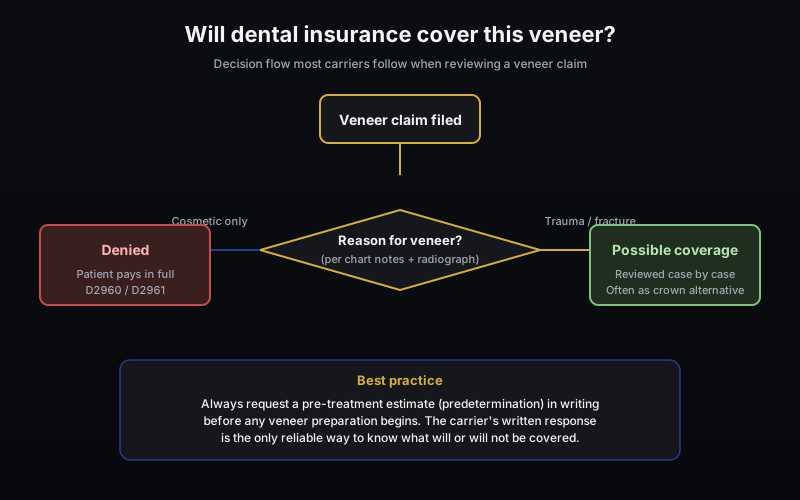
Major PPO plans, HMO plans, and most employer-sponsored dental benefits use a coding system from the American Dental Association called CDT codes. Veneers fall under codes that carriers flag as cosmetic, which means the carrier will not contribute toward the fee even if the rest of the plan is in network.
Carrier reasoning is consistent: if a tooth is otherwise functional and the reason for the treatment is appearance, the carrier will not pay. That stays true whether the case is one chipped tooth or a full smile design.
When insurance might contribute
A few real exceptions exist, and they come up occasionally in our consultations.
Veneers placed to restore a fractured front tooth after an accident are sometimes billed under a restorative code that certain plans cover. Documentation from the exam, the radiograph, and the dental history matters here because the claim depends on the cause being clearly restorative rather than cosmetic.
Teeth with severe enamel hypoplasia or other congenital defects occasionally support a restorative code. Coverage varies plan to plan and usually requires a pre-treatment estimate.
Structural damage often calls for a crown rather than a veneer. Crowns are more often covered by insurance, even on front teeth. We have a separate guide on veneers vs crowns that walks through when one or the other is the correct restorative choice.
How a pre-treatment estimate works
If there is any chance your case might qualify for partial coverage, the right step is a pre-treatment estimate, sometimes called a predetermination. Your dentist submits the proposed treatment to the carrier in writing before any work begins. Back comes a written statement of what the carrier will and will not pay.
Pre-treatment estimates are not binding determinations. Final benefits depend on plan language at the time the claim is processed, as the Academy of General Dentistry has noted, though a written predetermination remains the closest thing to a real answer available up front.
Medicaid, Medicare, and Illinois plans
Medicaid in Illinois does not cover cosmetic veneers. Adult dental benefits under Medicaid are limited and focus on restorative and emergency care, not cosmetic restorations.
Medicare itself does not cover routine dental care at all. Medicare Advantage plans sometimes include dental benefits, but those benefits do not extend to cosmetic procedures. Coverage varies by carrier and by plan year.
If you are unsure, the most reliable answer comes from calling the member services number on the back of your insurance card and asking specifically about CDT code D2962, which is the porcelain veneer code, or D2960 for composite. Carriers give clearer answers than brochures do.
Reading your plan document
Three lines in a plan booklet decide most veneer claims.
Look for the cosmetic exclusion clause first. Nearly every plan carries one, and its exact wording matters: some exclude procedures performed primarily for appearance, which leaves room for a restorative argument, while others exclude veneers by name, which does not.
Find the missing tooth and pre-existing condition provisions next. Teeth already chipped when coverage began may fall outside benefits regardless of how the claim is coded.
Check the annual maximum last. Most plans cap yearly benefits somewhere between one thousand and two thousand dollars, which means that even a fully covered restorative claim on a front tooth absorbs a substantial share of the year’s allowance. Cost remains among the leading reasons adults defer needed dental care, per the CDC, and annual maximums that have not risen with fees are part of that picture.
What to ask when you call your carrier
Five minutes on the phone, asked well, beats a week of guessing.
Give the representative the specific procedure code rather than the word veneer, because a carrier system searching D2962 returns a definitive contract answer while a conversation about cosmetic dentistry in general returns an opinion, and the difference between those two things shows up later when the claim is adjudicated against the code and not against the phone call. Codes are the language. Use them.
Ask four things. Whether D2962 and D2960 are covered benefits under the plan. What the annual maximum is and how much of it has already been used this year. Whether a predetermination can be submitted and how long the carrier takes to respond. Whether an alternate benefit provision applies, which is the clause that lets a carrier pay toward a less expensive treatment than the one performed.
Write down the representative’s name, the date, and a reference number for the call. None of that makes a verbal answer binding, but it gives the practice something concrete to cite if the claim is later processed differently than described.
Payment options when insurance does not pay
Several payment paths work well for cosmetic cases, and most cosmetic dentistry practices offer some combination.
Third-party financing through Cherry, CareCredit, or Sunbit spreads the total over six, twelve, or longer terms. Some plans offer promotional periods at zero interest if the balance is paid within a set window. The CDC notes that affordability planning improves overall access to recommended dental care, and financing is one practical lever.
In-house payment plans split the case into installments tied to treatment milestones, typically a deposit at the design appointment, a payment at the prep visit, and a final payment at seating. These are usually offered without interest because the practice is the lender.
Health savings accounts and flexible spending accounts can sometimes be used for the cosmetic portion of treatment when the IRS allows it. Rules are narrow, and an HSA administrator should confirm in writing.
Dental discount plans, which are not insurance, charge an annual membership fee in exchange for reduced rates on services. Read the fee schedule closely before enrolling, since cosmetic procedures are excluded from many of them.
Why the answer is almost always no
Insurance exists to restore function, not appearance. That single principle explains nearly every veneer denial.
A carrier evaluating a claim asks whether the tooth in question can bite, chew, and hold its place in the arch, and if the answer is yes then the veneer is improving how the tooth looks rather than how it works, which places it outside the contract no matter how much the appearance bothers the patient or how carefully the dentist documents the case. Function is the test. Appearance is not.
Knowing that in advance changes the planning. When a case is clearly cosmetic, the productive next step is rarely a predetermination that will come back denied; it is comparing financing terms and deciding how many teeth the case really needs. Time spent appealing a clearly cosmetic claim is usually time better spent narrowing the treatment plan.
Why a written estimate matters more than a quote on the phone
Cost questions over the phone get rough numbers because the answer depends on the exam. Written estimates after a consultation work differently. It accounts for the number of teeth, the chosen material, the lab, and any related work like night guards or pre-treatment whitening.
We provide a written, itemized estimate at every veneer consultation in our practice so patients know exactly what is included before deciding to move forward.
Watch for these gotchas
Three things catch patients off guard often enough to be worth flagging.
Low quotes that exclude lab fees, temporary veneers, and post-op visits end up higher than complete quotes that include them. Always check what is in the line items.
Deferred-interest offers become expensive if the promotional period ends with a balance outstanding. Read the disclosure on the financing application before signing.
Read any advertised refund or assured outcome carefully. Cosmetic results depend on patient factors that no clinic can fully control, and an honest practice will explain limits up front.
This article is general information rather than individualized medical or financial advice. Coverage and payment terms vary by plan and by lender, and the right answer depends on your specific situation.
When to call rather than wait
Insurance questions are rarely time-sensitive, but a few situations are.
Call your carrier before the prep appointment, not after. Once a tooth has been prepared, the treatment plan is difficult to change if coverage comes back differently than expected.
Call the office if a fractured front tooth is the reason you are considering a veneer. Documentation captured at the time of injury, including photographs and radiographs, is what supports a restorative claim later, and it cannot be recreated weeks afterward.
Call promptly if an existing veneer debonds, cracks, or becomes sensitive at the margin. Repairs and rebonds are usually straightforward when addressed early, and the cost climbs once decay reaches the tooth beneath.
Seek urgent care the same day after a blow to a front tooth. Guidance from the International Association of Dental Traumatology (IADT) puts the evaluation window at 24 hours, both because pulp status can change in the days that follow and because the record created at that visit often determines whether a later claim is payable.
What to do next
If you are weighing veneers and want to know what insurance will and will not cover for your specific plan, contact our Bloomingdale office. We will run a pre-treatment estimate where appropriate and give you a written, itemized fee schedule before any treatment begins.
FAQs
Does dental insurance cover veneers?
Will Medicaid pay for veneers in Illinois?
What is a pre-treatment estimate?
Can I finance veneers without insurance?
Can I use an HSA or FSA for veneers?
Which CDT code applies to a veneer?
Will insurance cover a crown instead of a veneer?
Does a pre-treatment estimate lock in payment?
What happens if a claim for a veneer is denied?
Educational content only. Recommendations are personalized after an exam and any needed imaging.
Need help with this in real life?
Reading helps. Talking to someone who can look at your actual teeth and symptoms helps more. If you want a clear next step, we’re here.
Related articles
How Long Do Dental Veneers Last? Lifespan, Wear, and Replacement
Real numbers on how long porcelain and composite veneers last, what wears them down, and how to make them last longer, from a Bloomingdale, IL dentist.
Read article →Porcelain vs Composite Veneers: An Honest Comparison
Porcelain or composite veneers? A Bloomingdale, IL dentist breaks down cost, lifespan, appearance, and which option fits which kind of patient.
Read article →Snap-On Veneers vs Permanent Veneers: An Honest Comparison
Snap-on or pop-on veneers vs bonded porcelain. A Bloomingdale, IL dentist explains who each one is for and where the marketing is misleading.
Read article →