
Cosmetic Dentistry
Porcelain vs Composite Veneers: An Honest Comparison
Porcelain or composite veneers? A Bloomingdale, IL dentist breaks down cost, lifespan, appearance, and which option fits which kind of patient.

Porcelain and composite veneers are not interchangeable. Different materials. Different chair time, different lifespans, and cost different amounts. Patients in our Bloomingdale practice often arrive expecting to choose between brands, when the real choice is between two material families with very different tradeoffs.
This guide walks through the comparison the way Dr. Husna Khan walks through it at the consultation, with the points that actually matter when you are deciding which one fits your situation.
The short version
Porcelain vs composite veneers
| Factor | Porcelain veneers | Composite veneers |
|---|---|---|
| Material | Lab-fabricated ceramic | Sculpted resin in-office |
| Visits | 2-3 | 1 |
| Lifespan | 10-15 years | 5-7 years |
| Stain resistance | Excellent | Stains over time |
| Tooth removal | Light enamel reduction | None to minimal |
| Repairability | Replace if fractured | Easily patched |
| Cost (per tooth) | Roughly $900-$2,500 | Roughly $450-$1,250 |
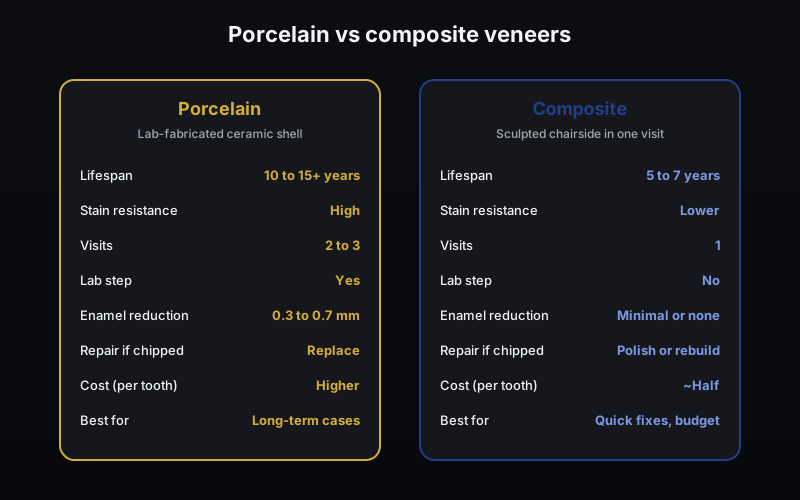
Porcelain veneers are thin lab-fabricated shells, bonded to the tooth in a separate visit only after the lab has pressed, layered, glazed, and fired the ceramic against the exact impression of your prepared tooth, which is where most of the fee and most of the realism both come from, after the lab makes them. In the chair, composite veneers are sculpted directly on the tooth from a tooth-colored resin, layered and light-cured in stages until the shape, contour, and shade all read correctly against the neighbors. Porcelain tends to last longer and resist stain better. It costs less. It repairs easily when small chips happen.
That summary is true, but the right choice depends on which teeth, how many, your budget, and how your bite behaves at night.
How each one is made
Porcelain veneers are usually milled or pressed in a dental lab from a digital scan or impression of your prepared teeth. The process takes one to two weeks. During that time you wear temporary veneers that protect the prepared surface and let you preview the planned shape. Resin cement bonds the final porcelain under a curing light.
Chairside, the material goes on in layers. Dr. Husna Khan shapes the material freehand or against a wax-up template, sets it under a blue curing light, and polishes it to a high gloss. There is no lab step and no waiting period.
The American Academy of Cosmetic Dentistry treats both as accepted cosmetic restorations, but the technique demands of composite are higher because the artistry happens chairside, not in a lab.
Lifespan, in real numbers
Porcelain veneers survive longer in published data. Survival above 90 percent at ten years for porcelain placed under normal conditions is the figure a Journal of Esthetic and Restorative Dentistry systematic review reports. Twenty-year retrospective studies show survival above 80 percent in well-maintained cases.
Refurbishing or replacement comes sooner. Published estimates often fall in the five to seven year range for the average composite veneer, with shorter spans common in patients who grind their teeth or drink a lot of coffee, tea, or red wine.
That gap matters. Grinding history gets walked through at every consultation for exactly this reason. The Cochrane group has published on the link between bruxism and restorative wear, and our experience matches the literature: a patient who grinds will burn through composite faster than porcelain.
Stain resistance
Glass-like surface, glass-like behavior: porcelain simply does not pick up stain the way enamel or composite does, and coffee that would dull a composite case in three years leaves fired ceramic essentially untouched. Coffee, tea, red wine, turmeric, and tobacco all stain composite over time. They will not change the color of porcelain in the same way.
Polishing refreshes the surface for a while. The shine does not stay. Lowest-maintenance color: porcelain, every time.
Appearance
A skilled cosmetic dentist can make either material look natural. Porcelain has an advantage in translucency, which is the way light passes through enamel and reflects off the dentin. The CDC notes that natural enamel is partly translucent rather than purely opaque, and high-quality porcelain reproduces that effect well.
Modern resins have improved a lot in the past decade, and a skilled operator working with current nanohybrid materials can produce results that would have been impossible with the composites of fifteen years ago. Modern resins layer opaque, dentin, and enamel shades to produce credible depth. The honest tradeoff is that composite tends to look slightly flatter under direct studio lighting, while porcelain tends to look more lifelike.
Cost
Per tooth, composite usually runs roughly half the porcelain fee, though ranges vary by region and complexity. We provide a written estimate before any treatment so the numbers are clear up front.
Two factors widen or narrow that gap:
If you want to do six or eight teeth across a smile, the per-tooth lab fee on porcelain adds up faster than chair time on composite.
If you want one or two teeth touched up to match the rest of your smile, composite is often the more practical choice because the cost difference matters less and the repairability is an advantage.
Repair and maintenance
Composite is easier to fix. Small chips polish out or rebuild chairside in one short visit, which is the flip side of composite’s softer surface: the same property that lets it wear and stain also lets it be repaired without involving a lab at all. Porcelain typically cannot be repaired in the same way; a fractured porcelain veneer often needs to be replaced.
Daily care does not differ: brushing twice, flossing, regular professional cleanings. A night guard is recommended for either material if you grind, and Dr. Husna Khan checks for grinding wear at every recall.
Tooth preparation
Traditional porcelain veneers usually require a small amount of enamel to be reduced from the front of the tooth so the veneer sits flush. Minimally invasive preparation designs, described at length in the Journal of Prosthetic Dentistry, are those that aim to keep that reduction inside enamel only.
Composite veneers can sometimes be placed with little or no preparation. That is one reason patients who are nervous about removing tooth structure often ask about composite first.
If keeping enamel intact is a priority, that is worth raising at the consultation so the plan can be designed around it.
Which option fits which patient
A few patterns repeat in our Bloomingdale practice. Patients who want the longest lifespan, the strongest stain resistance, and a high-end finish for a cosmetic case spanning multiple teeth usually do best with porcelain. Patients who want one or two teeth touched up, who are budget-sensitive, or who want to keep the door open for easy adjustments often do better with composite.
Bite history matters too. A patient who grinds heavily at night may need a more durable material plus a custom night guard regardless of which veneer is chosen.
A note on what this article is not
This is general information for patients weighing cosmetic options. It is not a substitute for an in-person exam. The right answer for your teeth depends on enamel thickness, bite, gum health, and what you want the smile to look like. We recommend a consultation before making the decision.
Booking the conversation
To talk through whether porcelain or composite veneers fit your goals, contact our Bloomingdale office to book a consultation with Dr. Husna Khan. We will review what each option would mean for your specific teeth and give you a written estimate before any treatment.
When to call rather than wait
Comparison questions can wait for a consultation. A few situations should not.
Call promptly if an existing composite veneer chips and leaves a sharp edge. Sharp composite cuts lips and tongues, and smoothing it is a five-minute fix that prevents a week of soreness.
Call about any sudden color change at the edge of a veneer, porcelain or composite. Marginal darkening that appears over weeks rather than years can signal a leaking bond, and leaks caught early are repairs rather than replacements.
Contact your dentist before whitening if you have composite veneers anywhere in your smile. Composite does not bleach, so whitening the natural teeth around it creates a mismatch that then requires replacing the composite to fix.
Cost figures in this article are typical ranges for the Chicago area, compiled from regional fee data. They are not quotes from Serenity Dental of Bloomingdale; your fee depends on exam findings, materials, and insurance benefits, and we provide a written, itemized estimate before any treatment begins.
FAQs
Which lasts longer, porcelain or composite veneers?
Are composite veneers cheaper than porcelain?
Do composite veneers stain?
Can a chipped composite veneer be repaired?
Do composite veneers require less tooth shaving?
Can composite veneers be upgraded to porcelain later?
Do porcelain and composite veneers look different up close?
Which is easier to repair, porcelain or composite?
How many visits do composite veneers take compared with porcelain?
Educational content only. Recommendations are personalized after an exam and any needed imaging.
Need help with this in real life?
Reading helps. Talking to someone who can look at your actual teeth and symptoms helps more. If you want a clear next step, we’re here.
Related articles
Does Insurance Cover Dental Veneers? Coverage and Payment Options
Plain answers about veneer insurance coverage, what counts as cosmetic, and what payment plans actually work for patients in Bloomingdale, IL.
Read article →How Long Do Dental Veneers Last? Lifespan, Wear, and Replacement
Real numbers on how long porcelain and composite veneers last, what wears them down, and how to make them last longer, from a Bloomingdale, IL dentist.
Read article →Snap-On Veneers vs Permanent Veneers: An Honest Comparison
Snap-on or pop-on veneers vs bonded porcelain. A Bloomingdale, IL dentist explains who each one is for and where the marketing is misleading.
Read article →