
Gum Therapy
Gingivitis vs periodontitis: differences, treatment, reversibility
Gingivitis vs periodontitis explained: what each looks like, how they differ, which is reversible, how treatment differs, and the transition point.
Cost figures in this article are typical ranges for the Chicago area, compiled from regional fee data. They are not quotes from Serenity Dental of Bloomingdale; your fee depends on exam findings, materials, and insurance benefits, and we provide a written, itemized estimate before any treatment begins.
The distinction between gingivitis and periodontitis is the single most important concept in understanding gum disease, yet most patients conflate the two. This distinction determines whether your condition is fully reversible or permanent damage. Whether treatment costs $150 or $6,000. Whether tooth loss is a realistic risk or not. This guide covers the clinical differences, what each looks like, how treatment differs, when and how gingivitis transitions to periodontitis, and what can realistically be accomplished at each stage. Per Centers for Disease Control and Prevention (CDC) data, approximately 90 percent of adults experience gingivitis at some point, while 47 percent develop periodontitis by age 30.

Written by Dr. Husna Khan, DDS
Serenity Dental of Bloomingdale · April 19, 2026
Wondering which you have? Call (630) 359-0105 for a gum evaluation.
For specific stages of periodontitis, see gum disease stages explained. For the full treatment picture, see the gum therapy service page.
In our Bloomingdale practice the distinction matters every week: gingivitis patients leave with a cleaning and a technique talk, while periodontitis patients leave with a staged treatment plan, and the difference between those two conversations is usually a few years of unnoticed bleeding.
The one-sentence difference
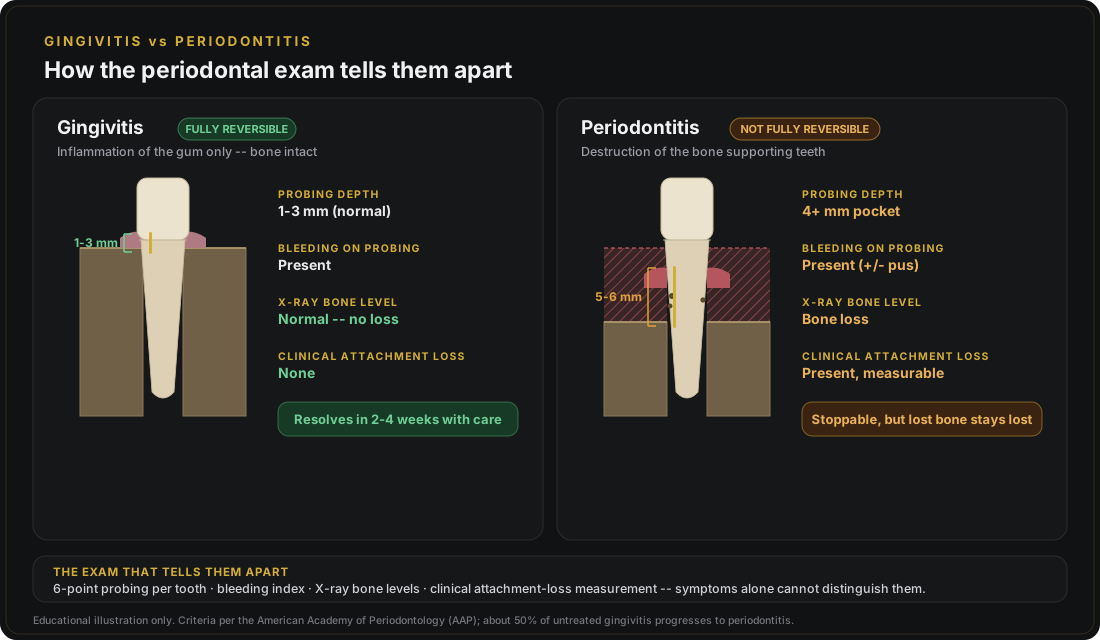
Gingivitis is inflammation of gum tissue only, with no bone loss, fully reversible. Periodontitis involves destruction of the bone supporting teeth, manageable but not reversible.
That’s it. Every other difference flows from this core distinction.
Side-by-side comparison
The two conditions sit on one continuous timeline rather than in separate boxes, and that is the single most useful thing to understand about them. Everything else in this article, from symptoms to treatment to the question of reversibility, follows from where on that timeline a particular mouth is standing.
| Feature | Gingivitis | Periodontitis |
|---|---|---|
| Tissue affected | Gums only | Gums + bone + attachment |
| Bone loss | None | Present (varies by stage) |
| Pocket depths | 1-3 mm (normal) | 4+ mm |
| Clinical attachment loss | None | Yes |
| Reversible? | Yes, fully | No, but manageable |
| Tooth loss risk | None (from gingivitis) | Yes, if untreated |
| Treatment needed | Professional cleaning + home care | SRP + possibly surgery + maintenance |
| Cost of treatment | $100-$200 (professional cleaning) | $800-$1,600 (full-mouth SRP), plus maintenance |
| Visible on X-ray | No | Yes (bone loss) |
| Timeline to resolution | 2-4 weeks | Months + ongoing maintenance |
| Affects overall health | Mild systemic impact | Significant systemic impact |
| Standard of care | 6-month cleanings | 3-month periodontal maintenance |
Gingivitis explained
What makes the transition dangerous is precisely that it is quiet, because the shift from inflammation that lives in soft tissue to infection that consumes supporting bone announces itself with no new pain, no new taste, and often no new bleeding beyond what the patient has already learned to ignore.
The earliest and mildest form of gum disease.
What is happening biologically
Bacterial plaque accumulates at the gumline. The body mounts an inflammatory response. Blood vessels in gum tissue become more numerous and fragile. Tissue becomes: Inflamed tissue looks red or bright red from the increased blood flow and sits visibly swollen with inflammatory fluid. It becomes fragile enough to bleed on contact. Most patients also notice it feels tender to the touch, though tenderness varies more than the bleeding does.
Critically: the attachment between gum and tooth is intact. The bone supporting teeth is completely undamaged.
Who gets gingivitis
Nearly everyone at some point: Almost everyone, is the honest answer: approximately 90 percent of adults experience gingivitis at some point. Hormones amplify it dramatically, with pregnancy gingivitis appearing in 60 to 75 percent of pregnancies and a temporary adolescent version arriving with puberty. Certain medications, including calcium channel blockers and phenytoin, raise susceptibility further. So do stress and poor sleep.
What gingivitis looks like
Key visual signs
- Gums that are red or bright red instead of healthy pink-coral
- Gum tissue between teeth (papilla) appears puffy and blunted
- Gumline may look shiny or stretched
- Plaque or tartar visible at gumline
- Gums bleed readily when touched, brushed, or flossed
Visual indicators of healthy gums (for comparison):
- Firm coral-pink color (not red)
- Stippled surface (like orange peel texture)
- Scalloped shape following tooth contours
- Pointed papilla between teeth
- No bleeding on routine brushing
- No swelling or puffiness
Symptoms patients notice
Bleeding leads the list, first when brushing or flossing, then with firm foods like apples or corn on the cob. Persistent bad breath is common, and some patients report mild tenderness or discomfort when flossing. The appearance changes are the strange part: patients who see their own gums every day often fail to notice a shift that a hygienist spots from across the room.
What gingivitis does NOT cause
Teeth do not become loose in gingivitis, gums do not pull back significantly, and X-rays stay normal because no bone has been touched. Tooth loss does not happen at this stage. Even pain stays mild, which is part of why the condition gets ignored for years.
Timeline
| What | Details |
|---|---|
| Develops | Within days to weeks of plaque accumulation at gumline |
| Peaks | Usually within 1-2 weeks of inadequate care |
| Reverses | Within 2-4 weeks of proper care |
| Progresses to periodontitis | Over months to years if untreated (not all cases progress) |
Periodontitis explained
Reversibility is the word that separates the two diagnoses more cleanly than any symptom list, since gingivitis resolved with a cleaning and honest home care leaves the mouth exactly as it was before, while periodontitis managed perfectly for decades still leaves behind every millimeter of bone it took before treatment began.
When gingivitis progresses past the gum tissue and begins affecting the supporting structures.
What is happening biologically
When gingivitis persists without treatment, bacteria migrate deeper below the gumline. The inflammatory response becomes chronic. Over time:
The attachment fibers between tooth and bone break down first, and the bone itself begins to resorb. Pockets open between tooth and gum where the tissue previously hugged the root closely, and those pockets shelter exactly the bacteria that deepen them, a self-feeding cycle. Bone loss then progresses gradually, usually without announcing itself.
This damage does not reverse. Once bone is gone, it does not regrow on its own.
Why some progress and others don’t
About 50 percent of untreated gingivitis cases progress to periodontitis. Key factors:
Risk factors for progression
- Poor oral hygiene
- Smoking (2-3x increased risk)
- Diabetes (especially poorly controlled)
- Family history / genetic susceptibility
- Stress and immune suppression
- Hormonal factors
- Certain medications
- Missing regular dental cleanings
- Male sex (slightly higher risk)
- Older age (cumulative damage)
Protective factors
- Consistent proper home care
- Regular professional cleanings
- Non-smoker status
- Controlled systemic diseases
- Genetic resistance (some people never develop periodontitis despite poor habits)
Periodontitis stages (AAP 2017)
Stage 1 (early): Pockets 4-5 mm, < 15% bone loss Stage 2 (moderate): Pockets 5-6 mm, 15-33% bone loss Stage 3 (severe): Pockets 6-7 mm, 33-50% bone loss, possible mobility Stage 4 (advanced): Pockets 7+ mm, >50% bone loss, significant mobility, potential tooth loss
For full staging details, see gum disease stages explained.
What periodontitis looks like
Visible signs (beyond gingivitis signs)
- Visible gum recession
- Teeth appearing longer than before
- Sometimes pus at gumline
- Spaces appearing between teeth
- Teeth visibly shifting
- Later stages: tooth mobility
Internal signs (diagnostic)
- Pocket depths 4+ mm on probing
- Bone loss visible on X-rays
- Clinical attachment loss measurable
- Bleeding on probing at multiple sites
- Sometimes pus on probing
Symptoms patients notice
Early periodontitis often has minimal symptoms:
- Some bleeding (similar to gingivitis)
- Occasional sensitivity
- Mild bad breath
Advanced periodontitis has noticeable symptoms:
- Receded-looking teeth
- Sensitivity to temperature
- Bad breath that doesn’t resolve
- Tooth mobility
- Loose teeth
- Pain when chewing
- Pus from gums occasionally
- Teeth shifting position
Timeline
| What | Details |
|---|---|
| Develops | Over months to years after persistent gingivitis |
| Progresses | Typically slow (Stage 1 to Stage 4 over 10-20 years without treatment) |
| Rapid progression | In some susceptible individuals (smokers, diabetics), progression can occur over 1-5 years |
| With treatment | Progression essentially stopped in most patients |
| Without treatment | Continued progression likely, eventual tooth loss |
The transition point: gingivitis becoming periodontitis
Cost follows the same slope as everything else here. It starts at the price of a routine cleaning while the problem is still gingivitis, then climbs through quadrant-priced deep cleanings toward surgical fees once bone is involved. That slope is the most practical argument for treating the early, boring version seriously.
Understanding the transition helps understand why early intervention matters.
What happens at the transition
Changes occurring as gingivitis progresses to periodontitis:
1. Bacterial shift Bacterial populations change from early colonizers (Streptococcus species) to late colonizers (Porphyromonas gingivalis, Tannerella forsythia) that cause more damage.
2. Pocket formation The previously tight gum-tooth attachment begins breaking down. Early pockets form (3-4 mm initially).
3. Attachment loss Connective tissue fibers attaching tooth to bone begin breaking down.
4. Early bone resorption Bone adjacent to pockets begins dissolving as inflammation extends.
5. Self-perpetuating cycle Deeper pockets harbor more bacteria, causing more bone loss, creating deeper pockets.
Clinical markers of transition
The dentist identifies transition by:
- First appearance of 4 mm pockets
- First signs of bone loss on X-rays
- Measurable clinical attachment loss (1-2 mm initially)
- Continued bleeding despite improved home care
Why the transition matters
Before transition (gingivitis)
- Treatment: Professional cleaning + home care
- Cost: $100-$200 for a professional cleaning
- Timeline: 2-4 weeks to resolution
- Outcome: Complete return to health
After transition (early periodontitis)
- Treatment: Scaling and root planing + home care + maintenance
- Cost: $800-$1,600 for full-mouth scaling and root planing, plus ongoing maintenance
- Timeline: 4-8 weeks initial + lifelong maintenance
- Outcome: Disease stopped, but not reversed
Much later (advanced periodontitis)
- Treatment: SRP + surgery + possibly extractions
- Cost: $100-$200 for a professional cleaning
- Timeline: Months to years + lifelong
- Outcome: Stabilization, probable tooth loss
Treatment comparison
Gingivitis treatment
First-line treatment
- Professional cleaning (prophylaxis)
- Oral hygiene instruction (proper brushing and flossing technique)
- Antibacterial mouthwash (optional but helpful)
Follow-up
- Re-evaluation at 4-6 weeks
- If resolved: return to 6-month recall
- If not resolved: investigate systemic factors, refine home care
Total cost: $150-$400 typical.
Expected outcome: Complete resolution within 2-4 weeks.
Periodontitis treatment
First-line (non-surgical)
- Scaling and root planing (SRP) across affected areas
- Localized antibiotic therapy in deeper pockets
- Comprehensive home care coaching
- Possible systemic antibiotics for aggressive cases
Re-evaluation at 4-6 weeks
- Assess response to non-surgical therapy
- Identify sites needing additional treatment
Second-line (surgical) if needed
- Osseous surgery for persistent 6+ mm pockets
- Gum graft surgery for significant recession
- Guided tissue regeneration for specific defects
Ongoing maintenance
- Periodontal maintenance every 3-4 months for life
- Strict home care
- Monitoring for recurrence
Total cost: $150-$1,600 depending on severity, plus $600-$1,200/year for ongoing periodontal maintenance.
Expected outcome: Disease stopped, teeth preserved, ongoing management.
Can you have both at once?
Yes, many patients have periodontitis at some sites and gingivitis at others.
Typical pattern
A patient might have:
| What | Details |
|---|---|
| Back teeth (molars) | Periodontitis with 5-6 mm pockets and bone loss |
| Front teeth | Gingivitis only, normal pocket depths, no bone loss |
| Specific areas | Recession from aggressive brushing |
This is very common and requires targeted treatment:
- SRP only at affected quadrants
- Regular cleaning at healthy quadrants
- Home care coaching for all areas
- Different recall schedules based on site-specific needs
What do patients commonly misunderstand?
Misunderstanding 1: “My gums bleed, so I have periodontitis”
Reality: Bleeding occurs in both gingivitis and periodontitis. Bleeding alone does not distinguish them. Professional evaluation with probing and X-rays is required.
Misunderstanding 2: “I had a deep cleaning once, so I’m cured”
Reality: Periodontitis is not cured by SRP. It is controlled and managed. Without ongoing maintenance, disease typically returns within 6-18 months.
Misunderstanding 3: “My gingivitis will just get worse over time”
Reality: Gingivitis does not automatically progress. Many people have gingivitis for decades without progressing. Good home care typically prevents progression.
Misunderstanding 4: “Natural remedies can reverse periodontitis”
Reality: No natural remedy regrows lost bone. Some improve inflammation (making gingivitis look better), but periodontitis requires clinical treatment.
Misunderstanding 5: “If I had gum disease, I’d know it”
Reality: Early periodontitis often has minimal symptoms. Many patients discover periodontitis only at dental visits when probing and X-rays are done. This is why regular dental visits matter.
Risk factors affecting both
Shared risk factors
Modifiable
- Poor oral hygiene
- Smoking (affects both, dramatically worse for periodontitis)
- Diabetes
- Stress
- Poor nutrition
Non-modifiable
- Genetics
- Age
- Male sex
Unique to periodontitis progression
Factors that specifically accelerate gingivitis to periodontitis:
- Specific bacterial pathogens (periodontitis-associated species)
- Immune response genetics (IL-1 polymorphisms)
- Specific systemic diseases (diabetes especially)
Systemic health implications
Gingivitis and systemic health
- Mild inflammation contribution to overall body inflammation
- Reversible when treated
- Limited lasting impact if resolved
Periodontitis and systemic health
Significant and increasingly documented links:
| What | Details |
|---|---|
| Cardiovascular disease | 2-3x increased risk |
| Diabetes | Bidirectional relationship, mutual worsening |
| Pregnancy | Pre-term birth, low birth weight |
| Respiratory | Aspiration pneumonia risk, especially in older adults |
| Alzheimer’s | Emerging research suggests bacterial link |
| Certain cancers | Associations being studied |
Treating periodontitis improves overall systemic health outcomes per increasing research.
For detailed information, see gum disease complications.
Prevention
Preventing gingivitis
- Proper brushing technique twice daily
- Daily flossing or interdental cleaning
- Professional cleanings every 6 months
- Healthy diet limiting sugar
- No tobacco use
- Managing systemic health (diabetes especially)
Preventing progression to periodontitis
If you have gingivitis:
- Address it promptly (do not wait)
- Improve home care consistency
- Professional cleaning scheduled
- Re-evaluation at 4-6 weeks
- Identify and address risk factors (smoking, diabetes)
Preventing periodontitis recurrence (after treatment)
- Periodontal maintenance every 3 months (not 6)
- Excellent home care
- Complete smoking cessation
- Diabetes control
- Stress management
- Prompt attention to any new symptoms
What Dr. Husna Khan tells patients at the transition point is blunt: gingivitis is the last exit before treatment stops being simple.
When should you see the dentist?
See promptly (within 2-4 weeks)
- New bleeding during brushing
- Persistent bad breath
- Gum color changes
- Tender gums
- Swollen gums
See soon (within 1-2 weeks)
- Continued bleeding despite home care
- Visible recession
- New sensitivity
- Worsening symptoms
See urgently (days)
- Loose teeth
- Severe pain
- Pus at gumline
- Fever with dental symptoms
Call Serenity Dental at (630) 359-0105.
Serenity Dental’s approach
Dr. Husna Khan’s approach:
- Accurate diagnosis with comprehensive probing and X-rays distinguishing gingivitis from periodontitis
- Appropriate treatment matching the specific diagnosis (not over-treating gingivitis, not under-treating periodontitis)
- Clear patient education about the distinction and implications
- Conservative approach first when appropriate
- Honest long-term prognosis discussion
- Structured maintenance planning based on individual disease status
Schedule a gum evaluation at Serenity Dental by calling (630) 359-0105. Knowing specifically whether you have gingivitis or periodontitis changes everything about your treatment plan and expectations. Related: gum therapy service page.
In our Bloomingdale office we see the same arc over and over: years of pink-tinged rinse water dismissed as normal, then surprise at the first full probing. It happens weekly, and the conversation that follows is never about blame and always about where the timeline currently stands.
When to call rather than wait
Bleeding gums earn a scheduled cleaning, not panic. Three findings change that. Call right away at (630) 359-0105 for gum swelling with throbbing pain or a bad taste, which can mean an abscess. Loose or drifting teeth earn the same call. So does bleeding that outlasts two weeks of honest brushing. That one surprises people, because bleeding that lingers past the two-week mark usually means the inflammation has help from below the gumline. Each of those says the process has likely crossed out of gingivitis, and early probing depths and X-rays keep the treatment that follows simple.
This article is general education and not individualized medical advice. Treatment recommendations come from an exam, not an article.
FAQs
What is the difference between gingivitis and periodontitis?
Is gingivitis curable?
Is periodontitis reversible?
What does gingivitis look like?
Can you have gingivitis without periodontitis?
Does gingivitis turn into periodontitis?
How do you know if you have gingivitis or periodontitis?
Can gingivitis cause tooth loss?
Educational content only. Recommendations are personalized after an exam and any needed imaging.
About this article
Reviewed by Dr. Husna Khan, DDS, of Serenity Dental of Bloomingdale. Dr. Husna Khan accurately distinguishes gingivitis from periodontitis using American Academy of Periodontology (AAP) 2017 classification criteria, comprehensive probing measurements, radiographic assessment of bone levels, and clinical attachment loss calculation, ensuring appropriate treatment for each condition.
Educational content. Accurate diagnosis requires clinical examination with probing and X-rays. Cited sources: American Academy of Periodontology (AAP) 2017 classification of periodontal and peri-implant diseases, Centers for Disease Control and Prevention (CDC) oral health surveillance data, American Dental Association (ADA) evidence-based clinical recommendations, Cochrane Collaboration systematic reviews on gingivitis and periodontitis management.
Related: gum therapy service page.
Need help with this in real life?
Reading helps. Talking to someone who can look at your actual teeth and symptoms helps more. If you want a clear next step, we’re here.
Related articles
Gum graft recovery: day-by-day timeline and what to expect
Gum graft recovery from day 1 to month 6. Pain timeline, eating restrictions, healing milestones, when to worry, and the typical 4-week return to normal.
Read article →Gum graft surgery: complete guide to types, cost, recovery
Gum graft surgery for receding gums: connective tissue graft, free gingival graft, pedicle graft, AlloDerm. Cost, procedure, recovery, success rates.
Read article →Receding Gums Treatment: What Actually Works for Gum Recession
Gum recession treatment starts with removing the cause, then restoring tissue where needed. A Bloomingdale, IL dentist on what works, what fails, and honest costs.
Read article →