Gum Therapy
Receding Gums Treatment: What Actually Works for Gum Recession
Gum recession treatment starts with removing the cause, then restoring tissue where needed. A Bloomingdale, IL dentist on what works, what fails, and honest costs.
Gum recession affects 88 percent of adults over 65 per Centers for Disease Control and Prevention (CDC) data, yet most people misunderstand what can and cannot be done about it. The honest answer upfront: gum tissue does not regrow on its own, regardless of what online wellness content claims. Once gums have receded, restoration requires surgical intervention (gum grafts). What CAN be done non-surgically: stop further recession, improve the health of remaining gum tissue, reduce sensitivity, and in some cases bond composite material over exposed roots. This guide covers realistic treatment options, what “healing” actually means, cost and insurance, and when surgery is the right choice.

Written by Dr. Husna Khan, DDS
Serenity Dental of Bloomingdale · April 19, 2026
Gum recession requires professional evaluation to identify cause. Call (630) 359-0105.
For surgical treatment details, see gum graft surgery guide. For the broader picture, see the gum therapy service page. Anxious about gum surgery specifically? The sedation dentistry page explains the comfort options available for surgical visits.
The myth of gum regrowth
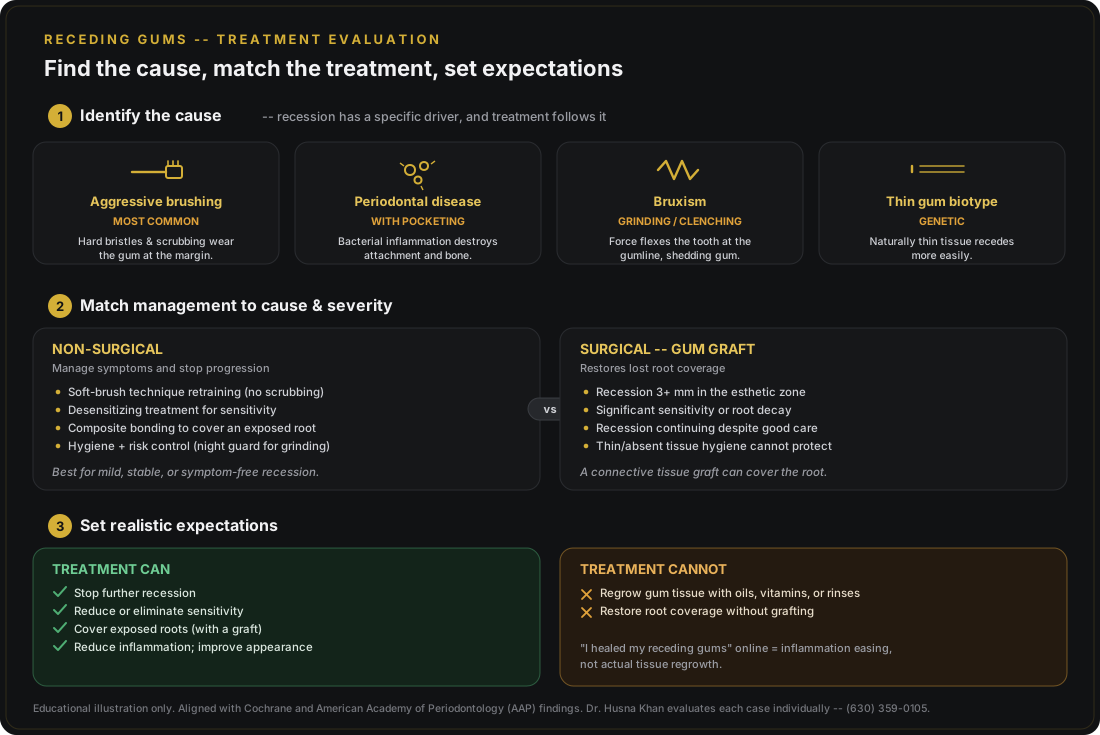
Here is the short version. Gums do not grow back. Full stop. Tissue can be moved, borrowed, and grafted, and treated inflammation can shrink enough in the first weeks to look encouragingly like regrowth, but the fibers that once anchored the original gum to the tooth do not regenerate on their own.
Popular internet content frequently claims that essential oils, coconut oil pulling, specific vitamins, or natural remedies can regrow receded gums. These claims are not supported by clinical evidence.
What the research actually shows
Multiple Cochrane Collaboration systematic reviews and American Academy of Periodontology (AAP) reviews consistently find:
- No evidence for gum regrowth from essential oil applications
- No evidence for oil pulling causing gum regrowth
- No evidence for vitamin supplements causing gum regrowth (though vitamin deficiency can cause recession, correcting deficiency only prevents further loss)
- No evidence for specific toothpastes regrowing gum tissue
What these interventions CAN do
- Reduce surface-level gum inflammation (making gums look healthier)
- Provide mild antibacterial effect
- Support overall oral hygiene
- Prevent further recession when part of proper care
The “I healed my receding gums” stories online typically describe inflammation resolution (making gums appear pinker and firmer) rather than actual tissue regrowth. This is a meaningful improvement but different from tissue restoration.
What is gum recession, actually?
Understanding what has happened helps understand what treatment options exist.
The mechanism is worth thirty seconds of anatomy, because once you can picture the thin collar of specialized tissue that seals each tooth against the bacterial world below the gumline, the reason a receded gum cannot simply knit itself back into that seal, the way a skinned knee closes over, stops being mysterious and starts being obvious.
Normal anatomy
Healthy gum tissue:
- Firm, coral-pink color
- Extends 1-2 mm onto the tooth, covering the root at the gum line
- Has a scalloped shape following tooth contours
- Free of significant inflammation
What happens in recession
Gum tissue retreats apically (toward the root tip), exposing:
- More of the tooth crown (tooth looks longer)
- Root surface (appears yellow-tan vs white enamel)
- Sometimes a step or notch at the gum-tooth junction
- Dentinal tubules (microscopic channels to the nerve)
Once this tissue has retreated, it does not advance coronally (back up toward the crown) on its own.
Why it matters
Exposed root surface has significant problems:
- Sensitivity to hot, cold, sweet, or air
- Root decay risk (root surfaces decay much faster than enamel)
- Esthetic concerns (longer-looking teeth)
- Difficult cleaning (more surface to maintain)
- Eventually tooth loss if recession progresses far enough
Causes of gum recession
Cause matters more than severity at the first visit, because a graft placed over recession whose cause was never addressed is a graft placed into the same forces that destroyed the original tissue, which is why every treatment plan below starts with the cause and only then considers the repair.
Treatment depends entirely on cause. Same-appearing recession can have very different causes requiring very different treatments.
| Cause | % of cases | Key features | Primary treatment |
|---|---|---|---|
| Aggressive brushing | 30-40% | Healthy gums otherwise, no deep pockets | Technique change, soft brush |
| Periodontal disease | 30-40% | Bleeding, inflammation, deep pockets | SRP + improved care |
| Thin gum biotype | 10-15% | Genetic, recession from normal forces | Graft if significant |
| Bruxism | 10-15% | V-shaped notches at gumline | Nightguard + monitoring |
| Orthodontic factors | 5-10% | Recession after tooth moved | Varies by situation |
| Smoking | Contributor | Accelerates any recession | Cessation crucial |
| Piercings | Localized | Specific contact point | Remove piercing |
| Smokeless tobacco | Localized | Where tobacco placed | Cessation |
1. Aggressive toothbrushing (most common)
Many patients brush too hard with too-stiff bristles, essentially sandblasting gum tissue away over years. Signs:
- Recession without deep pockets
- Healthy-appearing gums elsewhere
- V-shaped abrasion at gumline (dentin notching visible)
- Often symmetric pattern (recession on same teeth bilaterally)
How it’s treated
- Switch to soft-bristled toothbrush
- Electric toothbrush with pressure sensor helps many patients
- Proper technique training (gentle circles, not aggressive scrubbing)
- Possible gum graft for significant existing recession
2. Periodontal disease (most common with pocketing)
Active gum disease causes recession as attachment fibers break down. Signs:
- Bleeding on probing
- Pockets 4+ mm
- Often bad breath
- Recession with generalized inflammation
How it’s treated
- Scaling and root planing first
- Improved home care
- Possible surgical treatment if disease advanced
- Gum graft later if recession significant after disease controlled
3. Thin gum biotype
Some patients inherit thinner, more fragile gum tissue (thin biotype) that recedes easily even with normal care. Signs:
- Translucent appearance of gum
- Recession despite good oral hygiene
- Often a family history
How it’s treated
- Gum graft often helpful
- Protective approach to home care
- Monitoring for further recession
4. Bruxism (grinding)
Clenching and grinding creates bite forces that damage gum attachment at the necks of teeth. Signs:
- Abfraction lesions (V-shaped notches at gumline)
- Often wear facets on teeth
- Morning jaw soreness
- Recession at specific teeth bearing heavy forces
How it’s treated
- Custom nightguard (primary intervention)
- Stress management
- Possible gum graft for significant recession
- Bonding of abfraction lesions
Treatment options by cause and severity
Gum recession treatment has two jobs, always in this order: stop whatever is causing the recession, then decide whether the tissue that has already been lost needs to be surgically restored. The first job is cheap. It is also non-negotiable. The second is optional more often than people expect. The pattern we see most often in our Bloomingdale practice is the diligent scrubber: a patient with excellent plaque control and a hard-bristled brush, wearing their own gums away with effort.
| Severity | Typical plan | Typical cost |
|---|---|---|
| Mild, from brushing habit | Technique retraining, soft brush, sensitivity toothpaste | $20-$60 in tools |
| Moderate, from gum disease | Scaling and root planing, then 3-month maintenance | $200-$400 per quadrant |
| Root exposure with sensitivity | Connective tissue graft on affected teeth | $300-$1,200 per tooth |
| Severe with advanced disease | Staged periodontal and restorative treatment | $5,000-$15,000+ |
Mild recession, healthy gums, aggressive brushing cause
The plan
- Change to soft-bristled electric brush with pressure sensor
- Proper technique training
- Sensitivity toothpaste for exposed areas
- Fluoride mouth rinse at bedtime
- Monitor at 6-month recalls
Expected outcome: Further recession stopped. Existing recession remains unchanged but sensitivity managed.
Cost: $20-$60 for new brush, toothpaste, rinse. Covered maintenance visits.
Moderate recession from periodontal disease
The plan
- Comprehensive periodontal evaluation
- Scaling and root planing
- Improved home care coaching
- Possible localized antibiotics
- Re-evaluation at 6 weeks
- Periodontal maintenance every 3-4 months
- Consider gum graft after disease stabilized
Expected outcome: Inflammation resolves. Disease progression stopped. Bleeding resolves. Recession stops progressing. Existing recession remains (need graft for tissue restoration).
Cost: $200-$400 per quadrant for SRP. Ongoing $100-$200 every 3 months for maintenance.
Significant recession with root exposure and sensitivity
The plan
- Address underlying cause first (brushing technique, gum disease treatment)
- Evaluate for gum graft surgery
- Connective tissue graft is most common and reliable option
- Performed on 1 tooth at a time or multiple adjacent teeth
- 2-week initial recovery
- Final healing over 6-8 weeks
Expected outcome: Root surface covered. Sensitivity resolved. Improved appearance. Stops progression. Tissue graft success rates 80-90 percent at covered sites.
Cost: $300-$1,200 per tooth for connective tissue graft. Insurance often covers 50 percent when clinically indicated.
For detailed gum graft information, see gum graft surgery guide.
Severe recession with advanced disease
The plan
- Comprehensive periodontal treatment (possible referral to periodontist)
- Possible extractions of severely affected teeth
- Gum grafting on salvageable teeth
- Bone grafting if indicated
- Long-term maintenance
Expected outcome: Salvageable teeth stabilized. Lost teeth replaced with implants or bridges. Ongoing management needed.
Cost: Often $5,000-$15,000+ for comprehensive staged treatment.
Patients in our practice who commit to the technique change usually stop the progression without ever needing a graft, which is the quiet win this condition offers.
Non-surgical management details
None of what follows regrows tissue, and every item on the list still earns its place, because the difference between recession that stops at two millimeters and recession that marches on to root exposure and sensitivity is usually not surgery at all but the unglamorous daily mechanics covered here.
For patients not ready for surgery or with mild recession, these measures help:
Toothbrush technique retraining
The old pattern
- Medium or hard-bristle brush
- Aggressive scrubbing motion
- High pressure
- Left-to-right sawing motion
The retrained pattern
- Soft or extra-soft bristle brush
- Gentle circular motions
- Light pressure (bristle tips barely bend)
- 45-degree angle to gumline
- 2 full minutes, covering all surfaces
Tools that help
- Electric toothbrushes with pressure sensors (Sonicare, Oral-B iO)
- Timer built into brush
- Multiple brushing heads for different areas
Sensitivity management
Exposed root surfaces are sensitive. Evidence-based options:
Daily sensitivity toothpaste
- Sensodyne Repair & Protect (nanoHAP technology)
- Colgate Sensitive Pro-Relief
- Tom’s of Maine Sensitive
- Use as regular toothpaste, consistent daily use
Home fluoride
- Prescription-strength fluoride toothpaste (1.1% sodium fluoride)
- Fluoride mouth rinse at bedtime
- Do not eat or drink for 30 minutes after bedtime rinse
In-office fluoride treatment
- 5% sodium fluoride varnish applied at cleanings
- Every 3-6 months for high-sensitivity patients
- Typically $25-$75 per application
Composite bonding for exposed roots
Composite resin can be bonded over exposed root surfaces:
- Improves appearance
- Reduces sensitivity
- Protects against root decay
- Temporary solution (7-10 years typical)
Cost: $150-$400 per tooth. Usually covered as restorative.
Oral hygiene adjustments
- Switch to waxed floss (less abrasive)
- Consider interdental brushes instead of floss at recession sites
- Water flosser on low setting
- Avoid whitening products on exposed roots
Gum graft surgery
For significant recession with root exposure, tissue grafting is the definitive treatment.
Types of gum grafts
Connective tissue graft (most common)
- Tissue taken from palate (hidden donor site)
- Placed under existing gum tissue at recession site
- Best esthetic outcome
- Most predictable success
- Success rate 80-90% complete coverage
Free gingival graft
- Similar but tissue placed on top (more visible)
- Better for increasing tissue thickness
- Slightly less predictable esthetics
- Used when there is not enough existing tissue to cover donor graft
Pedicle graft
- Adjacent tissue rotated to cover recession
- No palate donor site
- Limited to situations with adequate adjacent tissue
Alloderm (donor tissue)
- Processed human donor tissue
- Used when palate cannot provide adequate tissue
- No second surgical site needed
- Slightly lower success than autogenous tissue
Procedure overview
- Local anesthesia to surgical site and donor site (if autogenous)
- Recession area prepared to receive graft
- Donor tissue obtained (palate for autogenous grafts)
- Tissue sutured into place at recession site
- Donor site closed with dressing or sutures
- Surgical pack may cover sites during initial healing
Duration: 60-90 minutes per site typically.
Recovery
| What | Details |
|---|---|
| Days 1-3 | Mild to moderate discomfort, manage with ibuprofen |
| Days 3-7 | Soft diet, avoid brushing surgical site |
| Week 2 | Suture removal, continue soft brushing |
| Weeks 4-6 | Resume normal brushing of surgical site |
| Weeks 6-8 | Complete healing, final tissue contour |
Outcomes
- 80-90 percent complete coverage in well-selected cases
- Reduced sensitivity at treated teeth
- Improved appearance, tooth looks proper length again
- Long-lasting results (15-25 years or more)
- Stops progression at treated sites
For comprehensive gum graft information, see gum graft surgery guide.
The “I healed my receding gums” phenomenon
Social media is full of testimonials from people claiming they healed their receding gums without surgery. What is actually happening:
What usually occurred
These stories typically describe one of three things:
1. Inflammation resolution
- Inflamed gums look puffy, red, and sometimes “pulled back”
- When inflammation resolves, gums look pinker, firmer, and “healthier”
- This is not tissue regrowth, the tissue was always there but looking unhealthy
2. Misidentified anatomy
- What appeared to be recession was actually normal gum anatomy with some irritation
- Once irritation resolved, gums looked “restored”
3. Minor coverage from soft tissue remodeling
- Some cases of very mild recession show small (0.5-1 mm) improvement over time with excellent care
- This is soft tissue adaptation, not significant regrowth
What did not happen
In clinical documented cases:
- No significant tissue regrowth on exposed roots without surgical intervention
- No predictable regrowth with any non-surgical approach
- Most dramatic “before and after” photos show inflammation resolution, not tissue restoration
This does not mean non-surgical care is worthless, it prevents further loss and improves gum health significantly. But patients should have realistic expectations.
When should you consider surgery?
Indications favoring gum graft surgery:
Strong indicators
- Recession 3+ mm in esthetic zone (front teeth)
- Significant sensitivity affecting quality of life
- Root decay developing on exposed surfaces
- Continued recession despite good home care
- Thin or absent gum tissue that cannot be protected with hygiene alone
Moderate indicators
- Cosmetic concerns about tooth appearance
- Recession interfering with oral hygiene
- Recession causing difficulty with existing dental work
Weak indicators (usually manage non-surgically):
- Very mild recession (< 1 mm)
- Recession without symptoms
- Older patient with stable recession
- Surgery contraindicated by medical conditions
Dr. Husna Khan evaluates each case individually and discusses all appropriate options.
Special situations
Recession with active gum disease
Treat gum disease first. SRP, improved home care, and stabilization for 3-6 months before considering grafting. Grafts have better success on healthy tissue.
Recession with bruxism
Nightguard first. Without addressing grinding forces, grafted tissue can be damaged by continued parafunction.
Single-tooth recession
Pedicle grafts work well when adjacent tissue is abundant. Alternative: composite bonding if cosmetic only.
Multiple adjacent teeth
Connective tissue graft covering multiple teeth at once. Sometimes staged across 2 surgeries.
Severe recession with significant bone loss
May require combined treatment: bone graft plus soft tissue graft. Complex cases typically referred to periodontist.
Preventing further recession
Whether you have current recession or want to prevent it:
Daily habits
- Soft-bristled toothbrush, hard bristles are never appropriate
- Light pressure technique
- Proper 45-degree angle to gumline
- 2 minutes twice daily
- Daily flossing with proper technique
- Avoid abrasive whitening toothpastes on sensitive areas
Risk factor management
- Quit smoking (largest modifiable risk factor)
- Control diabetes (affects gum health significantly)
- Manage bruxism with nightguard
- Treat gum disease promptly when diagnosed
Professional care
- Regular cleanings every 6 months (3-4 for higher risk)
- Periodontal probing at every exam
- Address bleeding early before it advances
- Monitor recession measurements over time
Serenity Dental’s approach
Dr. Husna Khan’s approach to recession:
- Thorough evaluation identifying specific cause of recession
- Address cause first (hygiene technique, gum disease, bruxism)
- Conservative management when appropriate
- Honest assessment of what non-surgical care can accomplish
- Gum graft referral or treatment when clinically indicated
- Realistic expectations, no overpromising regrowth
- Long-term monitoring to prevent further recession
Schedule a recession evaluation at Serenity Dental by calling (630) 359-0105. Recession is manageable and treatable, but realistic expectations about what is possible help you make the best decision for your specific situation. Related: gum therapy service page · gum graft surgery.
Cost figures in this article are typical ranges for the Chicago area, compiled from regional fee data. They are not quotes from Serenity Dental of Bloomingdale; your fee depends on exam findings, materials, and insurance benefits, and we provide a written, itemized estimate before any treatment begins.
This article is general education and not individualized medical advice. Treatment recommendations come from an exam, not an article.
When to call rather than wait
Most recession is slow, and slow problems can wait for a scheduled visit. A few cannot, and knowing the difference matters more than any home remedy, because the fast-moving versions of this condition, the ones that pair recession with swelling, looseness, or pus, are the ones where a two-week delay changes what treatment can still accomplish. Call right away at (630) 359-0105 for a tooth that suddenly feels loose, a gum that swells or drains, or recession that visibly advances within weeks. Bleeding that persists beyond two weeks of good technique deserves a call too. Do not wait on pain. Ever.
FAQs
Can receding gums grow back naturally?
What is the best treatment for receding gums?
Can you reverse gum recession without surgery?
How much does it cost to fix receding gums?
Does salt water help receding gums?
Can I heal my receding gums at home?
Is receding gums serious?
What causes gums to recede the most?
Educational content only. Recommendations are personalized after an exam and any needed imaging.
About this article
Reviewed by Dr. Husna Khan, DDS, of Serenity Dental of Bloomingdale. Dr. Husna Khan provides honest assessment of gum recession treatment, what non-surgical management can realistically accomplish, when gum graft surgery is the appropriate option, and how to prevent further recession regardless of treatment chosen.
Educational content. Individual recession evaluation requires in-person clinical examination. Cited sources: American Academy of Periodontology (AAP) clinical guidelines for management of gingival recession, Centers for Disease Control and Prevention (CDC) oral health surveillance data on recession prevalence, American Dental Association (ADA) evidence-based recommendations for non-surgical gum care, Cochrane Collaboration systematic reviews on root coverage procedures.
Related: gum therapy service page · gum graft surgery.
Pricing note. Prices shown are approximate Chicago-area 2026 ranges compiled from public cost guides, not a quote or a Serenity Dental fee schedule. Your actual cost depends on your clinical needs, the materials chosen, and your insurance. We provide a written estimate before any treatment begins. Call (630) 359-0105 to confirm pricing for your situation.
Need help with this in real life?
Reading helps. Talking to someone who can look at your actual teeth and symptoms helps more. If you want a clear next step, we’re here.
Related articles
Gum graft recovery: day-by-day timeline and what to expect
Gum graft recovery from day 1 to month 6. Pain timeline, eating restrictions, healing milestones, when to worry, and the typical 4-week return to normal.
Read article →Gingivitis vs periodontitis: differences, treatment, reversibility
Gingivitis vs periodontitis explained: what each looks like, how they differ, which is reversible, how treatment differs, and the transition point.
Read article →Gum graft surgery: complete guide to types, cost, recovery
Gum graft surgery for receding gums: connective tissue graft, free gingival graft, pedicle graft, AlloDerm. Cost, procedure, recovery, success rates.
Read article →