Gum Therapy
Gum graft recovery: day-by-day timeline and what to expect
Gum graft recovery from day 1 to month 6. Pain timeline, eating restrictions, healing milestones, when to worry, and the typical 4-week return to normal.
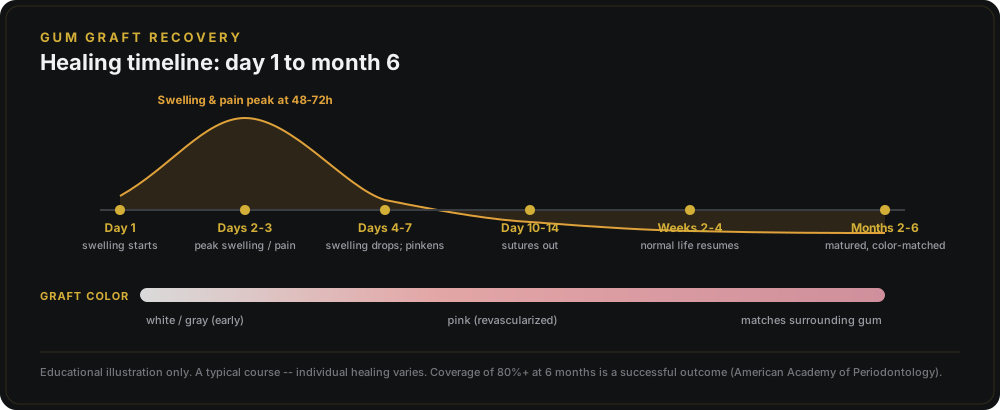
Gum graft recovery follows a predictable timeline. Day 1 to 3 is the discomfort peak. Days 4 to 7 see steady improvement. By week 2, most patients eat normally. At 4 weeks the tissue has integrated, and at 6 months the graft has matured to its final color match. This page lays out exactly what to expect at each stage, what is normal versus what needs attention, and the eating, brushing, and activity protocols that protect a successful outcome.

Written by Dr. Husna Khan, DDS
Serenity Dental of Bloomingdale · April 30, 2026
Have a graft scheduled or post-op questions? Call (630) 359-0105 any business day.
For procedure background, read gum graft surgery guide. For broader context on receding gums, see receding gums treatment.
The full recovery timeline at a glance
| Time after surgery | Tissue state | Diet | Activity |
|---|---|---|---|
| Hours 1 to 4 | Active bleeding, anesthesia | None until numbness fades | Rest, head elevated |
| Day 1 | Swelling, mild bleeding | Cold liquids, soft foods | Stay home, ice |
| Days 2 to 3 | Peak swelling, peak pain | Soft cold foods | Limited movement |
| Days 4 to 7 | Swelling reducing daily | Soft foods, room temp | Light walking |
| Days 7 to 14 | Sutures removed, color shifts | Soft foods, expanding | Light cardio at 7d |
| Weeks 2 to 4 | Tissue integrating, pinkening | Normal foods, careful side | Resume normal exercise |
| Weeks 4 to 6 | Brushing graft site resumes | Full normal diet | Normal activity |
| Months 2 to 6 | Color and texture maturing | Normal | Normal |
First 24 hours: setting up healing
The first day is the highest-risk window for graft displacement and bleeding. Three rules matter most:
- Bite firmly on gauze for 30 minutes at a time. Replace if soaked. Bleeding should slow within 2 hours.
- No spitting, no rinsing, no straws. Each of these creates suction or pressure that can dislodge the graft.
- Stay upright and ice the cheek 20 minutes on, 20 off, for the first 6 hours.
Sleep with your head elevated on 2 pillows for the first 3 nights — this reduces overnight swelling and prevents blood from pooling at the surgical site.
Pain control
Ibuprofen 600 mg every 6 hours starting before the anesthesia wears off (typically 2 hours after surgery) controls pain effectively for most patients. Alternating with acetaminophen 500 mg every 3 hours allows constant coverage:
- 0 hour: Ibuprofen 600 mg
- 3 hour: Acetaminophen 500 mg
- 6 hour: Ibuprofen 600 mg
- 9 hour: Acetaminophen 500 mg
This regimen produces pain control comparable to opioids in randomized trials and avoids opioid side effects. Continue for 48 to 72 hours, then taper. Avoid aspirin — it increases bleeding risk.
What to eat
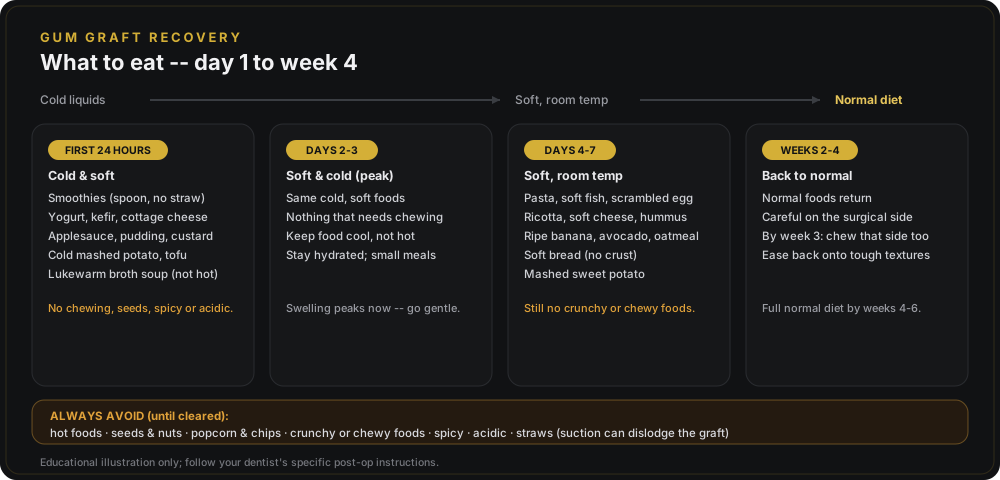
Cold and soft. Suggested first 24 hours:
- Cold smoothies (no straw — spoon)
- Yogurt or kefir
- Cottage cheese
- Applesauce
- Pudding or custard
- Cold mashed potatoes
- Tofu
- Lukewarm broth-based soup (not hot)
Avoid: hot foods, anything that requires chewing, anything with seeds, anything spicy, anything acidic.
Days 2 to 3: peak discomfort
Swelling typically peaks at 48 to 72 hours after surgery and then improves. Pain follows a similar curve. The donor site (roof of the mouth, if connective tissue or free gingival graft) often hurts more than the recipient site — a stent or palatal bandage covers it for the first week.
What is normal
- Swelling on the cheek over the graft site
- Bruising that may extend to the lower jaw or upper neck (gravity)
- A salty or metallic taste (small amounts of blood mixing with saliva)
- The graft site looking white, gray, or yellowish
- The palate stent feeling tight or scratchy
- Mild bad breath (no normal cleaning yet)
What is not normal
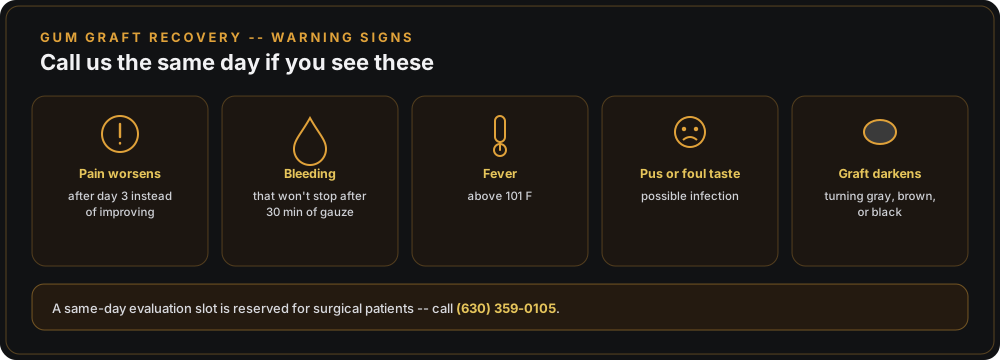
Contact us same day if you notice any of these:
- Pain that worsens after day 3 instead of improving
- Active bleeding that does not stop with 30 minutes of gauze pressure
- Fever above 101 F
- Swelling that increases rapidly after day 3
- Pus or foul taste
- Numbness in the lip or chin that was not present at surgery end
- The graft turning dark gray, brown, or black
Call (630) 359-0105 — we have a same-day evaluation slot reserved for surgical patients.
Days 4 to 7: turning the corner
Visible swelling reduces noticeably each day. The graft tissue starts to revascularize — tiny blood vessels grow in from surrounding gum, and color shifts from white toward pink. Pain decreases enough that most patients reduce ibuprofen to as needed.
Diet expansion
Add: well-cooked pasta, soft fish (salmon, tilapia), scrambled eggs, soft tofu dishes, ricotta or soft cheeses, ripe bananas, ripe avocados, soft bread without crusts, oatmeal, mashed sweet potato, hummus.
Still avoid: crunchy foods, chewy meats, raw vegetables, nuts, seeds, popcorn, chips, hard bread crusts.
Hygiene
- Brush all non-surgical teeth normally with a soft brush.
- Do not brush, floss, or touch the graft area.
- Use prescribed chlorhexidine 0.12% rinse twice daily, after meals — swish gently for 30 seconds, do not spit forcefully.
- Salt water rinse (1 teaspoon in 1 cup warm water) 4 times daily, allowing it to flow over the area without active swishing.
Week 2: sutures out, transition to normal
Suture removal happens at day 10 to 14 if non-resorbable. Resorbable sutures dissolve on their own between days 7 and 21. The graft has integrated enough by week 2 that small bumps or chewing on the opposite side will not displace it.
What you might notice at the suture removal visit
- Tissue color is shifting toward pink
- Swelling is mostly resolved
- The graft margin has a fine line where it meets surrounding tissue (this fades over months)
- The palate donor site is healing with a thin reddish-pink layer
- Some patients have mild “graft creep” where tissue extends slightly more than placed
We assess color, attachment, and any signs of failure at this visit. Most grafts at 2 weeks look exactly as expected.
Weeks 3 to 4: resuming normal life
By week 3:
- Eat normally, including chewing on the surgical side.
- Brush the graft tooth surface with a soft brush at light pressure (skip the gumline another 1 to 2 weeks).
- Strength training and high-intensity cardio resume.
- Most discomfort gone except occasional sensitivity to cold at the graft tooth.
At week 4:
- Brush the gumline area normally with proper technique.
- Wait 2 more weeks before flossing the graft tooth.
- Color shift continues — tissue is light pink and slightly thinner than surrounding gum.
Months 2 to 6: full maturation
Tissue maturation is gradual. The graft becomes thicker, more keratinized, and color-matches the surrounding gum. By month 4 to 6, most patients cannot identify the graft site without close inspection. The result is stable for 10+ years if the underlying cause (aggressive brushing, bruxism, periodontal disease) is corrected.
6-month follow-up
We re-measure the gum line at 6 months and document final coverage. Coverage of 80 percent or better at this point is considered a successful outcome by the American Academy of Periodontology guidelines. Patients with thin biotype or single-tooth severe recession may have less complete coverage but typically gain better tissue thickness, which protects the underlying root long-term.
Serenity Dental’s gum graft post-op protocol
When patients have a graft scheduled at our practice, we provide:
- A printed timeline with daily checklists
- The exact pain control regimen written out
- A direct cell number for after-hours questions in the first 72 hours
- Scheduled 1-week and 4-week follow-up visits at no additional charge
- A custom palatal stent for connective tissue grafts to protect the donor site
We use a layered closure technique with 6-0 chromic gut and PTFE sutures, which has shown lower dehiscence rates in our case series than older silk-suture techniques. For patients with thin biotype, we add platelet-rich fibrin (PRF) from the patient’s own blood to accelerate revascularization. For multi-tooth recession requiring pinhole technique, we typically refer to a periodontist with high-volume PST experience.
We tell patients clearly: the first 7 days determine the result. Following the protocol matters more than any post-surgical product or supplement.
Recovery do and do not summary
Do:
- Take ibuprofen on schedule for 48 to 72 hours
- Use ice on the cheek for the first 24 hours
- Sleep with head elevated for 3 nights
- Eat cold soft foods for 3 days, soft foods through week 2
- Use chlorhexidine rinse as prescribed
- Stay upright and rest the first 24 hours
Do not:
- Smoke (extends healing by 2 to 3 weeks and doubles failure risk)
- Use straws for 7 days
- Spit forcefully or rinse vigorously for 7 days
- Brush, floss, or touch the graft area for 14 days
- Eat hot foods for 48 hours
- Exercise for 48 hours
- Skip the chlorhexidine rinse
Common questions about gum graft recovery
How long does gum graft recovery take?
How painful is gum graft recovery?
What can I eat after a gum graft?
When can I brush my teeth after a gum graft?
Is it normal for a gum graft to look white after surgery?
When can I exercise after gum graft surgery?
Can a gum graft fail and what causes it?
Will I need a second gum graft later?
Educational content only. Recommendations are personalized after an exam and any needed imaging.
About this article
Reviewed by: Dr. Husna Khan, DDS, lead dentist at Serenity Dental of Bloomingdale. Published: April 30, 2026. Last updated: April 30, 2026. Sources: American Academy of Periodontology (AAP) clinical guidelines for soft tissue graft procedures; Journal of Periodontology systematic reviews on root coverage outcomes; American Dental Association (ADA) post-operative care protocols; Cochrane Reviews on pain management after periodontal surgery.
Educational content. Individual recovery varies by graft technique, patient health, and tissue biotype, and any treatment decision requires clinical examination. To schedule a graft consultation or post-op visit at Serenity Dental of Bloomingdale, call (630) 359-0105.
Need help with this in real life?
Reading helps. Talking to someone who can look at your actual teeth and symptoms helps more. If you want a clear next step, we’re here.
Related articles
Gingivitis vs periodontitis: differences, treatment, reversibility
Gingivitis vs periodontitis explained: what each looks like, how they differ, which is reversible, how treatment differs, and the transition point.
Read article →Gum graft surgery: complete guide to types, cost, recovery
Gum graft surgery for receding gums: connective tissue graft, free gingival graft, pedicle graft, AlloDerm. Cost, procedure, recovery, success rates.
Read article →Receding Gums Treatment: What Actually Works for Gum Recession
Gum recession treatment starts with removing the cause, then restoring tissue where needed. A Bloomingdale, IL dentist on what works, what fails, and honest costs.
Read article →