
Restorative Dentistry
Root Canal Recovery Time: Day-by-Day What to Expect
Root canal recovery timeline -- when pain resolves, what to eat, when to return to work, chewing restrictions, and the crown appointment timing.
Root canal recovery is typically 3 to 5 days of noticeable soreness, with full comfort returning once the permanent crown is placed 2 to 4 weeks later. It’s generally a milder recovery than extraction because the tooth remains in place and no large wound has to heal. This guide walks through each phase of recovery day-by-day, covers what to eat and when, and flags the specific signs that warrant a call during the healing period.
For broader context on the procedure itself, see the root canal service page. For specifics on pain management and when pain isn’t normal, see pain after a root canal.
Recovery at a glance
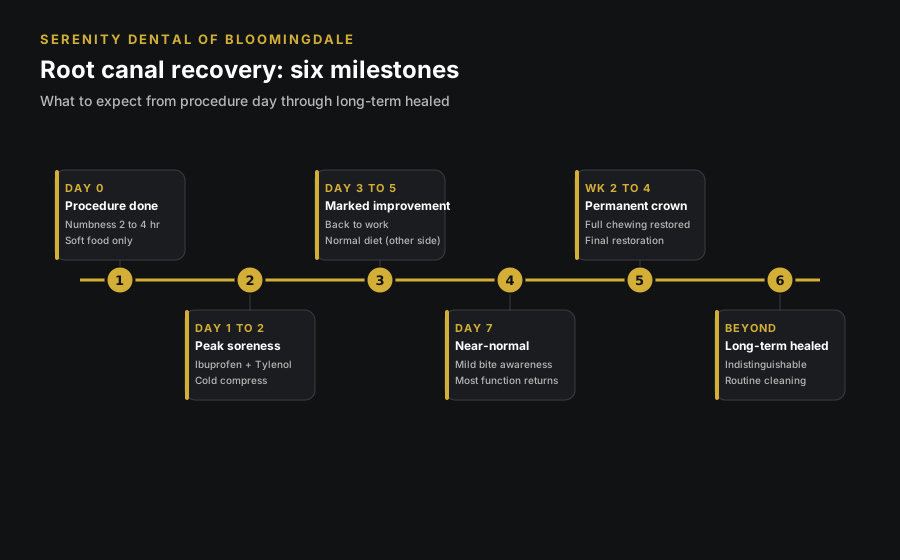
Day 0 (procedure day)
Numb then sore
Numbness wears off 2 to 4 hours post-procedure. Soft foods once sensation returns. Mild aching controlled with ibuprofen.
Days 1–2
Peak tenderness
Soreness peaks around 48 hours. Most patients back to work. Normal foods on opposite side.
Days 3–5
Steady improvement
Pain decreases daily. Most patients off pain medication. Biting tenderness persists but manageable.
Days 6–14
Near-normal
Minimal discomfort. Mild awareness when biting on the tooth. Continue chewing opposite side until crown placed.
Weeks 2–4
Permanent crown
Crown appointment. Once seated, full chewing function returns. Tooth feels normal.
Months 1+
Long-term
Tooth integrated into normal function. Regular checkups monitor long-term success.
Day 0: procedure day
You leave the office numb. The temporary filling is in place, closing the access opening. Local anesthesia is still in full effect.
Hours 0 to 4
- Don’t eat while numb — you can bite your cheek or tongue without feeling it
- Sip water only if needed
- Take prescribed or OTC pain medication before numbness wears off if the pre-procedure pain was severe
- No driving home if sedation was used (arrange a ride in advance)
Hours 4 to 8
- Numbness gradually wears off; mild ache begins
- Start ibuprofen (400 to 600 mg with food) or acetaminophen (500 to 1,000 mg)
- Apply ice on the cheek for 20 minutes on, 20 minutes off if swelling appears
- Drink cool liquids; avoid very hot or cold foods until the permanent crown is placed
Evening
- Soft foods on the opposite side: yogurt, soup, pasta, mashed potatoes, eggs
- Sleep with head elevated on an extra pillow for the first 1 to 2 nights
- Avoid vigorous rinsing or spitting
Things NOT to do on day 0
- Chew on the treated side
- Smoke (slows healing; if you must, wait at least 4 hours and minimize)
- Drink alcohol (interacts with pain medications)
- Exercise vigorously
- Probe the temporary filling with your tongue repeatedly
Days 1 to 2: peak soreness
The most uncomfortable period for most patients. Soreness peaks around the 48-hour mark and reflects normal inflammation from the procedure.
Pain management
Scheduled dosing, not as-needed. Set reminders for the first 48 hours:
- Ibuprofen 400 to 600 mg every 6 hours with food
- Acetaminophen 500 to 1,000 mg every 4 to 6 hours
- Alternate them every 3 hours for continuous coverage
- Max daily: 2,400 mg ibuprofen, 3,000 mg acetaminophen, and only at the doses written on your post-op sheet
What’s normal on days 1 to 2
- Tenderness when biting directly on the tooth
- Mild ache that’s controlled by medication
- Sensitivity to hot or cold (worst days 1 to 3)
- Mild inflammation of the gum around the tooth
What’s not normal
- Pain that’s getting worse each hour
- Severe throbbing unresponsive to medication
- Swelling of the cheek or face
- Fever above 100.4°F
- Temporary filling falling out
Any of these warrant a call. See the pain after root canal article for more on distinguishing normal vs concerning pain patterns.
Activity and diet
Activity: Most patients return to work on day 1. Office work fine. Physically demanding work may warrant an extra day.
Diet: Soft foods through day 1. Day 2 can include softer regular foods (well-cooked pasta, soft fish, scrambled eggs, mashed vegetables). Continue chewing opposite side.
Days 3 to 5: the turning point
This is when most patients feel a clear improvement. Pain decreases daily. Most patients reduce or stop pain medication. Biting tenderness on the treated tooth persists but is manageable.
What to expect
- Ibuprofen or acetaminophen only as needed (often not at all)
- Mild tenderness when biting, still on opposite side primarily
- Near-normal eating of soft-to-medium foods
- Return to normal activity including light exercise
- Continuing to chew opposite side
Diet expansion
By day 3 to 4, most patients can eat most normal foods with care:
Generally OK on opposite side:
- Sandwiches (not hard crusts)
- Pasta and rice dishes
- Soft cooked vegetables
- Chicken, fish
- Eggs, cheese
- Soft fruits
Still avoid:
- Very hot or very cold foods (can affect the temporary filling)
- Hard or crunchy foods like chips, popcorn, nuts on the treated side
- Sticky candies (can pull out the temporary)
- Direct chewing on the treated tooth
Week 1 to 2: approaching normal
By day 7, most root canal recovery is largely complete except for the final crown appointment. Minor tenderness when biting directly on the tooth may linger for 1 to 2 weeks but is usually not a daily issue.
What to watch for
- Temporary filling intact. Check in the mirror occasionally. If it falls out or partially comes out, call for replacement.
- Biting still tender? Possibly a high bite. If the temporary is sitting slightly high, the tooth hits first when you close. A 5-minute bite adjustment fixes this. Call the office if tenderness isn’t improving.
- Sharp pain returning. Shouldn’t happen by week 2. If it does, call for evaluation.
- Bad taste developing. Could indicate bacteria getting under the temporary. Call.
What’s happening internally
The tissues around the root tip (the periapical tissues) are calming down from the inflammation of the procedure. The body’s immune system clears any residual bacteria. The tooth itself is sealed and shouldn’t become re-infected as long as the temporary filling stays intact.
Weeks 2 to 4: permanent crown
The permanent crown appointment is the second half of treatment. Most root canal patients need a crown for long-term success, especially on molars and premolars.
What happens at the crown appointment
- Local anesthesia is administered (most patients choose anesthesia even though the tooth itself is no longer sensitive — the gum tissue still responds)
- The temporary filling is removed
- The tooth is prepared for the crown (shaped to receive the final restoration)
- An impression is taken, or the tooth is digitally scanned
- A temporary crown is placed while the permanent crown is fabricated (1 to 2 weeks), or the permanent crown is placed same-day if your provider has a CEREC or similar in-office milling system
- At a follow-up appointment (if separate), the temporary is removed and the permanent crown is cemented in place
Why the crown timing matters
Placing the permanent crown promptly protects the tooth: in an eight-year study in the Journal of Endodontics, teeth crowned more than four months after the root canal were about three times as likely to be lost as teeth crowned within four months, and we schedule the crown within 30 days. Delay beyond 4 to 6 weeks increases risk of:
- Tooth fracture under chewing force
- Bacterial re-contamination of the root canal
- Temporary filling breakdown
- Need for retreatment
If scheduling pushes the crown appointment past 4 weeks, call your dentist to discuss interim options.
In our Bloomingdale office, the crown visit is booked before you leave on root canal day, so the temporary never has to last longer than it was designed to. We see a high temporary filling as the most common reason biting tenderness lingers past the first week, and the fix is a five-minute bite adjustment, not a new procedure.
After the crown is placed
Full chewing function returns. Most patients feel the tooth is “back to normal” within a few days of the permanent crown. Some mild sensitivity to hot or cold for a few weeks is common and fades.
See the crowns service page for details on material options and the crown appointment process.
Aftercare checklist
Print or screenshot this for the first week after your root canal:
First 24 hours
- No eating while numb
- Soft foods only
- Opposite side chewing
- OTC pain medication as scheduled
- Ice pack if swelling appears
- Sleep with head elevated
- No smoking, no alcohol, no vigorous activity
Days 2 to 7
- Continue opposite-side chewing
- Gentle salt-water rinses 2 to 3 times daily starting day 2
- Normal brushing of other teeth; gentle near the temporary filling
- Gradually expand diet to softer normal foods
- Return to normal activity
- Monitor temporary filling
Until crown placement
- Always chew opposite side
- Avoid hard, sticky, or very hot/cold foods on the treated tooth
- Don’t skip the crown appointment
- Call if anything changes (new pain, bad taste, temporary coming loose)
When to call during recovery
Call within 24 hours for any of the following:
- Pain worsening after day 3 instead of improving
- Severe throbbing or unmanageable pain
- Swelling in the gum, cheek, or face
- Fever above 100.4°F
- Temporary filling falling out
- Persistent foul taste or odor
- A pimple-like bump appearing on the gum
- Bad taste or drainage from the tooth area
- New pain starting a week or more after the procedure
- Crown appointment running past 4 to 6 weeks
Most of these are addressed in a single follow-up visit. Delay makes them harder. A filling that fell out on Tuesday is a ten-minute reseal on Wednesday, while the same opening left uncovered for three weeks lets saliva and bacteria back into a canal system that took an hour to clean, and at that point the conversation turns to retreatment, which costs more and succeeds less often than the first attempt did.
Go to the emergency room same-day for facial swelling that is rapidly expanding, swelling that crosses the midline or reaches the eye, difficulty breathing, difficulty swallowing, or fever combined with significant facial swelling. These signs suggest the infection may have escaped into deeper tissue spaces and require IV antibiotics and possibly surgical drainage — care that exceeds what a dental office provides. Per American Association of Endodontists guidance, dental offices manage localized post-operative concerns; spreading facial space infections require hospital-level intervention.
Individual cases vary, and the recovery timeline above represents typical patterns. Dr. Husna Khan provides written post-operative instructions specific to each case, and clinical examination at the follow-up visit confirms healing is on track before the permanent crown is placed.
Schedule a root canal consultation or post-op follow-up at Serenity Dental by calling (630) 359-0105. Written aftercare instructions specific to your case are provided after every procedure. Dr. Husna Khan schedules the permanent crown appointment 2 to 4 weeks after the root canal and walks through the recovery timeline so there are no surprises. Related: root canal service page · pain after root canal · root canal cost.
Clinical references and sourcing
Clinical guidance in this article reflects current standards from the American Association of Endodontists (AAE) treatment standards and position statements; American Dental Association (ADA) procedure coding and its 2019 antibiotic guideline; American Association of Oral and Maxillofacial Surgeons (AAOMS) parameters of care for adjacent surgical decisions; the Cochrane review of single-visit versus multiple-visit treatment; and outcome studies in the Journal of Endodontics (JOE). Cited timelines and survival rates are drawn from these primary sources, listed with links under Sources below.
Quick reference
| Stage | What to expect |
|---|---|
| Same day | Numbness wears off in 2 to 4 hours; soft food until full sensation returns |
| Days 1 to 3 | Mild tenderness; OTC ibuprofen or acetaminophen typically sufficient |
| Days 4 to 7 | Most discomfort resolves; keep chewing on the other side until the crown is seated |
| Weeks 2 to 4 | Permanent crown placed on most back teeth |
| Long-term | Treated tooth functions normally for 10+ years with proper restoration |
| Call dentist if | Pain worsens after day 3, swelling develops, or filling falls out |
Root canal recovery - questions answered
How long does it take to recover from a root canal?
Can I eat after a root canal?
Can I go to work the day after a root canal?
When can I eat normally after a root canal?
How long before I can chew on a root canal tooth?
Can I exercise after a root canal?
Should I rinse my mouth after a root canal?
How long does the temporary filling last after a root canal?
Educational content only. Recommendations are personalized after an exam and any needed imaging.
About this article
Reviewed by Dr. Husna Khan, DDS, of Serenity Dental of Bloomingdale. Dr. Husna Khan performs endodontic treatment in-house at our office using rubber-dam isolation, rotary nickel-titanium instrumentation, electronic apex location, and CBCT imaging when canal anatomy warrants it.
This article is for general educational and informational purposes and is not a substitute for an in-person dental evaluation. Individual cases vary — a specific treatment plan is determined after clinical examination and imaging. If you have ongoing tooth pain, swelling, or a tooth you are unsure about, please call our office or schedule an evaluation so we can examine the tooth and review your imaging with you.
Cited sources: AAE clinical guidelines, ADA procedure coding and clinical guidance, AAOMS parameters of care, Cochrane systematic reviews of endodontic outcomes, and Journal of Endodontics (JOE) outcome studies.
Sources
- American Association of Endodontists, Treatment Standards: Executive Summary (2019). Minimum standards for nonsurgical root canal treatment; the final restoration plays a major role in long-term prognosis
- American Association of Endodontists, Guidance on the Use of Systemic Antibiotics in Endodontics (2017). Antibiotics only as an adjunct when there is systemic involvement or a spreading infection, not for a localized infection once the tooth is treated
- Lockhart PB et al. Evidence-based clinical practice guideline on antibiotic use for the urgent management of pulpal- and periapical-related dental pain and intraoral swelling: a report from the American Dental Association. J Am Dent Assoc 2019;150(11):906-921. Recommends against antibiotics in most cases of dental pain and swelling; reserve them for fever, malaise or a spreading infection
- Pratt I, Aminoshariae A, Montagnese TA, Williams KA, Khalighinejad N, Mickel A. Eight-year retrospective study of the critical time lapse between root canal completion and crown placement: its influence on the survival of endodontically treated teeth. J Endod 2016;42(11):1598-1603. Teeth crowned more than 4 months after the root canal were about 3 times as likely to be extracted (hazard ratio 3.38)
- Salehrabi R, Rotstein I. Endodontic treatment outcomes in a large patient population in the USA: an epidemiological study. J Endod 2004;30(12):846-850. 1.46 million root canals in 1.1 million patients; 97 percent of teeth were still in place 8 years later
- Manfredi M et al. Single versus multiple visits for endodontic treatment of permanent teeth. Cochrane Database Syst Rev 2022;12:CD005296. No evidence of a difference in outcomes between root canals finished in one visit and in several
- AAOMS Parameters of Care: Clinical Practice Guidelines for Oral and Maxillofacial Surgery (ParCare), 7th edition. Practice guidelines covering dentoalveolar and implant surgery
Need help with this in real life?
Reading helps. Talking to someone who can look at your actual teeth and symptoms helps more. If you want a clear next step, we’re here.
Related articles
Root Canal Cost in 2026: What You Actually Pay
Real root canal costs by tooth type -- front, premolar, molar. What insurance covers, the crown cost after, financing, and the $99 root canal trap explained.
Read article →Tooth Extraction Aftercare: Day-by-day Dos and Don'ts
Complete tooth extraction aftercare checklist -- gauze, rinsing, smoking, straws, sleeping position, brushing, and exercise. What to do and avoid by day.
Read article →Are Root Canals Safe? The Evidence Behind the Online Myths
A clinical review of social-media claims that root canals cause cancer or chronic disease, with the real evidence and the AAE, ADA, and Cochrane positions.
Read article →