Cosmetic Dentistry
Veneer Preparation and Tooth Shaving Explained
What really happens to teeth before veneers, how much enamel is removed, and when no-prep veneers are the right call. From a Bloomingdale, IL dentist.
Pegs. That is the fear patients bring to a veneer consultation more than any other, the worry that the dentist will grind their teeth down to small pegs like the ones in viral videos. Social media amplified it. Few of the circulating videos are accurate. Honestly answered: traditional porcelain veneers do require a small amount of enamel reduction, but the amount is much less than what is shown in viral clips, and there are minimal-prep and no-prep options for patients who are good candidates.
This article walks through what veneer preparation actually looks like in our Bloomingdale practice, how much tooth structure is involved, and which factors decide whether prep is needed at all.
What enamel reduction actually means
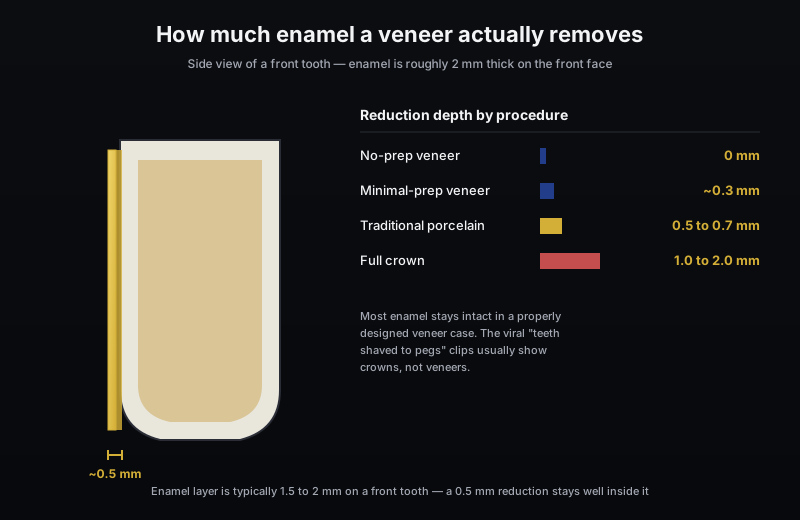
A traditional porcelain veneer needs space to sit flush against the natural tooth without making the tooth look bulky or pushed forward. To create that space, the dentist removes a thin layer of enamel from the front of the tooth, typically between three-tenths and seven-tenths of a millimeter.
For comparison, the average enamel thickness on a front tooth is about one to one and a half millimeters, so a typical preparation stays well within the enamel layer and does not reach the dentin underneath. The Journal of Prosthetic Dentistry has published on minimally invasive preparation designs that aim to keep all reduction inside enamel.
Dr. Husna Khan uses depth-cutting burs that score the enamel to a measured depth first, so the grooves themselves become a physical stop that keeps reduction from silently going deeper than the plan calls for. Reduction then proceeds only to those grooves, which prevents the tooth from being reduced more than the case requires.
Why those viral videos look so dramatic
Those clips showing teeth ground to small pegs almost always involve crowns, not veneers, and they often involve cases that are being treated abroad in countries where preparation conventions differ. Crowns wrap everything. Reduction runs significantly deeper than any veneer needs.
A second source of confusion is that some practices outside the United States routinely place crowns and call them veneers. The American Academy of Cosmetic Dentistry has noted that the terms get used loosely in marketing, but in standard United States practice a veneer is a thin facing on the front of the tooth, not a wraparound restoration.
If you are looking at a before and after image and the prepared teeth look like small stumps, you are looking at a crown case, not a veneer case.
When no-prep veneers are an option
No-prep veneers, sometimes marketed under brand names like Lumineers, are very thin porcelain shells, often around three-tenths of a millimeter thick, that can sometimes be bonded onto the tooth without removing any enamel.
The Academy of General Dentistry has noted that no-prep veneers work best for patients with smaller-than-average teeth, teeth that are slightly tipped inward, or front teeth with worn edges that need to be lengthened forward. They are not the right choice for patients with larger or more prominent teeth, where adding the thickness on top would make the smile look bulky.
In our practice, Dr. Husna Khan reviews tooth size, lip support, and how the upper teeth sit at rest before recommending a no-prep approach. When the case fits, no-prep keeps every bit of enamel.
Minimal-prep designs
A middle option sits between traditional preparation and no-prep, and it handles most cosmetic cases well. Minimal-prep veneers reduce only the amount of enamel needed to make the result look natural, often between one-tenth and three-tenths of a millimeter.
Three things make minimal preparation possible:
A digital wax-up done before the appointment, which lets the dentist plan the exact final shape and reduce only where the porcelain needs space.
Newer porcelain materials like e.max lithium disilicate, which can be made thinner than older feldspathic porcelains while still being strong enough to bond and function.
A bonded approach that uses adhesive resin to create a strong connection to enamel, which the Journal of Esthetic and Restorative Dentistry has documented as durable when the bond is to enamel rather than dentin.
This is the design we use most often in our Bloomingdale practice for cosmetic cases that are otherwise straightforward.
When more preparation is honestly needed
A few clinical situations require traditional or even more substantial preparation, and being upfront about them is part of the consultation:
Teeth that are pushed forward or rotated need to have enamel reduced to bring them back into alignment with the rest of the smile. Without that reduction, the veneers would sit too far forward and look unnatural.
Teeth with old fillings or visible discoloration need enough reduction to mask the underlying color, otherwise the dark area would shadow through the porcelain.
Teeth that have already lost a lot of enamel from grinding may need a different restoration, sometimes a crown rather than a veneer, to restore both shape and structure.
When more preparation is needed, we walk through why before any work begins, and we offer the option to consider Invisalign or another conservative path first if alignment is the underlying issue.
What the prep appointment feels like
Anesthesia covers the appointment. Nothing hurts during the work. After the anesthesia wears off, most patients describe a mild sensitivity to cold for a day or two, particularly while wearing the temporary veneers.
A custom temporary veneer is placed at the end of the prep appointment. Temporaries do three jobs at once: they protect the prepared surface, they let the patient preview the planned shape, and they allow time for the final porcelain to be made in the lab.
Dr. Husna Khan checks in by phone or message during the temporary phase to address any sensitivity or fit issues before the final seating appointment.
What if you change your mind after preparation
This is a fair question and worth addressing directly. Once enamel has been reduced for a traditional veneer, the tooth will need either a veneer or a crown going forward. Nobody designs a reduced surface to be left exposed, both because of sensitivity and because the appearance would not match the surrounding teeth.
Which is one of the reasons we do not move directly to preparation at a first visit, and why the appointment that removes enamel is always downstream of the one that only takes photographs. Consultation, wax-up, and design review all happen before any tooth is touched. Thinking it over for a few weeks is always an option.
This article is general information rather than individualized medical advice. What the right preparation looks like for your teeth depends on a clinical exam, photos, and a treatment plan from a dentist who has examined your specific case.
Talking through your options
If you are considering veneers and want to understand whether your case is a candidate for minimal or no preparation, contact our Bloomingdale office to schedule a consultation with Dr. Husna Khan. We will review what the actual preparation would look like for your teeth before any decision is made.
When to call rather than wait
Between prep day and seating day, a few things justify a same-day call.
Call immediately if a temporary comes off. The exposed tooth will complain about cold within hours, and a prepared tooth that drifts even slightly can turn a smooth seating appointment into a remake.
Call about anything sharp against your tongue after prep. Temporaries are acrylic, edges chip, and a thirty-second polish beats a week of tongue soreness.
Call promptly if the temporaries feel high when you bite, because a bite that is off on acrylic will be off on porcelain too, and adjusting it now costs nothing.
Zinging cold sensitivity through a temporary that lasts more than a moment also merits a call rather than patience. Brief cold response is normal on freshly prepared teeth; lingering ache is not.
FAQs
Do veneers require shaving down the teeth?
Why do social media videos show teeth shaved down to pegs?
What are no-prep veneers?
Does veneer preparation hurt?
Can I go back to my original teeth after veneer prep?
How much enamel is removed for a traditional veneer?
How long does the prep appointment take?
What happens if a temporary veneer falls off after prep?
Is enamel removal the same for composite veneers?
Educational content only. Recommendations are personalized after an exam and any needed imaging.
Need help with this in real life?
Reading helps. Talking to someone who can look at your actual teeth and symptoms helps more. If you want a clear next step, we’re here.
Related articles
Does Insurance Cover Dental Veneers? Coverage and Payment Options
Plain answers about veneer insurance coverage, what counts as cosmetic, and what payment plans actually work for patients in Bloomingdale, IL.
Read article →How Long Do Dental Veneers Last? Lifespan, Wear, and Replacement
Real numbers on how long porcelain and composite veneers last, what wears them down, and how to make them last longer, from a Bloomingdale, IL dentist.
Read article →Porcelain vs Composite Veneers: An Honest Comparison
Porcelain or composite veneers? A Bloomingdale, IL dentist breaks down cost, lifespan, appearance, and which option fits which kind of patient.
Read article →