Dental Implants
What Are Dental Implants Made Of? Materials and Components
Dental implant materials explained, titanium versus zirconia posts, abutment options, crown materials, and biocompatibility.
Written by Dr. Husna Khan, DDS
Serenity Dental of Bloomingdale · April 29, 2026
Educational purposes only, material selection depends on individual factors. Call (630) 359-0105. Dr. Husna Khan reviews material options and any allergy considerations at every implant consultation.
Dental implants are made from titanium or zirconia, with several material choices for each component. Patients researching implants frequently ask whether the metal in their mouth is safe, whether they have material options, and whether the brand or grade matters. Short answer: yes, materials matter, and the FDA has cleared specific titanium and zirconia formulations for dental implant use after extensive testing for biocompatibility, strength, and corrosion resistance.
This guide covers what each component is made of, why titanium became the dominant material, when zirconia is the right alternative, and how to think about material selection at consultation.
The three components of a dental implant
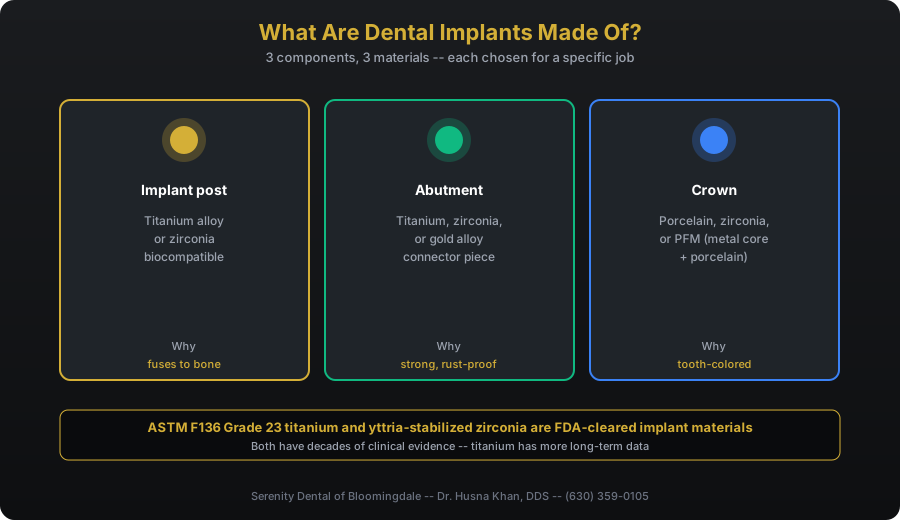
A dental implant has three distinct parts, each made from different materials selected for their specific function.
The implant post is the part surgically placed into the jawbone. It functions as the artificial tooth root and is the component that osseointegrates with the bone. Standard implant posts are titanium (most common) or zirconia (ceramic alternative). Lengths typically range from 8 mm to 13 mm; widths from 3.0 mm to 5.0 mm depending on the available bone and tooth position.
The abutment is the connector piece between the implant post and the crown. It screws into the implant post and emerges through the gum tissue. Abutments are typically titanium (strongest, most cost-effective) or zirconia (white ceramic, used for aesthetic front teeth). Custom abutments are milled to specific gum contours; stock abutments are off-the-shelf and less expensive.
The crown is the visible tooth-shaped restoration that attaches to the abutment. Crown materials include all-ceramic (e.max lithium disilicate), layered zirconia, monolithic zirconia, and porcelain-fused-to-metal (PFM). Material selection depends on tooth position, bite force, and aesthetic requirements.
Each component is made by a different manufacturer in most cases. Implant posts come from the implant brand (Straumann, Nobel Biocare, BioHorizons, etc.). Abutments come from the implant brand or a custom dental lab. Crowns come from a separate dental laboratory that specializes in restoration materials.
Titanium: the gold standard for implant posts
Because titanium fuses with living bone rather than merely sitting beside it, a property discovered accidentally in a Swedish rabbit-bone experiment in the 1950s, nearly every implant system on the market still builds on the same metallurgy seventy years later.
Titanium became the standard implant material in 1965 when Per-Ingvar Branemark, a Swedish orthopedic surgeon, accidentally discovered osseointegration, bone fusing directly to titanium without the body rejecting it. Sixty years of clinical research has refined titanium implant design and confirmed the material’s exceptional biocompatibility.
Two titanium grades dominate dental implants. Commercially pure titanium (CP titanium) grades 1 through 4 contain 99 to 99.5 percent titanium with trace iron, oxygen, nitrogen, and carbon. Grade 4 is the most common for implants because of slightly higher strength than grades 1 to 3. Grade 5 titanium alloy (Ti-6Al-4V) contains 6 percent aluminum and 4 percent vanadium for substantially higher tensile strength, used in larger implants and in cases requiring extra mechanical resistance.
Both CP titanium and Ti-6Al-4V are recognized by the American Dental Association as appropriate for clinical implant use. Premium implant brands typically offer both options, with the choice driven by the specific clinical situation. Titanium’s oxide surface layer is what makes osseointegration possible, bone-forming cells (osteoblasts) recognize the oxide layer as a biocompatible surface and grow directly into its microscopic pores.
Surface treatments enhance osseointegration further. Sandblasted, acid-etched (SLA) surfaces increase the microscopic roughness that bone cells anchor to. Treated surfaces are recognized by the American Academy of Implant Dentistry’s published guidance as the standard for modern implants, with smooth-surface implants now relegated mostly to historical reference.
Zirconia: the metal-free alternative
What zirconia offers instead is a white ceramic body with no metal in it at all, which matters cosmetically in thin tissue and matters medically for the small group of patients with confirmed metal sensitivities, at the cost of a shorter track record and less forgiving mechanics.
Zirconia ceramic implants emerged in the early 2000s as an option for patients who preferred or required metal-free implants. Its material is yttria-stabilized zirconia (Y-TZP), the same ceramic used in dental crowns, formed into implant posts.
Zirconia has different properties than titanium. Zirconia is white, avoiding any potential gray show-through at thin gum margins. It is exceptionally hard (1,190 VHN, harder than enamel) and chemically inert in body fluids. The ceramic surface promotes some bone integration, though somewhat slower than titanium based on clinical comparison studies summarized in a 2022 Journal of Periodontology systematic review.
The trade-offs are real. Zirconia has 60+ years less clinical data than titanium. Most zirconia implants are one-piece designs (the post and abutment are integrated), which limits the ability to angle the abutment for restorative purposes. Zirconia is more brittle than titanium, catastrophic fracture is a risk if the implant is loaded too heavily during integration. Cost typically runs $500-$1,500 higher per implant than titanium.
Zirconia implants are appropriate for patients with documented titanium sensitivity (rare, under 0.6 percent prevalence per the 2020 Clinical Oral Implants Research review), patients with metal allergies who prefer metal-free alternatives, and patients with very thin gum tissue at front-tooth implant sites where titanium show-through would be a concern. The decision is made at consultation after CBCT review and discussion of the trade-offs.
Are titanium dental implants safe? The biocompatibility question
Underneath the marketing labels, every implant conversation reduces to the same three materials questions, what the body is made of, what the abutment is made of, and what the crown is made of, and the honest answer is that different combinations suit different mouths.
Titanium is one of the most biocompatible materials in medicine. Across medicine, titanium is used in joint replacements (hips, knees), spinal fusion hardware, cardiac stents, and surgical clips, with excellent long-term outcomes. Titanium does not corrode in body fluids, does not produce significant ions in surrounding tissues, and does not trigger immune responses in the vast majority of patients.
True titanium allergy is rare. The 2020 Clinical Oral Implants Research systematic review on titanium allergy prevalence in dental implant patients found documented allergic reactions in less than 0.6 percent of cases, a much lower prevalence than nickel allergy (around 17 percent in the general population) or chromium allergy. Reported reactions include localized gum inflammation around the implant, gum recession not explained by hygiene, and rarely systemic skin reactions.
For patients with concerns, MELISA testing (a blood test for titanium sensitivity) and patch testing through a dermatologist can identify true sensitivity before implant placement. Patients with documented titanium allergy or strong preference for metal-free options can opt for zirconia ceramic implants. The American Dental Association’s clinical guidance recognizes both titanium and zirconia as appropriate based on individual patient factors.
The “metals in the mouth cause health problems” claim sometimes circulates online but does not reflect peer-reviewed research. Repeatedly, the American Dental Association, the U.S. FDA, and major implant research organizations have reviewed the evidence and confirmed titanium dental implants are safe for the vast majority of patients.
Crown material selection
Over decades of published follow-up, titanium’s survival numbers have stayed remarkably stable across studies, brands, and countries, which is the quiet statistical reason it remains the default recommendation in our office and most others.
The crown attached to the abutment is the visible tooth-shaped component, and its material choice affects both aesthetics and durability.
All-ceramic (e.max lithium disilicate) is the gold standard for front-tooth crowns. The material has excellent translucency (mimics natural enamel) and adequate strength for incisor and premolar positions. It is the most aesthetic option but somewhat less durable than zirconia for back-tooth chewing forces.
Layered zirconia combines a strong zirconia core with porcelain layered over the top for translucency. Hybrid construction provides excellent aesthetics with better strength than pure all-ceramic. It is the most common choice for front teeth and aesthetic premolars at our Bloomingdale practice.
Monolithic zirconia is solid zirconia throughout, the strongest crown material available. Its trade-off is somewhat reduced translucency compared to layered options. Monolithic zirconia is the preferred choice for back teeth (molars), patients with heavy bite forces, and patients who grind their teeth (bruxism).
Porcelain-fused-to-metal (PFM) uses a metal substructure with porcelain bonded to the outside. The metal is typically a gold-palladium alloy or a non-precious nickel-chromium alloy. PFM crowns have a long track record of durability but show a thin metal margin at the gum line if gums recede, a particular concern for front teeth. The material is less commonly used now in implant restorations.
Extensive research on long-term outcomes has been published in the Journal of Prosthetic Dentistry for each crown material in implant restorations. We discuss the trade-offs for each specific case at consultation rather than defaulting to one material.
What do we tell patients about implant materials?
Three points come up consistently at material selection consultations at our Bloomingdale practice. First, the published outcome data favors titanium for the implant post in most cases. We are direct: titanium has 60+ years of clinical research, 95 to 98 percent success rates, and the most refined surface treatments. Zirconia is a reasonable alternative for specific situations, not a default substitute.
Second, the material question often gets confused between the implant post and the crown. Patients sometimes ask “is my implant ceramic or metal?” without specifying which component. Posts are typically titanium, sometimes zirconia. Abutments follow the same pattern. Visible crowns are typically all-ceramic or zirconia, with porcelain-fused-to-metal in some cases. All three components can be all-ceramic in metal-free cases, or hybrid combinations in mixed cases.
Third, patient values matter in material selection beyond pure clinical performance. Some patients have strong preferences for metal-free dentistry; we honor those preferences when the clinical conditions allow. Some patients have documented metal allergies; we identify those at consultation and select materials accordingly. Some patients prioritize aesthetics over longevity; we discuss the trade-offs honestly and let the patient make the informed choice.
When should you call rather than wait?
After implant placement, several material-related symptoms warrant prompt attention. New gum recession exposing implant threads or the abutment may indicate a fit issue with the abutment or hygiene problem. Persistent inflammation around the implant despite good hygiene may indicate a material reaction (rare) or peri-implantitis. A new gray shadow appearing at the gum line of a front-tooth implant may indicate the abutment material is showing through thinned gum tissue and may need replacement.
After the final crown is placed, chipping of porcelain, hairline cracks in zirconia, or visible wear on the chewing surfaces should be evaluated. Most material issues caught early are addressable; problems that wait often become harder to manage. Crown replacement is much simpler than abutment or implant replacement, so noticing crown issues early is particularly valuable. Call our office at (630) 359-0105, patients with active concerns are seen the same day or next business day.
Cost figures in this article are typical ranges for the Chicago area, compiled from regional fee data. They are not quotes from Serenity Dental of Bloomingdale; your fee depends on exam findings, materials, and insurance benefits, and we provide a written, itemized estimate before any treatment begins.
This article is general education and not individualized medical advice. Implant decisions come from an exam, imaging, and your health history, not an article.
When materials become a call rather than a curiosity
Material questions are almost never emergencies, with one exception worth naming. Call right away at (630) 359-0105 if the gum around an implant stays inflamed, bleeds on brushing for more than two weeks, or develops a gray shadow at the margin, because those can signal a reaction or an early peri-implant problem regardless of which material sits in your jaw. Titanium versus zirconia can wait for the consultation. Persistent inflammation should not.
Stated as plainly as the materials science allows, what sits in your jaw after implant treatment is a metallurgy stack refined across seventy years of published follow-up, chosen combination by combination for your anatomy rather than pulled off a shelf, which is exactly why the consultation conversation matters more than any brand name in this article.
Frequently asked questions about dental implant materials
What are dental implants made of?
Are dental implants made of metal or ceramic?
Why is titanium used for dental implants?
When would zirconia be preferred over titanium for an implant?
Are dental implants made of pure titanium?
Can someone be allergic to dental implants?
What is the implant abutment made of?
What are dental implant crowns made of?
Educational content only. Recommendations are personalized after an exam and any needed imaging.
About this article. Written by Dr. Husna Khan, DDS at Serenity Dental of Bloomingdale. Reviewed against ADA and AAID material guidance, FDA dental device clearances, 2020 Clinical Oral Implants Research and 2022 Journal of Periodontology systematic reviews. Updated April 29, 2026. Call (630) 359-0105 to schedule a consultation. Visit 1 Tiffany Pointe, Suite 205,Bloomingdale, IL 60108.
Need help with this in real life?
Reading helps. Talking to someone who can look at your actual teeth and symptoms helps more. If you want a clear next step, we’re here.
Related articles
Dental Implant Cost: What You Actually Pay in 2026
Dental implant cost in the Chicago area: post, abutment, crown, CBCT and bone grafting line by line, what insurance pays, and how to spot a padded estimate.
Read article →Dental Implant Healing Stages: From Surgery to Final Crown
Dental implant healing happens in four overlapping stages over 3 to 6 months. Detailed timeline of soft tissue, osseointegration, and bone remodeling.
Read article →Dental Bridges: Types, Cost, and How Long They Last
The four types of dental bridges, Chicago-area cost ranges, how long each lasts, the two-visit procedure, and when an implant is the better choice.
Read article →