
Dental Implants
Dental Implants and Diabetes: Can Diabetics Get Dental Implants?
Yes, diabetics can get dental implants. Patients with HbA1c below 7 have outcomes comparable to non-diabetics. Honest guide to candidacy and risk.

Written by Dr. Husna Khan, DDS
Serenity Dental of Bloomingdale · April 28, 2026
Educational purposes only. Implant candidacy in diabetics depends on individual glucose control and overall health. Call (630) 359-0105. Dr. Husna Khan coordinates with your primary care physician on the treatment plan.
Yes, diabetics can get dental implants. Patients with well-controlled blood glucose. HbA1c below 7, have implant outcomes comparable to non-diabetics per a 2024 systematic review published in PMC and indexed by NCBI. Type 1 and type 2 diabetes are both compatible with implant treatment when blood sugar is well managed. Uncontrolled diabetes substantially elevates failure risk and is the primary reason patients are advised to improve glucose control before surgery rather than the reason to decline implants.
This guide walks through the actual research on diabetes and implants, the HbA1c thresholds that matter, the steps diabetic patients should take before consultation, and how the treatment plan adapts.
What does the research actually say?
The relationship between diabetes and dental implants has been well studied. Here is what the published evidence shows.
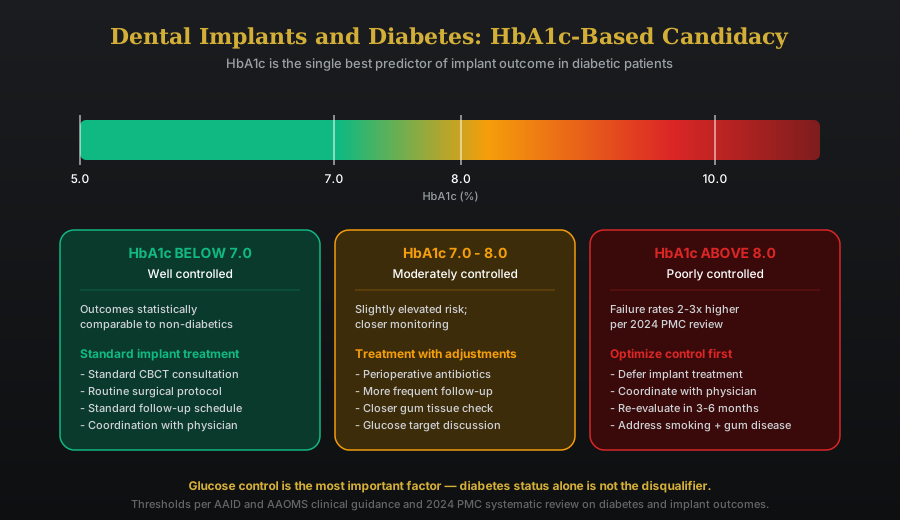
A 2024 systematic review and meta-analysis published in PMC and indexed by NCBI examined dental implant outcomes in diabetic patients across multiple cohort studies. Patients with HbA1c below 7 had implant survival rates statistically comparable to non-diabetic patients. Patients with HbA1c above 8 had failure rates approximately 2 to 3 times higher than non-diabetics. The intermediate range (HbA1c 7 to 8) showed slightly elevated risk that fell between the two extremes.
A 2021 cohort study tracked in Clinical Implant Dentistry and Related Research that followed 10,871 implants over 22 years separated outcomes by systemic-health categories and confirmed the same pattern: diabetes itself was not the disqualifying factor, but glucose control was. Well-controlled diabetics in the cohort had 10-year survival rates above 95 percent, similar to the healthy non-diabetic group.
An ADA position statement and AAID clinical guidance both support implant placement in well-controlled diabetics and recommend optimization of glucose control before surgery in poorly controlled cases. The AAOMS adds that the perioperative period is when glucose stability matters most, with the 8 weeks following surgery being the critical osseointegration window.
The bottom line from the published literature is consistent: diabetes is a manageable risk factor, not a contraindication, and HbA1c is the single best predictor of how well an implant will heal in a diabetic patient.
How does elevated blood glucose affect implant healing?
Three healing mechanisms are impaired when blood glucose runs high. Each returns to near-normal when glucose is controlled.
White-blood-cell function. Hyperglycemia reduces neutrophil and macrophage activity at the surgical site. The result is higher infection risk in the first 2 weeks of healing and slower clearance of bacteria around the implant. This is the leading reason poorly controlled diabetics have higher early implant failure rates.
Microvascular blood flow. Long-standing diabetes damages small blood vessels, including those at the implant site. Reduced blood flow slows tissue oxygenation and nutrient delivery during healing. The effect is more pronounced in patients with longer disease duration and poor control.
Bone-cell activity. Osteoblasts (the cells that lay down new bone during osseointegration) are sensitive to hyperglycemia. Elevated glucose slows their activity, which extends the time needed for the implant to fully integrate with bone. In well-controlled diabetics this effect is minimal; in poorly controlled patients it can extend integration timelines substantially.
For more on the broader healing process, see dental implant healing stages.
What do HbA1c levels mean for implant candidacy?
HbA1c is a blood test that measures average blood glucose over the previous 2 to 3 months. It is the standard metric used in implant candidacy decisions because it captures longer-term control rather than a single fasting glucose reading.
HbA1c below 7. Considered well controlled. Implant outcomes are statistically comparable to non-diabetics per the 2024 PMC systematic review. Standard implant treatment proceeds with no special protocol modifications beyond routine pre-implant care.
HbA1c 7 to 8. Considered moderately controlled. Implant placement is generally appropriate but with closer monitoring during healing, more frequent follow-up visits, and a low threshold for additional intervention if any signs of complications appear. Some practices add a perioperative antibiotic course in this range.
HbA1c above 8. Considered poorly controlled. Implant placement is not recommended at this level in our practice without first working with the patient and their physician to improve glucose control. Failure risk is 2 to 3 times higher per the 2024 systematic review, and the cost of a failed implant is substantial. Optimization typically takes 3 to 6 months and almost always involves adjustments to medication, diet, and exercise coordinated with the primary care physician or endocrinologist.
HbA1c above 10. Implant placement is generally contraindicated until glucose control is improved. The risk of failed osseointegration, infection, and slower healing combine to make the procedure unfavorable at this level.
For full candidacy review including diabetes considerations, see first dental implant consultation.
What should you do before your implant consultation if you have diabetes?
Four steps make the consultation more productive and the treatment plan more realistic.
Get a current HbA1c. A blood test within the past 3 months gives the most accurate picture of recent control. If your most recent test is older, ask your primary care physician for an updated test before the consultation. Many family medicine offices will order this without requiring a separate visit.
Coordinate with your physician. Your physician can confirm your current treatment is on track, adjust medications if HbA1c needs to come down, and provide a brief medical clearance letter that we keep with your dental records. This is standard for any patient with significant systemic disease undergoing dental surgery.
Bring documentation to the consultation. A current medication list (including doses), recent HbA1c results, your physician’s contact information, and any recent fasting glucose readings if you self-monitor. We do not require any of these but having them available speeds the medical-history portion of the consultation.
Plan timing carefully. Schedule implant surgery during a period of stable glucose control rather than during medication changes, illness, or major lifestyle disruption. Stable control before surgery and during the 8-week osseointegration window is the goal.
How does the implant treatment plan adapt for diabetic patients?
The CBCT consultation, written treatment plan, and implant placement procedure are essentially the same as for any other patient. What adapts is the perioperative care and follow-up schedule.
In our Bloomingdale practice, the additions for well-controlled diabetic patients (HbA1c below 7) are minimal: a confirmation of recent HbA1c, a brief check-in with the patient’s physician if they have not been seen recently, and a slightly more conservative postoperative monitoring schedule. The implant procedure itself follows the standard step-by-step process.
For moderately controlled patients (HbA1c 7 to 8), we add a perioperative antibiotic course (typically amoxicillin starting the day before surgery and continuing for 5 to 7 days), more frequent early follow-up visits (1 week, 3 weeks, 6 weeks), and closer attention to gum tissue health around the implant collar.
For poorly controlled patients, the priority is glucose optimization first. Implant treatment is deferred until HbA1c improves to below 8, ideally below 7. We coordinate with the patient’s medical team during this period and reassess at 3 and 6 months. This is one of the only times we explicitly recommend delaying treatment, and it almost always pays off in better outcomes.
Other diabetic-relevant factors at the implant site
Three additional factors get more attention in diabetic patients than in non-diabetics.
Gum disease. Diabetics have higher rates of periodontitis, and active gum disease at the implant site increases peri-implantitis risk after the implant is placed. We typically address gum disease before scheduling implant placement.
Smoking. Smoking and diabetes compound each other’s effects on implant healing. A 2024 systematic review in Cureus reported smoking roughly doubles failure rates independent of diabetes; combined with poor diabetes control the failure rate climbs substantially. Smoking cessation for at least 2 weeks before surgery and 8 weeks after is strongly recommended.
Medications. Some diabetes medications including SGLT2 inhibitors increase urinary tract infection risk and can affect oral microbiome balance. This rarely affects implant decisions but is worth disclosing at consultation. Bisphosphonates taken for bone density (more common in older diabetic patients) do warrant careful review per ADA and AAOMS guidance.
For a broader candidacy review including risk factors beyond diabetes, see 10 dental implant mistakes to avoid.
When should you call rather than wait?
Diabetic patients with implants should call the office promptly for any of the standard implant warning signs (covered in signs of dental implant failure) and additionally for: blood glucose readings that have unexpectedly increased after implant surgery, any signs of infection at the implant site, slower-than-expected healing in the first 2 weeks, or any change in diabetes medication during the first 8 weeks of healing. Schedule an appointment so we can evaluate. Coordination with your physician during recovery is sometimes part of resolving the issue.
Call (630) 359-0105 to discuss your specific case at a consultation. Dr. Husna Khan reviews recent HbA1c and coordinates with your physician. Related: dental implants service page · implant healing stages.
This article is general education and not individualized medical advice. Implant decisions come from an exam, imaging, and your health history, not an article.
When to call rather than wait
Diabetic healing deserves a shorter leash than average. Call right away at (630) 359-0105 for swelling that grows after day three, drainage or a bad taste from the surgical site, fever, or a blood sugar pattern that will not settle after surgery, because infection and glucose feed each other in both directions. Cochrane reviews of implant outcomes in diabetic patients support the practical message of this whole article: controlled diabetes changes the timeline, not the verdict. Slow, steady, boring healing is the goal.
Dental implants and diabetes, questions answered
Can diabetics get dental implants?
What HbA1c is safe for dental implants?
Are dental implants safe for type 2 diabetics?
Do dental implants fail more often in diabetics?
How does diabetes affect dental implant healing?
What should diabetics do before getting dental implants?
Can diabetics with uncontrolled blood sugar get dental implants?
Does diabetes affect dental implant cost?
Educational content only. Recommendations are personalized after an exam and any needed imaging.
About this article
Educational purposes only. Outcome data and HbA1c thresholds reflect ADA, AAID, and AAOMS clinical guidance and 2024 published systematic reviews. Individual implant candidacy in diabetic patients determined by case-specific factors, current glucose control, and coordination with the patient’s medical team.
Related: dental implants · complete dental implants guide.
Need help with this in real life?
Reading helps. Talking to someone who can look at your actual teeth and symptoms helps more. If you want a clear next step, we’re here.
Related articles
Dental Implant Cost: What You Actually Pay in 2026
Dental implant cost in the Chicago area: post, abutment, crown, CBCT and bone grafting line by line, what insurance pays, and how to spot a padded estimate.
Read article →Dental Implant Healing Stages: From Surgery to Final Crown
Dental implant healing happens in four overlapping stages over 3 to 6 months. Detailed timeline of soft tissue, osseointegration, and bone remodeling.
Read article →Dental Bridges: Types, Cost, and How Long They Last
The four types of dental bridges, Chicago-area cost ranges, how long each lasts, the two-visit procedure, and when an implant is the better choice.
Read article →