
Cosmetic Dentistry
Veneers for Crooked or Chipped Front Teeth: When They Help
Honest guide from a Bloomingdale, IL dentist on using veneers to fix crooked or chipped front teeth, when veneers work, when orthodontics or bonding are better, and what the process actually looks like.

Two of the most common cosmetic concerns people bring to a Bloomingdale dental consultation are a slightly crooked smile and a chipped front tooth. Both questions share a similar starting point, the patient wants the smile to look better in photographs without committing to a year of orthodontic treatment, and they want to know whether veneers can do the job. New to the topic? Begin with what dental veneers are, then come back for the crooked-and-chipped specifics.
Honestly, it depends on how crooked, how chipped, and what is actually causing the appearance the patient does not like. This guide walks through the cases where veneers genuinely help, the cases where they only mask a deeper problem, and the alternatives that often make more sense.
What patients usually mean by “crooked”
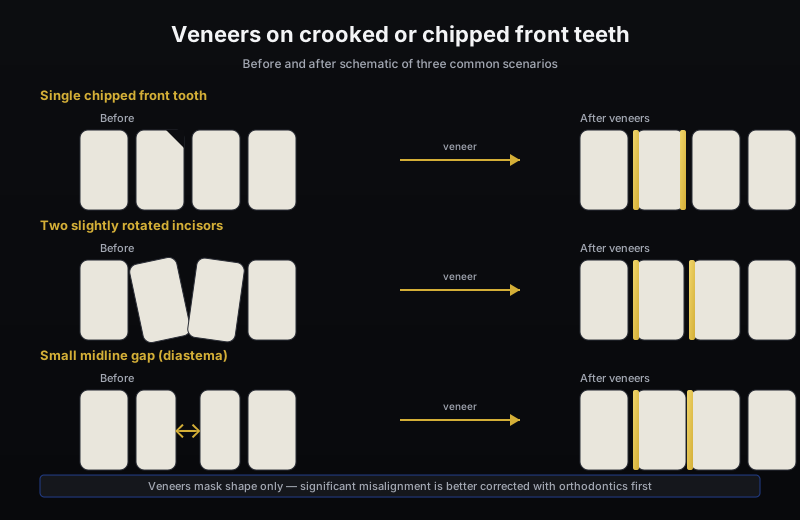
Crooked covers a wide spectrum. On one end, two front teeth might be rotated by a few degrees so they do not catch the light evenly. On the other end, the front teeth are visibly overlapped or pushed forward in a way that affects the bite as well as the look.
Veneers can mask mild crookedness because the veneer itself is shaped to sit straight even when the tooth underneath is slightly rotated. According to clinical literature reviewed by the American Academy of Cosmetic Dentistry, the technique works well when the rotation or crowding is small and the bite is otherwise stable.
Past minor misalignment, veneers stop being the right tool. Forcing a straight veneer onto a tooth that is significantly out of position usually means removing more enamel than is healthy, and it does nothing to correct the underlying bite. In those cases Dr. Husna Khan typically recommends Invisalign or braces first, sometimes followed by a small number of veneers afterward to refine shape and color.
What patients usually mean by “chipped”
A chip can be tiny, a rough edge from biting a fork, or it can be substantial, a triangular piece broken from the corner of a front tooth.
Small chips often do not require a veneer at all. Small chipped corner? Composite bonding rebuilds it in a single visit at a fraction of the cost. Clinical reports in the Journal of the American Dental Association show direct composite repair as an effective conservative option for minor enamel chips on front teeth.
A veneer becomes the better choice when the chip is large, when there are multiple chipped teeth, when the front teeth also have discoloration or wear that bonding will not address, or when the patient has tried bonding before and the repair keeps breaking off.
Cases where veneers genuinely help
Across years of cosmetic consultations in our Bloomingdale office, a few patterns repeat:
A patient has one front tooth that has been chipped for a decade, has been bonded twice, and the bonding keeps fracturing. Porcelain is a more durable surface and the veneer matches the adjacent tooth more reliably than repeated composite layers.
Two front teeth are slightly rotated, the bite is otherwise stable, and the patient does not want orthodontics. Two veneers can produce a straighter-looking smile in three appointments.
Uneven length across the front six, slight wear, slightly different shades. Six veneers can reset shape, length, and color in one coordinated case.
A patient finished orthodontic treatment years ago and the alignment is good, but a chip and a small gap between the central incisors remain. One or two veneers close the cosmetic gap without retreating the bite.
Cases where veneers are not the right answer
There are equally clear cases where the answer is not veneers:
Significant crowding, or an underlying bite problem that is quietly manufacturing the chips in the first place and will keep manufacturing them no matter what gets bonded to the surface. Treat only the surface and the cause stays. Then the veneers chip too.
Active grinding without a night guard. According to clinical guidance from the American Academy of Cosmetic Dentistry, parafunctional habits such as bruxism are a major contributor to porcelain fracture, and a guard is part of any responsible plan.
Teeth with large existing fillings, root canal treatment, or structural cracks. Crowning is usually safer there, because full coverage supports what remains of the tooth in a way a front-surface shell cannot, and a fracture line that grows under a veneer takes the veneer down with it.
Patients hoping that a veneer will straighten the bite. Veneers change appearance, not position. If the bite needs correction, orthodontics is the appropriate first step.
The conversation we usually have
When a patient sits down and points at one chipped tooth or a few crooked teeth in a photo, the consultation tends to follow a predictable arc.
Dr. Husna Khan first looks at the bite, not the cosmetic concern. Simple reason: treating a cosmetic chip without understanding why the chip happened often leads to a repeat chip on the new veneer.
If the bite is stable and the misalignment is mild, veneers are presented as one of two or three options alongside bonding and short-course orthodontics, with honest tradeoffs for each.
If the bite is unstable or the misalignment is significant, orthodontics moves to the top of the list, with veneers as a possible finishing touch later.
This sequence is not about steering patients toward more treatment. It is about avoiding the situation where the patient comes back two years later with a fractured veneer because the underlying cause was never addressed.
What the appointment looks like for a typical case
For a single chipped front tooth that is a good candidate for a veneer, the case usually runs across two visits in our office. Visit one covers consultation, photographs, shade mapping, and a small amount of conservative tooth preparation. Temporaries cover the tooth while the lab fabricates the porcelain. Two to three weeks later comes the try-in and bond.
For two to four veneers across the front teeth, the timeline is similar but with a longer chair time at each appointment, especially the bonding visit, where each veneer is checked individually for shape, fit, and shade match before final placement.
Patients are given a written estimate in advance, the recommended alternatives, and a clear description of what is being removed and what is staying. Informed consent gets emphasized by the Centers for Disease Control and Prevention as part of any elective dental procedure, and that standard applies fully to cosmetic cases.
A few honest cautions
Three points come up often in conversations about veneers for crooked or chipped front teeth:
Cosmetic does not mean trivial. Even one veneer is a long-term commitment. Decide with the same thoughtfulness as any other restoration.
Matching one veneer to one natural neighbor is genuinely harder than placing a full set, because a single unit has to reproduce the exact translucency, surface texture, and color gradient of the living tooth beside it. Shade, translucency, and surface texture all have to read as a single tooth rather than a stand-out neighbor. This is why many cases involving a single chipped front tooth are quoted with extra design and try-in time.
A veneer cannot move what is not yet straight. Patients who choose veneers over orthodontics for moderate crookedness sometimes regret it later because the bite continues to evolve under the veneers. An honest consultation includes that risk on the table.
This article is general education, not individualized medical advice. If a chipped or crooked front tooth is bothering you, an in-person exam is the only way to see whether veneers are appropriate for your specific case.
When to book a consultation
A consultation makes sense when a chip, a slight rotation, a small gap, or a single off-shade tooth is the thing you notice first in your own photos. Nothing about the visit commits you to treatment. It is to leave with a realistic sense of what veneers can and cannot change for your front teeth, and what the alternatives look like in cost, time, and durability.
To talk through whether veneers are the right fit for a chipped or crooked front tooth, call our Bloomingdale office and book a cosmetic consultation with Dr. Husna Khan.
When to call rather than wait
Cosmetic planning for a crooked tooth can wait. A newly broken one cannot.
See a dentist the same day after any impact that chips or cracks a front tooth, even a small one. Dental trauma guidance from the IADT sets a 24-hour evaluation window because the nerve inside a struck tooth can change status over the following days, and the exam record from that first visit shapes every option afterward, from simple bonding to a veneer to a root canal.
Call promptly if a previously chipped tooth starts reacting to cold or turning gray. Both signal the pulp is struggling, and a veneer placed over a dying nerve fails with the tooth.
Call about any loose fragment still attached after a chip. Hanging enamel catches, cuts, and usually breaks further at the worst possible moment; smoothing or removing it takes minutes.
FAQs
Can veneers fix crooked teeth?
Are veneers a good fix for a chipped front tooth?
Where should you go to get veneers for chipped teeth?
Will a veneer on a crooked tooth look natural?
How many veneers do you need for chipped or crooked front teeth?
Can Invisalign replace veneers for crooked front teeth?
Can a single crooked tooth get one veneer?
Do veneers on rotated teeth need more enamel removed?
How soon can a chipped front tooth be fixed?
Educational content only. Recommendations are personalized after an exam and any needed imaging.
Need help with this in real life?
Reading helps. Talking to someone who can look at your actual teeth and symptoms helps more. If you want a clear next step, we’re here.
Related articles
Does Insurance Cover Dental Veneers? Coverage and Payment Options
Plain answers about veneer insurance coverage, what counts as cosmetic, and what payment plans actually work for patients in Bloomingdale, IL.
Read article →How Long Do Dental Veneers Last? Lifespan, Wear, and Replacement
Real numbers on how long porcelain and composite veneers last, what wears them down, and how to make them last longer, from a Bloomingdale, IL dentist.
Read article →Porcelain vs Composite Veneers: An Honest Comparison
Porcelain or composite veneers? A Bloomingdale, IL dentist breaks down cost, lifespan, appearance, and which option fits which kind of patient.
Read article →