
Cosmetic Dentistry
Why Some People Regret Their Veneers, and How to Avoid That
Why veneer regret happens, what the patterns are, and how a Bloomingdale, IL dentist designs cases to make sure patients are happy years later.

Veneer regret is a real pattern, and it shows up often enough on social media and patient forums that it deserves an honest explanation rather than a brush-off. Most regret stories follow predictable paths, and most of those paths could have been avoided with a more careful consultation, more conservative case planning, or a different decision about whether to do the case at all. Most regret starts with a mismatch between expectation and mechanism, so it helps to understand how veneers actually work before committing.
This article walks through the most common reasons people regret veneers and what we do differently in our Bloomingdale practice to lower that risk for our patients.
The most common regret patterns
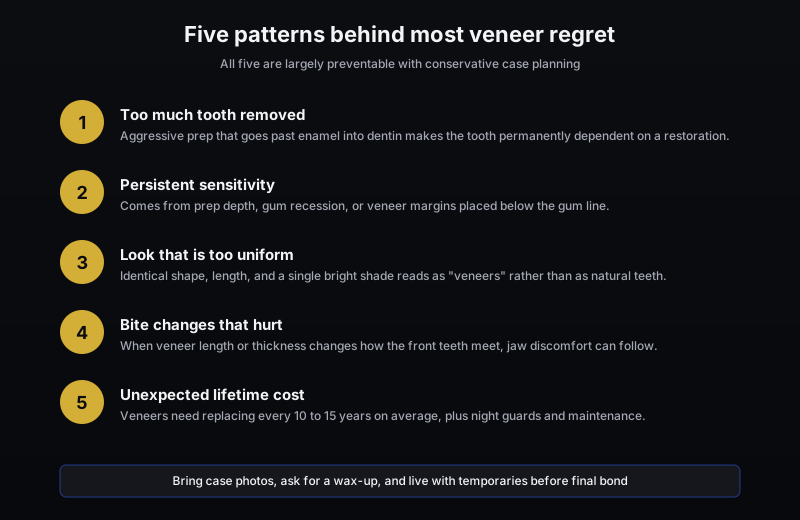
Five patterns. Between our chair and patient forums, the same five account for nearly every regret story we hear, which is actually good news, because a short list of known failure modes is a short list of things a careful consultation can screen for.
First: too much tooth structure removed. Someone is told they need veneers on six or eight upper teeth, more enamel is reduced than the case actually required, and now the patient feels stuck in a long-term restoration cycle. The Journal of Prosthetic Dentistry has documented that conservative preparation correlates with better long-term outcomes, and the published literature increasingly favors minimal-prep designs when the case allows.
Second: sensitivity that never resolved. Some sensitivity in the days and weeks after preparation is normal. When sensitivity persists beyond a few months, it usually points to either a bonding issue, a margin problem, or preparation that went deeper than it needed to.
Third: veneers that look too uniform or too white, the piano-key effect that photographs read instantly as artificial. Cosmetic cases that all use the same shade across every tooth, with the same edge length and the same shape, often look unnatural in real life. The Academy of General Dentistry has noted that natural-looking smiles incorporate small variations in color, length, and texture between adjacent teeth.
Fourth: a bite that does not feel right. Veneers change the front teeth, and the front teeth play a role in how the bite guides the lower jaw during chewing. Cases that ignore the bite can leave the patient with new jaw or muscle discomfort that was not present before.
Fifth: unexpected cost or maintenance. Nobody warned them about the lifespan range, the cost of replacement, or the need for a night guard may feel misled when those realities show up later.
Why some of these happen
Most of the regret patterns above trace back to one of three things: case selection, treatment planning, or the patient not having a clear understanding of what they were committing to.
Case selection is the most important. Some patients who request veneers are better candidates for whitening, bonding, or Invisalign, and an honest dentist will say so. Overselling is the most preventable cause of all: pushing a ten-veneer plan onto a case that two veneers and some whitening would have handled produces a patient who paid five times the money to end up less happy.
Treatment planning matters next. Diagnostic wax-ups, digital smile design, and temporary veneers the patient lives with for a few weeks all let the case be refined before the final porcelain is bonded. Skip them and the savings evaporate later.
Patient understanding closes the loop. Veneers are a long-term commitment, the lifespan is in the ten to fifteen year range on average, and replacement costs apply. Patients who understand this up front rarely report regret about it later.
A typical scenario from our chair
A common conversation in our Bloomingdale practice involves a patient who shows up with photos of celebrity smiles and asks for ten upper veneers to look the same. Dr. Husna Khan walks through three things in that conversation:
Celebrity smiles in reference photos are usually heavily edited and would look unnatural on most faces in real lighting.
Ten treated teeth is often more than the case needs. Most cosmetic concerns are concentrated in the upper front six to eight teeth, and treating fewer teeth produces a more natural-looking result in most cases.
Less invasive options might fit better. Alignment? Often Invisalign. If color is the main concern, professional whitening might handle most of it for a fraction of the cost.
Frankness up front beats any material choice. The Cochrane group has reviewed evidence on shared decision-making in dentistry and consistently found a correlation with long-term patient satisfaction.
How we lower the regret risk
Five things make a real difference in how we run veneer cases:
Diagnostics before any tooth is touched. Photos, intraoral scans, and a wax-up come first. Shape and color review comes first, before the prep appointment even gets scheduled, which means the version of the smile being approved is still one that can be edited freely, on wax or on screen, at no cost to anyone.
A frank conversation about alternatives. Whitening, bonding, and Invisalign get reviewed alongside veneers. If one of them would produce a better result, we say so.
Conservative preparation when the case allows. We aim to keep enamel reduction to the minimum the case requires, and we use depth-cutting burs to control the amount of reduction precisely.
Temporary veneers that match the planned final shape. Living with the design for one to two weeks comes before the final porcelain is bonded, and that trial window is where most would-be regrets get caught and corrected at zero cost. Adjustments to length, shape, and lip support can be made at the temporary stage rather than after the porcelain is in.
A written cost discussion that includes the lifespan range, the replacement cycle, and the cost of a custom night guard. No surprises at year one. None at year five.
What patients on the fence should know
If you are considering veneers and the regret stories online have made you nervous, three things are worth doing:
Get a second opinion. A consultation with a different dentist costs a fraction of the eventual treatment, and a second perspective on whether veneers are the right answer for your situation is worth it. The American Dental Association has noted that second opinions are a normal part of cosmetic decision-making.
Ask about the conservative options first. A skilled dentist should be willing to walk through whether whitening, bonding, or alignment changes might address what is bothering you before recommending veneers.
Look at real before and after photos from the practice you are considering, not stock images. What a practice has actually done predicts your result better than anything on its homepage.
What this article cannot tell you
This is general information rather than individualized medical advice. Whether veneers are the right choice for your teeth depends on a clinical exam, your specific cosmetic concerns, and your long-term goals. Deciding well means a consultation with a dentist who has examined your teeth and walked through the alternatives.
If you are considering veneers and want a frank conversation about whether they are the right answer for your situation, contact our Bloomingdale office to schedule a consultation with Dr. Husna Khan. We will review the alternatives alongside the veneer option and give you a written estimate before any treatment begins.
When to call rather than wait
Regret conversations deserve a scheduled visit. Physical symptoms do not wait as well.
Call promptly if a veneer you regret also hurts. Sensitivity, gum swelling, or a dark line at the margin are clinical problems, not aesthetic ones, and they progress on their own timeline whatever you decide about the smile.
Call the office rather than a second cosmetic consult first when a veneer loosens or moves. A mobile veneer contaminates its own bonding surface a little more every day it stays half-attached, and options narrow as that happens.
Second opinions are reasonable, and any dentist comfortable with their work will say so. Seek care quickly, though, for pain or swelling around a veneered tooth; those symptoms do not care whose chair you sit in first.
FAQs
Why do some people regret getting veneers?
Are veneers a permanent decision?
Can veneers be removed if I do not like them?
Do veneers look fake?
How can I avoid veneer regret?
Can too-white veneers be toned down?
Do veneers cause long-term sensitivity?
Is it normal to feel unsure right after veneers are placed?
What questions help prevent veneer regret?
Educational content only. Recommendations are personalized after an exam and any needed imaging.
Need help with this in real life?
Reading helps. Talking to someone who can look at your actual teeth and symptoms helps more. If you want a clear next step, we’re here.
Related articles
Does Insurance Cover Dental Veneers? Coverage and Payment Options
Plain answers about veneer insurance coverage, what counts as cosmetic, and what payment plans actually work for patients in Bloomingdale, IL.
Read article →How Long Do Dental Veneers Last? Lifespan, Wear, and Replacement
Real numbers on how long porcelain and composite veneers last, what wears them down, and how to make them last longer, from a Bloomingdale, IL dentist.
Read article →Porcelain vs Composite Veneers: An Honest Comparison
Porcelain or composite veneers? A Bloomingdale, IL dentist breaks down cost, lifespan, appearance, and which option fits which kind of patient.
Read article →