Dentures
Dentures cost and insurance: 2026 guide
How much do dentures cost? Cash prices by type, PPO insurance coverage, Medicaid, financing, and how to phase larger plans across years.
Dentures cost $400 to $30,000 per arch depending on type, materials, and whether implants are involved. Conventional full dentures run $1,500 to $4,000 per arch, partials $1,200 to $3,000, and fixed implant-supported (All-on-4) dentures $15,000 to $30,000 per arch. Most PPO insurance plans cover conventional dentures at 50 percent. Implant-supported dentures rarely receive insurance coverage. You are not alone in asking: the American College of Prosthodontists counts more than 36 million Americans with no teeth, about nine in ten of them wear dentures, and Centers for Disease Control and Prevention (CDC) data show complete tooth loss hits low-income older adults and smokers roughly three times as often as their peers, which is exactly the group for whom the cost question decides whether treatment happens at all. This guide breaks down every cost component, insurance coverage details, financing options, and how to phase larger treatment plans across years to maximize benefits.
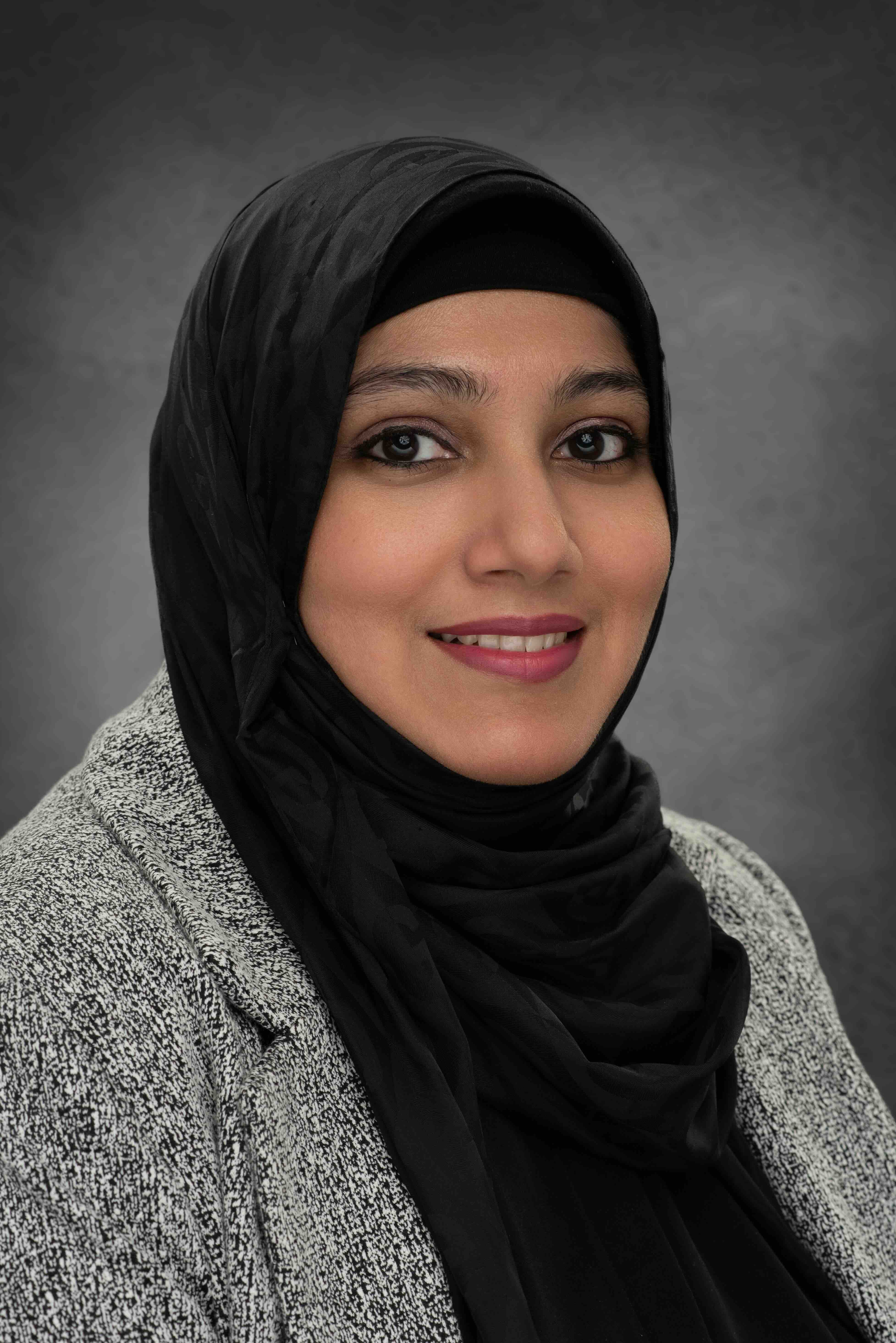
Written by Dr. Husna Khan, DDS
Serenity Dental of Bloomingdale · October 17, 2026
Call (630) 359-0105 for a free written estimate that includes your specific insurance breakdown.
For the dentures service overview, see our dentures in Bloomingdale page. Related guides: implant-supported dentures and getting used to dentures in daily life.
Cost summary by denture type
Patients ask “how much will my case cost?” more than any other cost question, and the answer depends primarily on type. Here is the at-a-glance summary:
| Denture type | Cash price (per arch) | With 50% PPO | Lifespan |
|---|---|---|---|
| Economy full denture (denture chains) | $400-$1,000 | $200-$500 | 3-5 years |
| Standard full conventional | $1,500-$4,000 | $750-$2,000 | 5-10 years |
| Premium full denture | $4,000-$6,000 | $2,000-$3,000 | 7-15 years |
| Partial denture (cast metal) | $1,200-$3,000 | $600-$1,500 | 5-8 years |
| Flexible partial | $1,500-$2,800 | $750-$1,400 | 3-7 years |
| Immediate denture | $1,800-$3,800 | $900-$1,900 | reline at 6-12 months |
| Snap-in implant denture (per arch) | $6,000-$15,000 | rare coverage | 10-15 years |
| Fixed All-on-4 (per arch) | $15,000-$30,000 | rare coverage | 15-25 years |
Cash prices vary by region, complexity of the case, and material choices. The numbers above reflect typical Chicago-area pricing as of 2026, and the standard and implant tiers match the ranges on our dentures in Bloomingdale page.
Component-level cost breakdown
Most denture cases include multiple billable items beyond the denture itself. Understanding the components helps avoid surprise charges.
For a typical conventional full denture case
| Component | ADA code | Typical cost |
|---|---|---|
| Comprehensive exam | D0150 | $80-$150 |
| Panoramic X-ray | D0330 | $90-$180 |
| Complete denture (upper or lower) | D5110/D5120 | $1,500-$4,000 |
| Adjustment visits (first 6 months) | D5410/D5411 | included or $50-$100 each |
| Reline at 6-12 months | D5750/D5751 | $300-$700 |
For an immediate denture case with extractions
| Component | ADA code | Typical cost |
|---|---|---|
| Multiple extractions | D7140-D7240 | $75-$300 simple, $225-$600 surgical |
| Immediate denture | D5130/D5140 | $1,800-$3,800 |
| Reline (typically at 6 months) | D5760 | $300-$700 |
| Optional permanent replacement at 1-2 years | D5110/D5120 | $1,500-$4,000 |
For an implant-supported denture case
| Component | ADA code | Typical cost |
|---|---|---|
| Implant placement (each) | D6010 | $1,800-$2,800 |
| Bone graft (if needed) | D7950 | $300-$1,200 per site |
| Sinus lift (if upper jaw) | D7951/D7952 | $1,500-$2,500 per side |
| Healing abutment | D6056 | $300-$500 each |
| Locator attachments (snap-in) | D6098 | $300-$600 each |
| Implant-retained denture | D5863-D5866 | $2,500-$5,500 |
| Implant-supported fixed denture | D6116 | $8,000-$15,000 per arch |
The implant cluster covers procedural details: see our All-on-4 implants in Bloomingdale page and dental implant cost for additional component costs on the implant side. In our Bloomingdale office, every denture estimate lists the reline as its own line, because that visit is coming whether or not it was quoted.
How insurance works for dentures
PPO dental insurance is the most common type and coverage rules are relatively standardized across major carriers (Delta Dental, Aetna, Cigna, MetLife, Guardian, BCBS, United Concordia, Humana, Principal).
Standard PPO denture coverage
| Coverage element | Typical |
|---|---|
| Coverage tier | Major services |
| Coverage percentage | 50% (some plans 60-70%) |
| Annual maximum | $1,000-$2,500 |
| Waiting period (new policies) | 6-12 months for major services |
| Frequency limit | One denture per arch every 5-7 years |
| Pre-authorization required | Often yes for over $300 |
| Network restrictions | In-network usually 10-30% better coverage |
What this means in practice
A typical full denture case ($2,500) with a typical PPO plan ($1,500 annual max, 50% major coverage):
- Patient pays the deductible (often $50-$100 first)
- Insurance covers 50% of remaining: $1,200
- But annual maximum cap: $1,500 already accounts for this case mostly
- Patient out-of-pocket: $1,300 in this scenario
For larger cases (implant-supported dentures at $25,000+), the annual maximum is exhausted by the first phase of treatment, and remaining costs are out-of-pocket unless treatment is phased across two calendar years.
Plans that cover dentures well
Plans that pay strongly toward dentures typically have:
- $2,500 annual maximum
- 60-70% coverage on major services
- No or short waiting period for major services
- Annual maximum that resets every January
Examples of plans known for above-average denture coverage include some Delta Dental Premier plans, Cigna Preferred plans, and certain employer-sponsored union plans.
Plans with limited denture coverage
Plans that may pay nothing toward dentures include:
- Most discount dental plans (these are not insurance)
- Original Medicare (Parts A and B) - never covers routine dentistry
- Many low-premium Medicare Advantage plans (verify the dental benefit specifically)
- Some short-term marketplace plans with major-services exclusions
Medicare and Medicaid
Medicare coverage
Original Medicare (Parts A and B) does not cover dentures, even when medically necessary. The only Medicare-related dental coverage exists through Medicare Advantage Part C plans, which are private plans approved by Medicare to provide additional benefits.
Medicare Advantage dental coverage typically falls into three tiers:
| Tier | Annual dental allowance | Denture coverage |
|---|---|---|
| Basic (no extra premium) | $0-$500 | preventive only |
| Mid-tier | $500-$1,500 | partial denture coverage |
| Premium (extra premium) | $1,500-$3,500 | meaningful denture coverage |
Patients on Medicare Advantage should verify their specific dental allowance and check whether dentures are covered as a major service before scheduling. Serenity Dental coordinates verification at the time of consultation.
Medicaid coverage in Illinois
The Illinois HFS dental fee schedule for adult beneficiaries lists complete dentures (D5110, D5120) and immediate dentures (D5130, D5140) with prior approval required and a fixed maximum allowance per arch. Three things follow from that:
- Prior approval has to be obtained before the denture is made, and the provider has to be enrolled with Illinois Medicaid
- Partial dentures carry no adult allowance on the schedule, so a Medicaid adult who needs a partial usually pays the cash fee
- HFS limits how often a denture can be replaced, and we confirm the current interval before quoting a replacement
Implant codes do not appear on the HFS schedule, so implant-supported dentures are not covered by Illinois Medicaid.
Financing options at Serenity Dental
For patients without insurance or with insurance that does not fully cover treatment, multiple financing approaches exist:
Option 1: CareCredit
CareCredit is the most widely-used dental financing card. Typical promotional terms include 6, 12, or 24 months of no-interest financing if paid in full within the promotional period. After the promotional period, deferred interest applies, so paying off the balance within the promotional window is essential. Requires application and credit approval.
Option 2: Cherry
Instant decision at the front desk, with terms that vary by credit profile. Cherry suits patients who want the decision settled in the same visit as the estimate.
Option 3: Sunbit
A short application and fixed monthly payments, often approved for patients who did not qualify elsewhere. Useful for larger implant-denture cases.
Option 4: HSA/FSA accounts
Pretax dollars from Health Savings Accounts (HSAs) and Flexible Spending Accounts (FSAs) can be used for dentures. The effective discount is your marginal tax rate. The health FSA contribution limit is $3,400 for 2026 (the IRS adjusts it each year), and IRS Publication 502 counts dentures as a qualifying dental expense.
Option 5: Treatment phasing
Larger plans can be phased across two or more calendar years to maximize annual insurance maximums. Example: extractions and immediate denture in November-December (one benefit year), final relined denture and any implant work in following calendar year (new benefit year). This requires planning at the treatment design stage, and Dr. Husna Khan discusses phasing options when total cost exceeds annual benefit limits. In our practice the insurance pre-authorization goes in before the first impression, so the patient’s share is known in writing before any work starts.
Cost factors that change estimates
Beyond denture type, several factors affect final cost.
Factors that increase cost
- Premium materials. Porcelain teeth, layered acrylics, and digital design add $500-$2,500 to base cost
- Multiple extractions. Each tooth needing extraction adds $75 to $300 for a simple removal or $225 to $600 for a surgical one
- Bone grafting. $300-$1,200 per site, common for implant cases with significant bone loss
- Sinus lifts. $1,500-$2,500 per side for upper implant cases
- Implant attachments. Each locator or O-ring system adds $300-$600 per implant
- Custom esthetic work. Tooth shade matching, gum tissue layering, and asymmetry correction add cost
Factors that decrease cost
- Pre-existing healthy bone and gums. No extractions or grafts needed
- Standard tooth selection. Off-the-shelf esthetic work
- Acrylic vs porcelain teeth. Acrylic is less expensive but wears faster
- Single arch vs both. Both arches together typically cost less per arch than separately
- Network insurance. In-network providers often negotiate 10-30% lower rates
Realistic budget expectations
Three example budget scenarios reflecting typical patient situations:
Scenario 1: Standard PPO patient, full upper denture
- Cash price: $2,500
- Insurance covers 50%: $1,250
- Patient owes: $1,250 minus deductible
- Out-of-pocket: ~$1,300
Scenario 2: No insurance, full upper and lower with extractions
- 6 upper extractions: $1,800
- 4 lower extractions: $1,200
- Upper immediate denture: $2,500
- Lower immediate denture: $2,500
- Reline at 6 months (both): $1,200
- Total cash: ~$9,200, financed across 24 months at low interest
Scenario 3: All-on-4 lower implant-supported denture
- Surgical placement of 4 implants: $7,200
- Bone graft (1 site): $800
- Implant-supported fixed denture: $14,000
- Total cash: ~$22,000
- Insurance contribution (if any): typically $1,500-$2,500 toward bone graft and implant placement
- Out-of-pocket: ~$19,500-$20,500, financed over 60 months
These are illustrative; actual estimates depend on specific clinical findings.
A note on these numbers
This pricing guide is general information for budgeting, drawn from regional fee data, the ADA CDT code set, and the Illinois HFS fee schedule. It is not a substitute for an in-person exam or a written estimate. Your fee depends on how many teeth remain, the condition of the ridge, the material chosen, and the benefits your plan actually carries.
Cost figures in this article are Chicago-area reference ranges compiled from regional fee data, not quotes from Serenity Dental of Bloomingdale. Every dental insurance carrier negotiates its own fee schedule, and Medicaid and Medicare Advantage plans set separate schedules of their own, so the amount a plan allows can sit above or below these ranges. Your actual fee depends on exam findings, materials, and benefits, and we provide a written, itemized estimate before any treatment begins.
When to call rather than wait
A denture is a cost question until it becomes a comfort question. Call right away at (630) 359-0105 if a sore spot has not healed after two weeks of wear, if the denture cracks or a tooth breaks off, if an immediate denture suddenly feels loose or rocks as the extraction sites shrink, or if you notice bleeding gums or a bad taste that does not clear with cleaning. Adjustments in the first months are expected and quick. Pain that keeps you from eating is not something to wait out.
Why Serenity Dental approaches cost transparently
Serenity Dental of Bloomingdale provides:
- Written cost estimates before treatment begins, including insurance breakdown and patient responsibility
- Multiple option presentation so patients can weigh cost vs benefit
- Free insurance verification during the consultation visit
- Phased treatment options when total cost exceeds annual benefits
- Multiple financing options discussed openly
- No surprise charges — if the plan changes mid-treatment, the patient is informed before any added work begins
Schedule a denture consultation at Serenity Dental by calling (630) 359-0105. The standard consultation includes a comprehensive exam, full cost discussion, and insurance verification.
Related: dentures in Bloomingdale · implant-supported dentures · getting used to dentures · dental implant cost.
FAQs
How much do dentures cost?
How much are dentures with insurance?
What is the cheapest type of dentures?
Does Medicare cover dentures?
Does Medicaid cover dentures?
How much do dentures cost without insurance?
What financing options are available for dentures?
Are dentures worth the cost?
Educational content only. Recommendations are personalized after an exam and any needed imaging.
About this article
Reviewed by Dr. Husna Khan, DDS, of Serenity Dental of Bloomingdale. Cost transparency standards at Serenity Dental include written estimates with insurance breakdown before treatment, multiple option presentations with honest trade-off discussion, and clear phasing strategies for larger plans.
Educational content. Specific costs depend on individual treatment plans and verification of insurance benefits. Cited sources: American College of Prosthodontists (ACP) facts and figures on tooth loss, CDC data on tooth loss in older adults, American Dental Association (ADA) CDT procedure codes and Survey of Dental Fees, Medicare.gov coverage rules, the Illinois Department of Healthcare and Family Services (HFS) dental fee schedule, and IRS Publication 502, all linked under Sources below.
Related: dentures in Bloomingdale · implant-supported dentures · All-on-4.
Sources
- Centers for Disease Control and Prevention, Some Older Adults Are More Than Three Times as Likely to Lose All of Their Teeth (2011-2016 data). Among adults 65 and older, complete tooth loss reached 34 percent of low-income adults and 43 percent of current smokers, against 11 and 12 percent in the comparison groups
- American College of Prosthodontists, Facts and Figures. More than 36 million Americans have no teeth and 120 million are missing at least one; about nine in ten edentulous adults wear dentures
- American Dental Association, Code on Dental Procedures and Nomenclature (CDT)
- American Dental Association, 2022 Survey of Dental Fees (Health Policy Institute). Self-reported fees for more than 200 procedures from a national sample of dentists, reported nationally and by region
- Illinois Department of Healthcare and Family Services, Dental Program Fee Schedule for Child and Adult Beneficiaries (effective January 1, 2023). Complete and immediate dentures are on the adult schedule with prior approval; partial dentures carry no adult allowance; implant codes are not listed
- Medicare.gov, Dental services. In most cases Medicare does not cover dental services, including dentures and implants
- IRS Publication 502, Medical and Dental Expenses. Amounts paid for the prevention and alleviation of dental disease are includible medical expenses
- KPMG summary of IRS Revenue Procedure 2025-32 (2026 inflation adjustments). The 2026 health FSA contribution limit is $3,400, with a $680 carryover where the plan allows it
Need help with this in real life?
Reading helps. Talking to someone who can look at your actual teeth and symptoms helps more. If you want a clear next step, we’re here.
Related articles
Permanent Dentures: Fixed Implant Teeth vs Finished Denture
What permanent dentures means: a fixed implant bridge on All-on-4 or All-on-6, or the finished denture after an immediate one. Candidacy, timeline, care, costs.
Read article →Flexible Dentures: Cost, Lifespan, Pros and Cons
Flexible nylon partial dentures explained: materials, how they compare with cast-metal and acrylic partials, lifespan, cleaning, and who should skip them.
Read article →Palateless (horseshoe) upper dentures: when to choose them
Palateless upper dentures eliminate roof coverage to restore taste and reduce gag reflex. They require 4 or more implants for support.
Read article →